
Submarine Tunnels of the Bay of Kotor
What the Bay of Kotor's old submarine tunnels are, the Yugoslav-navy history behind them, how boat tours actually visit these cliff-cut pens near the bay mouth, and the photo and safety context to know before you go.
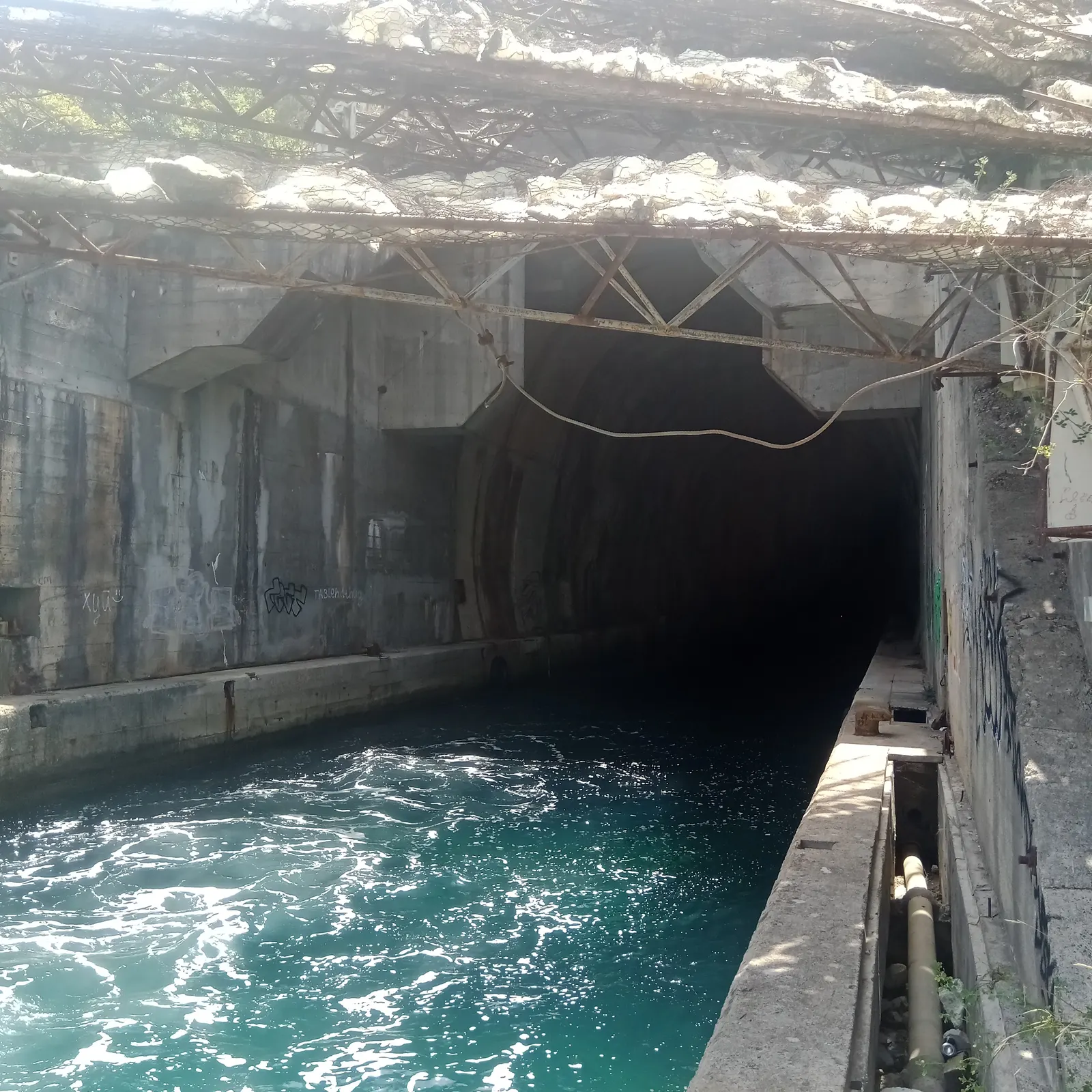
Photo: SWT666 / Wikimedia Commons · CC BY-SA 4.0
- ✓The 'submarine tunnels' are former Yugoslav navy submarine pens — tunnels blasted into the bay's limestone cliffs during the Cold War to hide and shelter boats.
- ✓They sit out toward the bay mouth, near the Luštica shore and the outer Boka, not in the inner bay by Kotor town — so you reach them on a boat trip, not on foot from the Old Town.
- ✓There is no ticket booth, no museum and no fixed opening hours: this is a stop on a boat tour rather than a managed attraction.
- ✓Most tours only let you nose the boat into a tunnel mouth or pause alongside; the interiors are bare, dark and unlit, so go for the atmosphere and the photo, not a guided walk-through.
- ✓The pens pair naturally with the Blue Cave, Mamula island and the Luštica coves on the same outer-bay boat day.
- ✓Sea state decides everything out here — confirm the tour is running and verify exactly which tunnels it visits before you book.
What the submarine tunnels actually are
Among the prettiest, gentlest scenery on the Adriatic, the Bay of Kotor hides a stark piece of twentieth-century history: a set of submarine tunnels cut straight into the living rock of the cliffs near the bay mouth. They are not natural caves and not a romantic ruin in the usual sense. They are military engineering — pens blasted out of the limestone so that submarines and small naval craft could be driven inside, hidden from the air and protected from attack.
The Bay of Kotor was one of the most important naval anchorages of the former Yugoslavia, and its deep, sheltered, mountain-walled water made it a natural fortress. The tunnels are part of that story: a way of tucking warships out of sight inside the rock, with the bay's narrow entrance and steep sides doing the rest of the defending. Today the navy is long gone and the pens sit empty, dark and silent — which is exactly what makes them so striking to come upon from a small boat.
Set expectations before you go. These are bare tunnels, not a polished visitor attraction. There is no lighting, no signage, no guided walkway and, for the most part, no way to disembark and explore on foot. What you get is the experience of approaching a black, arched opening in a wild cliff, the boat's engine echoing back at you, and a vivid sense of the bay's hidden military past.
A short history: the Yugoslav navy and the Cold War bay
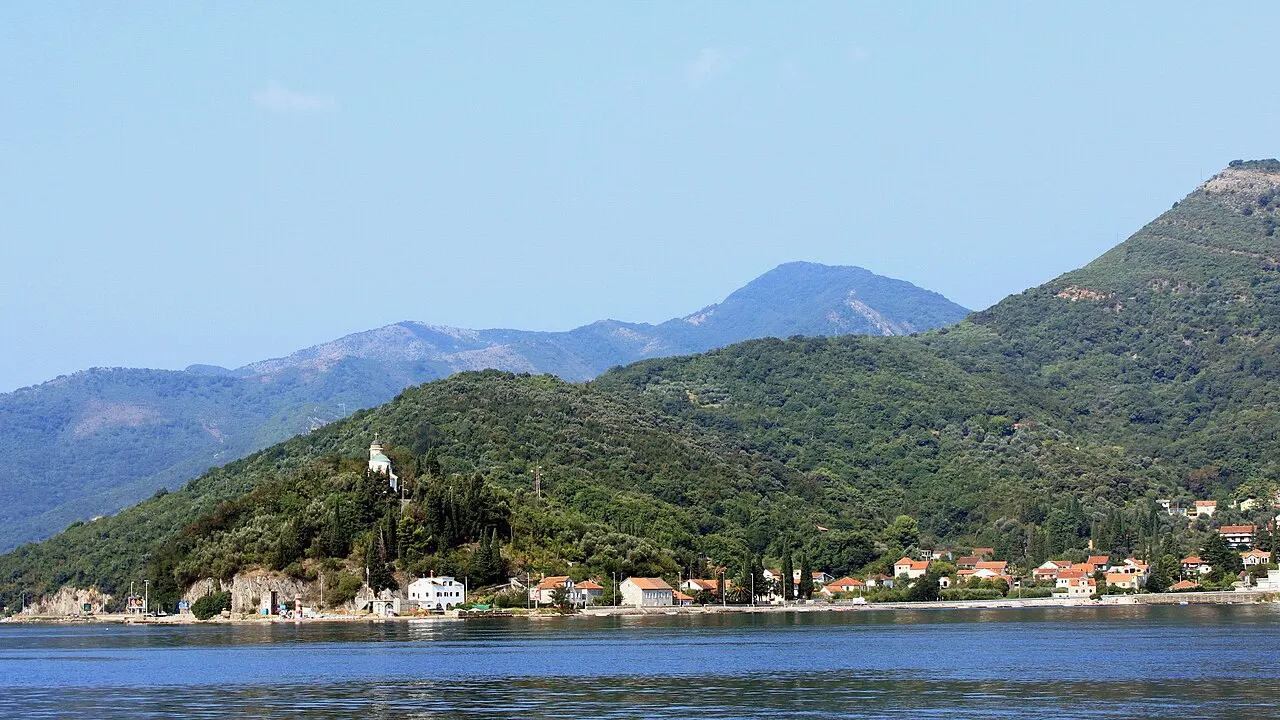
To understand the tunnels you have to picture the Boka as a working naval base rather than a holiday bay. Through much of the twentieth century, and especially during the Cold War decades of the former Yugoslavia, the Bay of Kotor sheltered a significant slice of the country's navy. Its geography made it ideal: a long, twisting inlet with a narrow, easily-watched mouth, deep water inside, and high mountains screening the basins from view and from weather alike.
Against the backdrop of Cold War tension, the bay was hardened. Coastal batteries, fortified islands and the tunnel pens together turned the Boka into a defended military zone. The submarine tunnels were the most dramatic piece of that work — galleries driven into the cliffs so that vessels could be hidden inside the rock itself, safe from aerial reconnaissance and from a strike. It was the same logic that shaped other Mediterranean naval bases of the era: when the sea cannot hide a ship, the mountain can.
With the break-up of Yugoslavia and the changes that followed, the bay's military role wound down, and the pens were abandoned. They remain as a quiet, slightly eerie counterpoint to the baroque churches and captains' palaces that the bay is better known for — a reminder that this gentle-looking water was, within living memory, one of the most strategic harbours on the Adriatic. For the specific dates, units and decommissioning details, treat any single online figure with caution and verify against a reputable history source; the broad story is solid, the fine print is often muddled.
- The Boka was a major anchorage of the former Yugoslav navy through the Cold War.
- Its narrow mouth, deep water and high cliffs made it a natural defended harbour.
- Tunnels were cut into the rock so vessels could be hidden from the air and sheltered from attack.
- The pens were abandoned as the bay's military role wound down — verify exact dates against a history source.
 Mamula Island
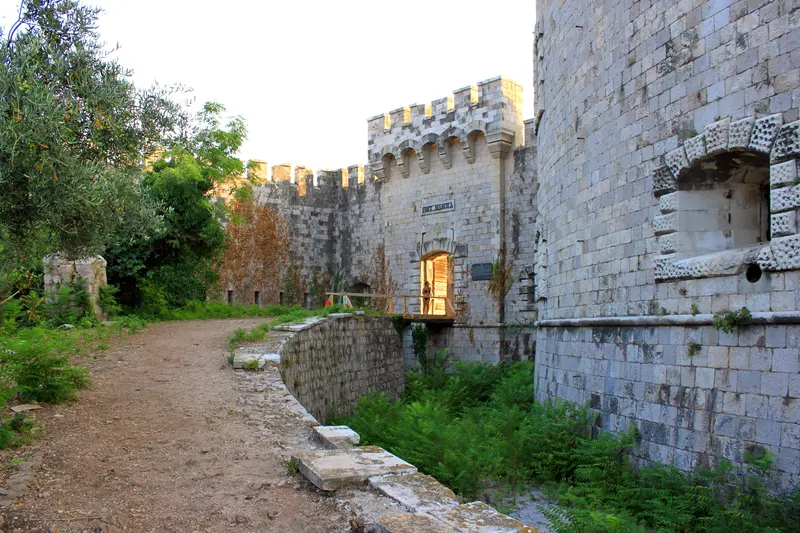
The Austro-Hungarian fortress island that anchored the bay's earlier defences.
 Luštica Peninsula
The headland whose shore the outer pens and forts sit along.
Map pins
Map data © OpenStreetMap contributors · Tiles © OpenFreeMap
Where they are — and why you visit by boat, not on foot
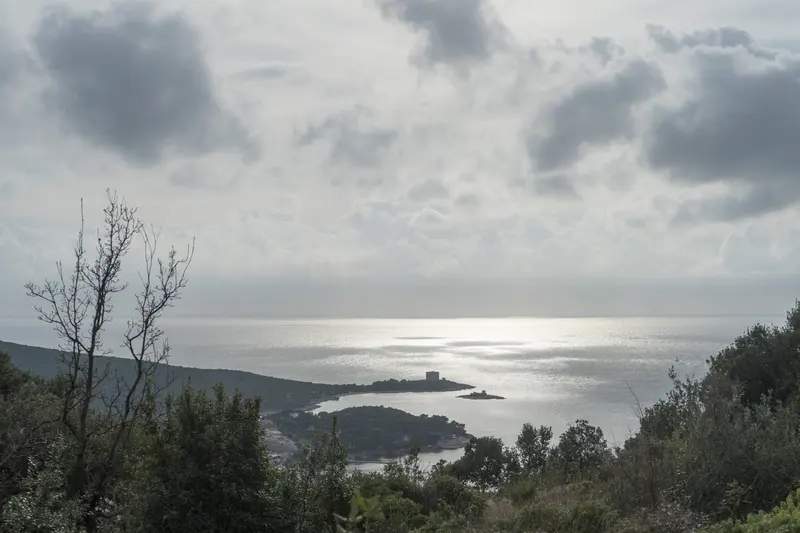
The first thing to get clear is geography, because it shapes the whole visit. The submarine tunnels are not in the inner bay beside Kotor's Old Town. They lie out toward the bay mouth, along the wilder shores near the Luštica peninsula and the outer Boka, where the water opens toward the Adriatic. From Kotor town that is a meaningful distance — a long way round by the bay road, and far more naturally reached on the water.
That is why, in practice, the tunnels are a boat stop rather than a sight you drive to and tour. Boat trips that work the bay mouth — typically the same excursions that take in the Blue Cave, Mamula island and the open-sea swimming coves — pass close to the pens and will usually slow or nose the boat into a tunnel mouth so you can look in, take photographs and feel the scale. Because the openings are at the waterline in remote cliffs, there is rarely a jetty, a path or a safe place to land and walk inside.
If you specifically want the tunnels, the key is to ask before booking, because not every bay tour goes out as far as the mouth, and not every one that does will include the pens. Tours focused on Perast and Our Lady of the Rocks, for instance, stay in the inner bay and never come near them. Confirm with the operator that the submarine tunnels are on the route, and whether the boat will actually approach a mouth or merely point them out from a distance.
- Location: out toward the bay mouth near Luštica and the outer Boka — not in the inner bay by Kotor town.
- Reached by boat tour; there is generally no road access, jetty or walkway at the pens.
- Usually combined with the Blue Cave, Mamula and the Luštica coves on a bay-mouth boat day.
- Inner-bay trips to Perast do NOT pass the tunnels — confirm the route before you book.
What the visit is actually like
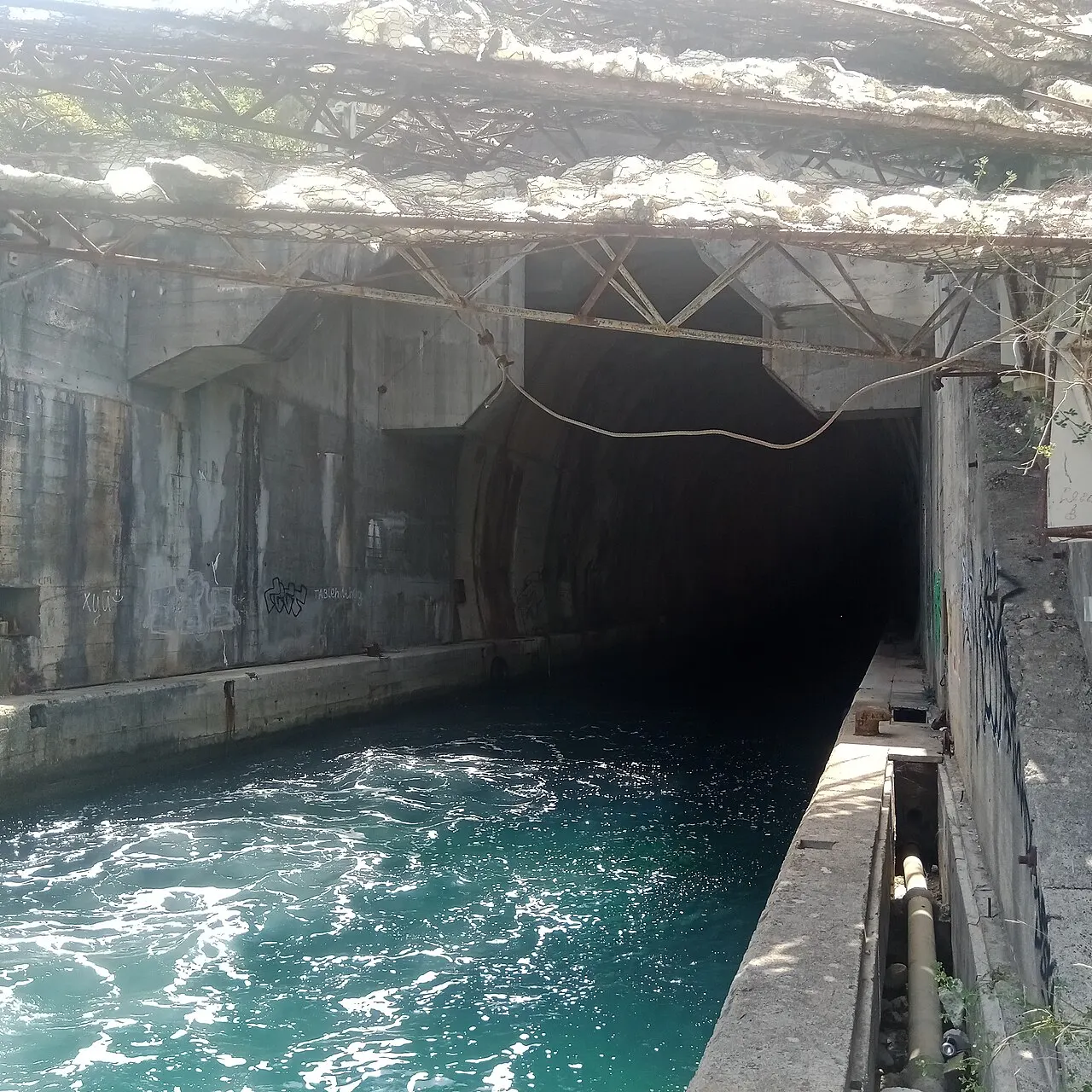
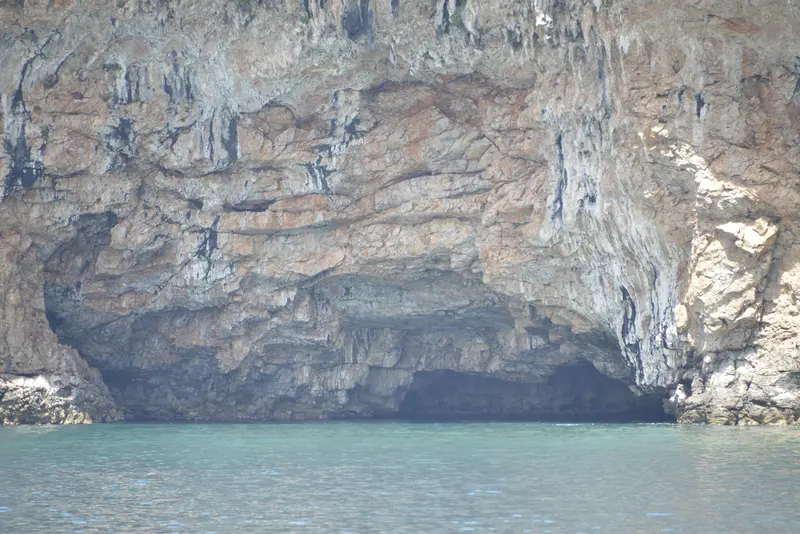
Approaching a submarine pen from a small boat is a genuinely cinematic moment. The cliff rises sheer and bright in the sun, and then, low at the waterline, there is a black rectangular or arched void where the rock has been cut clean away. As the boat eases in, the daylight drops behind you, the engine note changes as it echoes off the wet stone, and the air turns cool and still. Even with no ship inside, the sense of a hidden military space is immediate and a little uncanny.
How far in you go depends entirely on the boat, the skipper and the conditions. Some operators will nose the bow a short way into a wider tunnel so you can see the depth of the cut; others hold alongside the mouth. You will not, on a typical tour, be walking the galleries — the interiors are unlit, often flooded at the entrance, and not maintained for visitors. Bring that expectation and you will not be disappointed: the reward here is atmosphere, history and a remarkable photograph, not a guided interior tour.
Pair the stop with the rest of what the bay mouth offers and it becomes one beat in a varied day: the electric blue of the sea cave, the brooding fortress on Mamula, a swim in a clear Luštica cove, and these silent dark mouths in the cliffs. Together they tell the bay's double story — the gentle, beautiful Boka of the brochures, and the hard, defended Boka of the twentieth century.
- Expect to approach or nose into a tunnel mouth, not to walk the galleries on foot.
- Interiors are bare, dark and unlit — there is no lighting, signage or walkway.
- The payoff is atmosphere and a striking photo, not a guided interior visit.
- Best as one stop on a varied bay-mouth day with the Blue Cave, Mamula and a swim.
Photography: shooting the tunnels and the cliffs
The submarine tunnels are a photographer's gift precisely because of the contrast they offer. After a day of bright water and pale stone, here is deep shadow, a hard geometric cut in a wild natural cliff, and the drama of dark against light. The classic shot frames the black tunnel mouth within the sunlit rock, with the boat's wake or another vessel giving a sense of scale. If your skipper noses inside, turning back toward the bright arch of the entrance — daylight and blue water framed by the cut rock — makes the strongest single image of the trip.
The practical challenge is the extreme range between the dark interior and the brilliant exterior. Your camera or phone will want to expose for one or the other; decide which story you are telling. Expose for the cliff and the mouth goes a dramatic black; expose for the interior and the entrance blows out to white. On a phone, tapping to set exposure on the rock around the mouth usually gives the most balanced, atmospheric result. A bright midday sun deepens the contrast; softer light earlier or later in the day reveals more texture inside the cut.
Shoot from a moving boat the way you would any water-level subject: keep the shutter quick to freeze the gentle roll, brace your elbows, and take several frames as the angle changes, because the geometry of the mouth shifts fast as you pass. And mind your gear over open water — a wrist strap and a dry bag are cheap insurance against the one wave that catches you mid-shot.
- Frame the dark mouth within the sunlit cliff; use a boat for scale.
- From inside, shoot back toward the bright arch of daylight for the trip's best image.
- Tap to expose on the rock around the mouth for the most balanced result.
- Keep the shutter quick from a moving boat, take several frames, and protect gear over the water.


Safety and respect: what to know before you go
These are former military sites, not maintained tourist infrastructure, and a little caution goes a long way. The interiors are dark, can be flooded or littered with debris, and have no handrails, lighting or maintained surfaces — which is one good reason most tours keep you in the boat. Do not try to scramble inside on foot, swim deep into a tunnel, or treat the pens as a place to clamber around; follow your skipper's instructions and stay with the boat unless they tell you otherwise.
Out at the bay mouth, the sea is a bigger factor than in the sheltered inner basins. The water is more exposed to wind and swell, and tunnel approaches are unforgiving of bad conditions, so trips out here are weather-dependent and can be cancelled or shortened at short notice. Always confirm the day before — and again on the morning — that the tour is running and that it includes the tunnels, rather than building a fixed plan around them. If the wind is up, a good operator will change the route or postpone, and that is the right call.
Finally, treat the place with respect. The pens are a quiet relic of a tense chapter in the region's history, and the cliffs around them are wild, unspoilt coast. Take only photographs, leave nothing behind, and let the silence of the tunnels be part of the experience. For the volatile specifics — which operators run out here, what they charge, exactly which tunnels and forts a given trip covers, and the day's sea state — check directly with operators and a current marine-weather source rather than relying on any fixed figure.
- Former military sites: unlit, unmaintained, sometimes flooded — stay with the boat, don't scramble inside.
- The bay mouth is exposed; trips are weather-dependent and can be cancelled in wind.
- Confirm the tour is running AND that the tunnels are on the route, the day before and the morning of.
- Take only photos, leave nothing behind, and respect the site's history and the wild coast.
- Verify operators, prices, departure points and exactly which tunnels/forts are included before booking.
Blue Cave Montenegro
Is the Blue Cave (Plava Špilja) worth it from Kotor? What it is and why the water glows, where it sits near the bay mouth, how trips reach it, the sea-condition and timing realities, swimming inside, the crowds, and the honest verdict with alternatives.
Read guideMamula Island
Understanding Mamula, the fortress island at the mouth of the Bay of Kotor: its Austro-Hungarian fort, its dark wartime past, the recent hotel conversion and the controversy around it, and how to see it from the water on a bay-mouth boat tour.
Read guide
Bay of Kotor
How to explore the Bay of Kotor: the shape of the Boka's four linked basins, and the five ways to experience it — by boat, by bus, by car, on the waterfront on foot, and from a viewpoint above.
Read guideMore in Bay of Kotor
6
Bay of Kotor Boat Tours
Compare the kinds of boat trip on the Bay of Kotor: shared group tours, fast speedboat trips, private charters, the Perast and Our Lady of the Rocks classic, the Blue Cave route, and sunset cruises — what each suits, rough durations and the weather caveat.
Read guide
Best Swimming Spots in the Bay of Kotor
The best places to swim in the Bay of Kotor, compared by access, water, shade, families, boat traffic and view: the Dobrota platforms, the Muo and Prčanj rocks, the quiet Stoliv, Orahovac and Ljuta coves, and the clear-water Luštica beaches out toward the open sea.
Read guide
Kayaking & SUP in Kotor Bay
Where paddling works in the Bay of Kotor: the sheltered inner bay off Dobrota, Muo and Prčanj, the beginner-friendly routes, the all-important morning-wind safety rule, what to rent and which guided trips to join, and who kayaking and stand-up paddleboarding suit.
Read guide
Kotor Sunset Cruise Guide
When to book a sunset cruise in Kotor and what route to choose: why the bay is at its most beautiful at golden hour, the Perast run versus the open-bay loop, group boats versus going private, and how the high mountains change the sunset itself.
Read guide
Kotor to Perast by Boat
Every way to get from Kotor to Perast and Our Lady of the Rocks: boat tours (shared and private), the bay bus, taxi and driving — with steps, rough durations and the catch that there is no scheduled passenger ferry.
Read guideLuštica Peninsula
A guide to the Luštica peninsula at the mouth of the Bay of Kotor: its clear open-sea beaches and coves like Žanjice, Mirište and Rose, the Blue Cave, the quiet hill villages and olive groves, the drive-versus-boat decision, and when it's worth leaving the inner bay.
Read guide