

Where to Stay in Kotor & Around the Bay
A neighbourhood-by-neighbourhood guide to where to base around the Bay of Kotor: the walled Old Town, leafy Dobrota, quiet Muo and Prčanj, baroque Perast, marina-side Tivat and beachy Budva — compared by atmosphere, walkability, parking, noise and boat access.

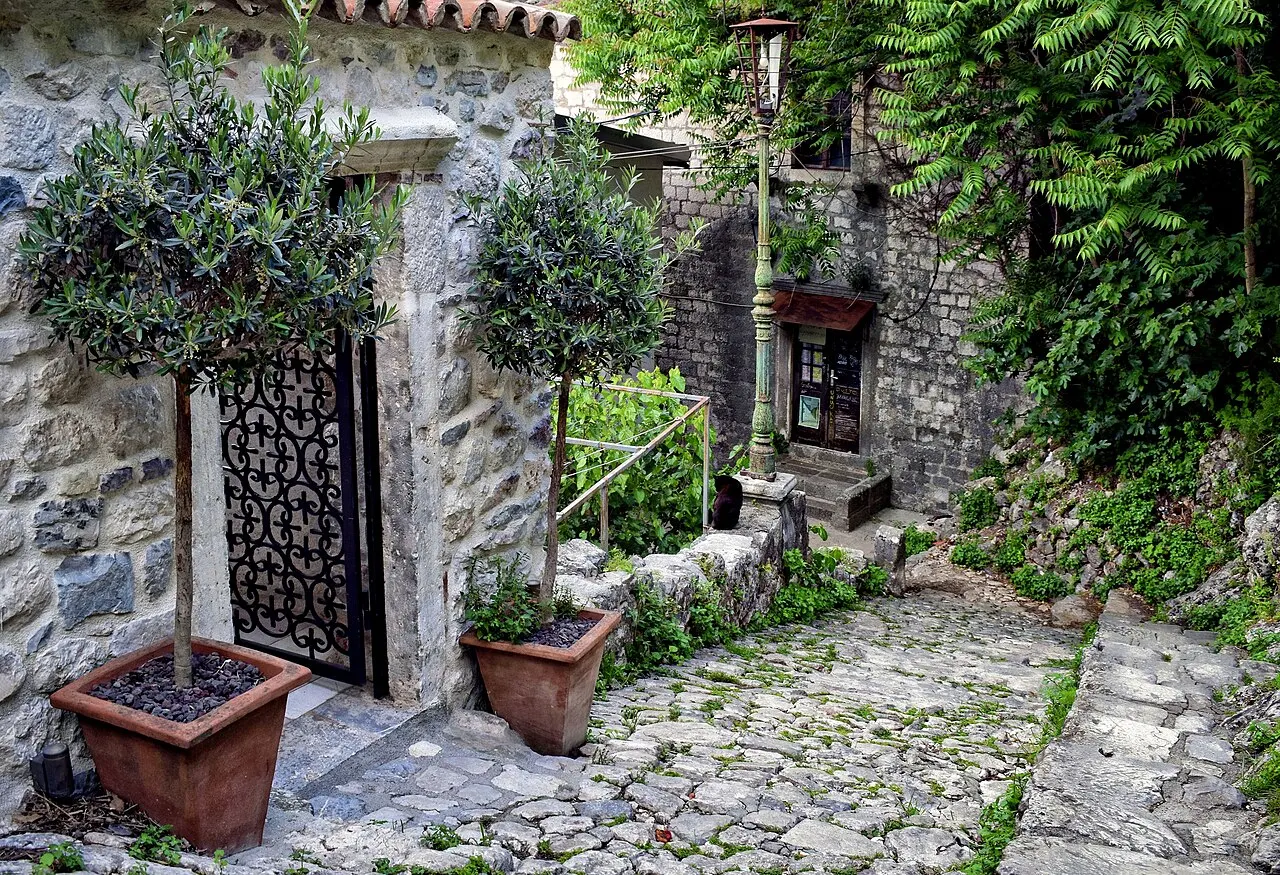
Photo: olga brajnovic / Unsplash
- ✓The Old Town is the most atmospheric base but the noisiest — stone lanes carry sound, there is no car access, and cruise mornings are busy.
- ✓Dobrota, just north along the bay, swaps the lanes for a quiet waterfront, easier parking and a flat walk back into town.
- ✓Muo and Prčanj, on the opposite shore, are calmer still, with bay-view rooms and a short drive or boat to Kotor.
- ✓Perast suits a slow, romantic, car-light stay; Tivat and Porto Montenegro suit travellers who want the marina, dining and the airport close.
- ✓Budva, 30-40 minutes down the coast, trades Boka calm for beaches and nightlife — a different holiday, not a Kotor base.
Choose your base by mood, not just by map
Kotor is small, but where you sleep shapes the whole trip. The bay is a string of distinct places within a short drive of one another, and each has a clearly different character: the medieval drama of the walled town, the calm waterfront of the villages, the baroque hush of Perast, the marina gloss of Tivat. None is far from the others, so the question is less about logistics than about the kind of day — and night — you want to wake up to.
Three practical questions sort most stays. Do you want to walk everywhere, or are you happy to drive or catch a boat? Do you need easy parking? And how much cruise-day noise and crowd can you tolerate? The Old Town scores highest on atmosphere and walkability and lowest on quiet and parking; the bay villages flip that balance. Answer those three honestly and the right neighbourhood usually picks itself.
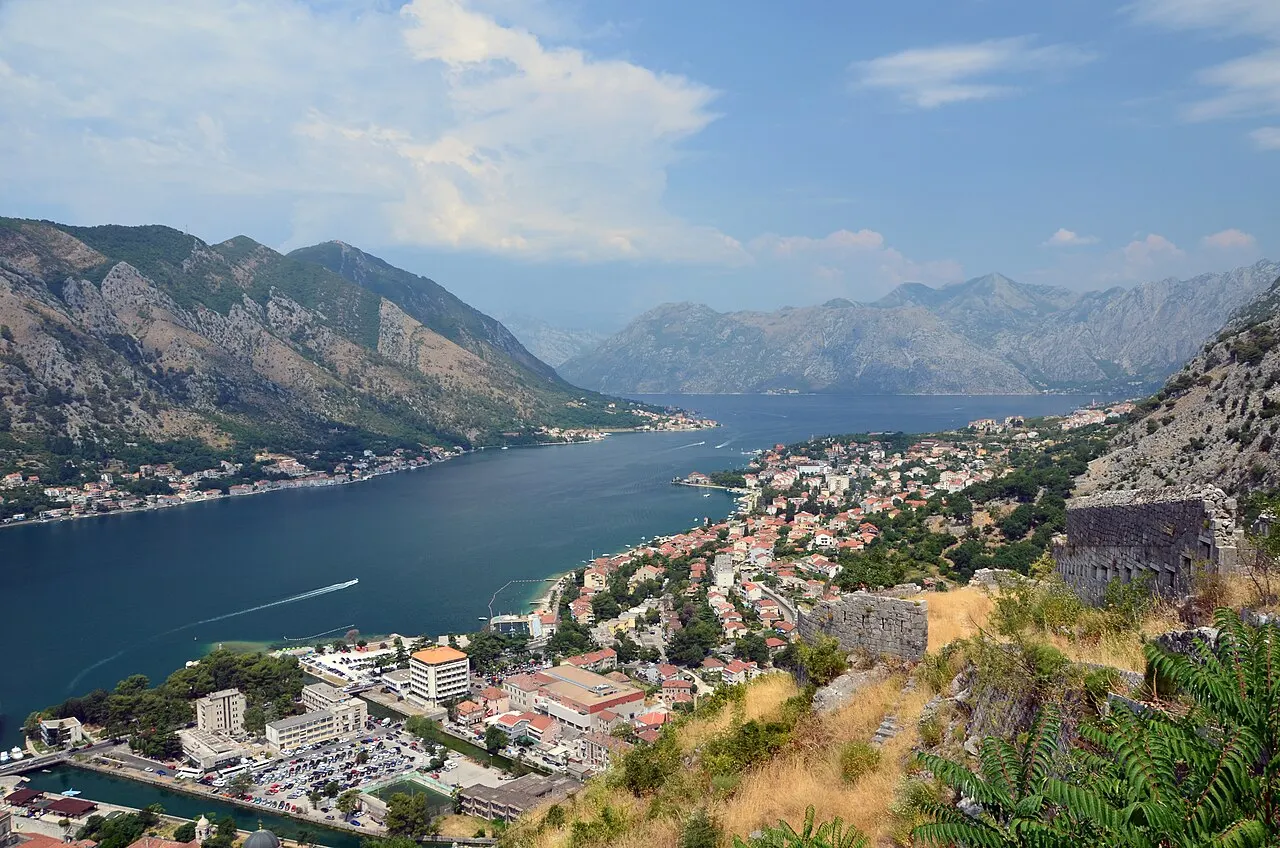


The Old Town: inside the walls
Sleeping inside the walls means waking up in the middle of the postcard — every lane a few steps from the cathedral, the squares yours in the early light before the first ship's tenders land. It is the most romantic and most atmospheric base on the bay, and for travellers without a car who want to wander on foot, it is hard to beat. The trade-offs are real, though: the stone lanes carry every sound, so late tables and early deliveries reach your window; there is no vehicle access, so luggage comes in on foot or by porter; and cruise crowds arrive on your doorstep by mid-morning.
It suits couples and short-stay sightseers more than drivers or light sleepers. If you do choose it, ask about noise and steps when you book — many Old Town rooms are up several flights with no lift.
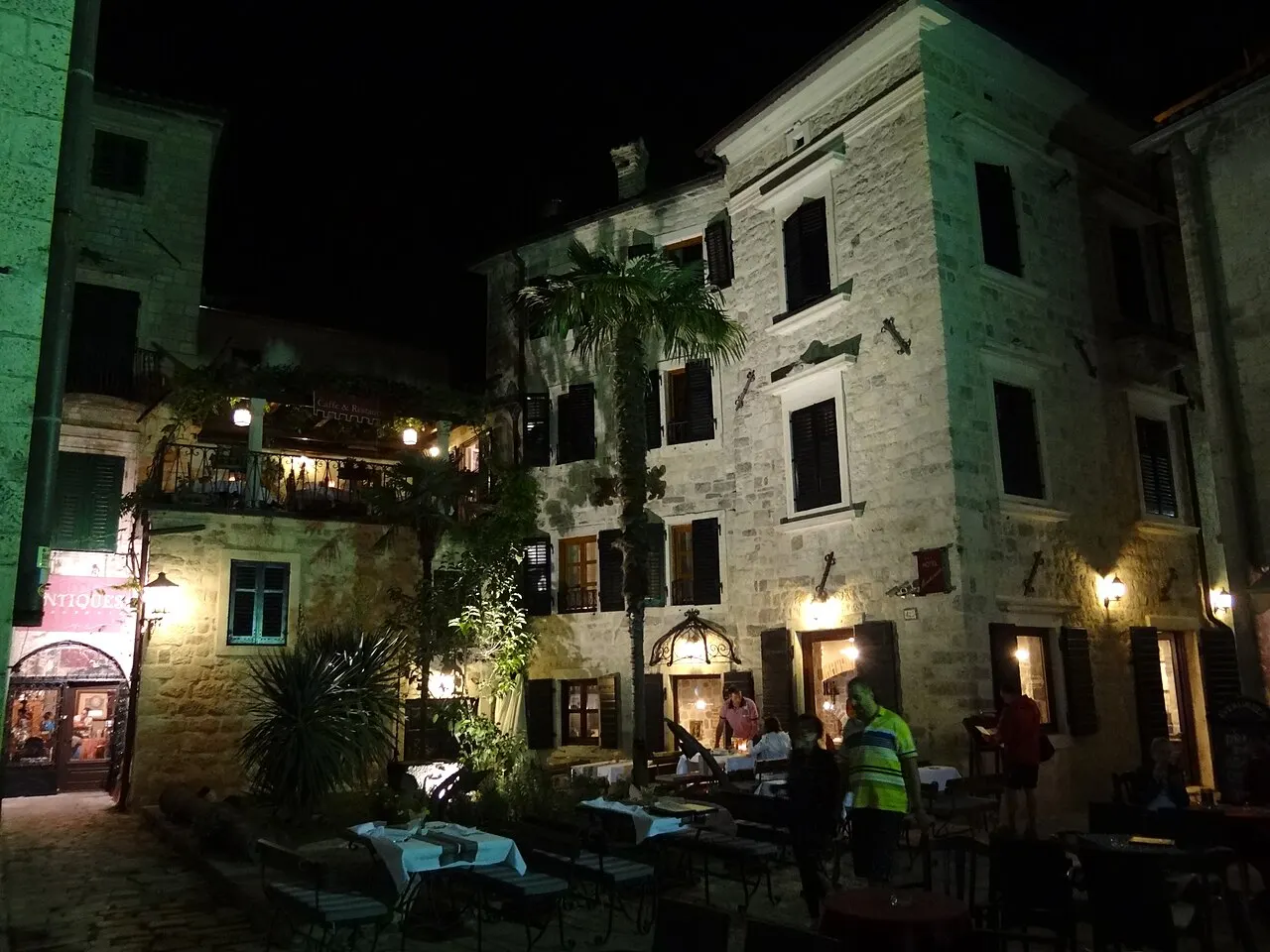
 Staying in Kotor Old Town
The full pros, cons, noise and stairs picture for staying inside the walls.
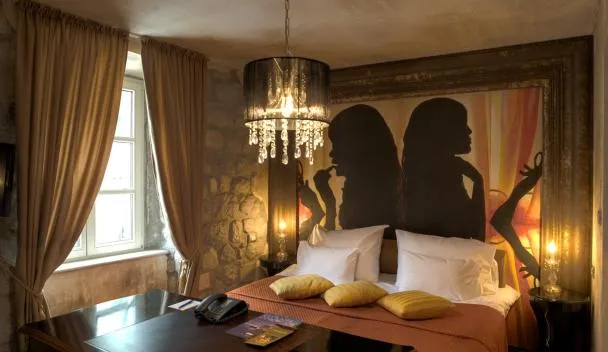 Researched stayBoutique Hotel Astoria
A researched Old Town stay for an atmosphere-first trip, with the historic-building trade-offs made clear.
Map pins
Map data © OpenStreetMap contributors · Tiles © OpenFreeMap
Dobrota, Muo and Prčanj: the quiet waterfront
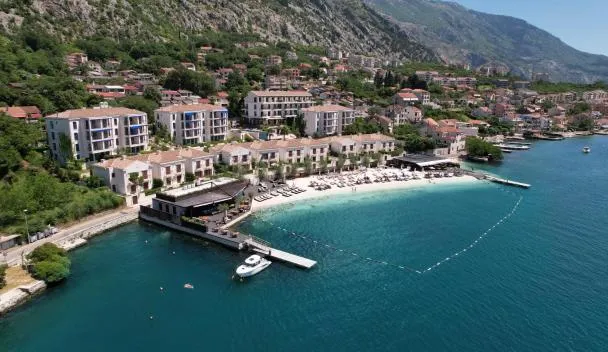
Move a little along the bay and the character changes fast. Dobrota stretches north from the Old Town along a calm waterfront, with a long promenade, swim spots off the rocks, easier parking and a flat 15-20 minute walk back to the Sea Gate. It is the natural pick for families, drivers and anyone who wants Kotor close but quiet, and it carries the bay's luxury palace-hotel scene along its shore.
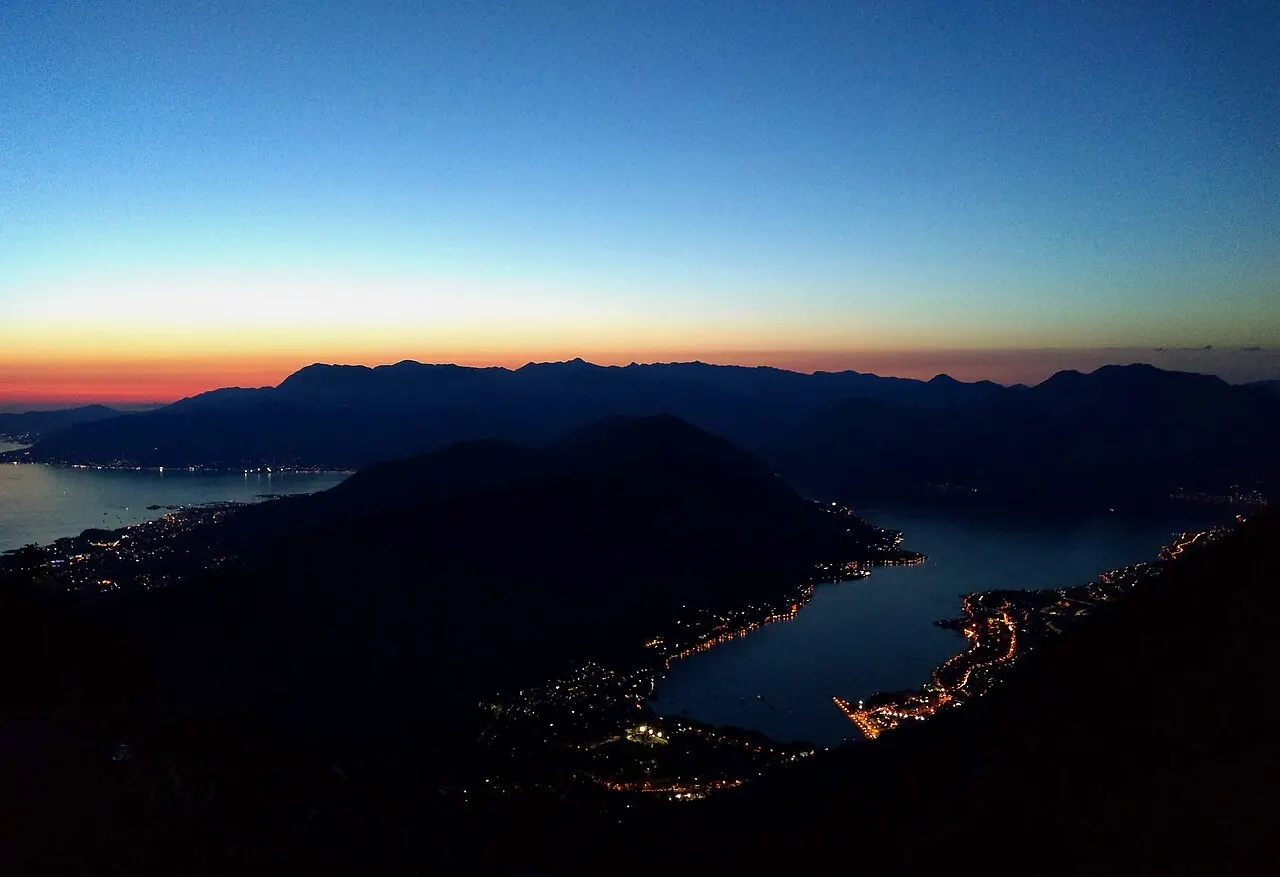
Across the water, Muo and Prčanj are quieter again — strung along the opposite shore with rooms that look straight onto the bay and Kotor glowing across it after dark. They are a short drive or boat from town and reward travellers who want stillness and a view over walkability. All three villages trade the Old Town's drama for calm nights and a car-friendly base, which for many visitors is exactly the right swap.
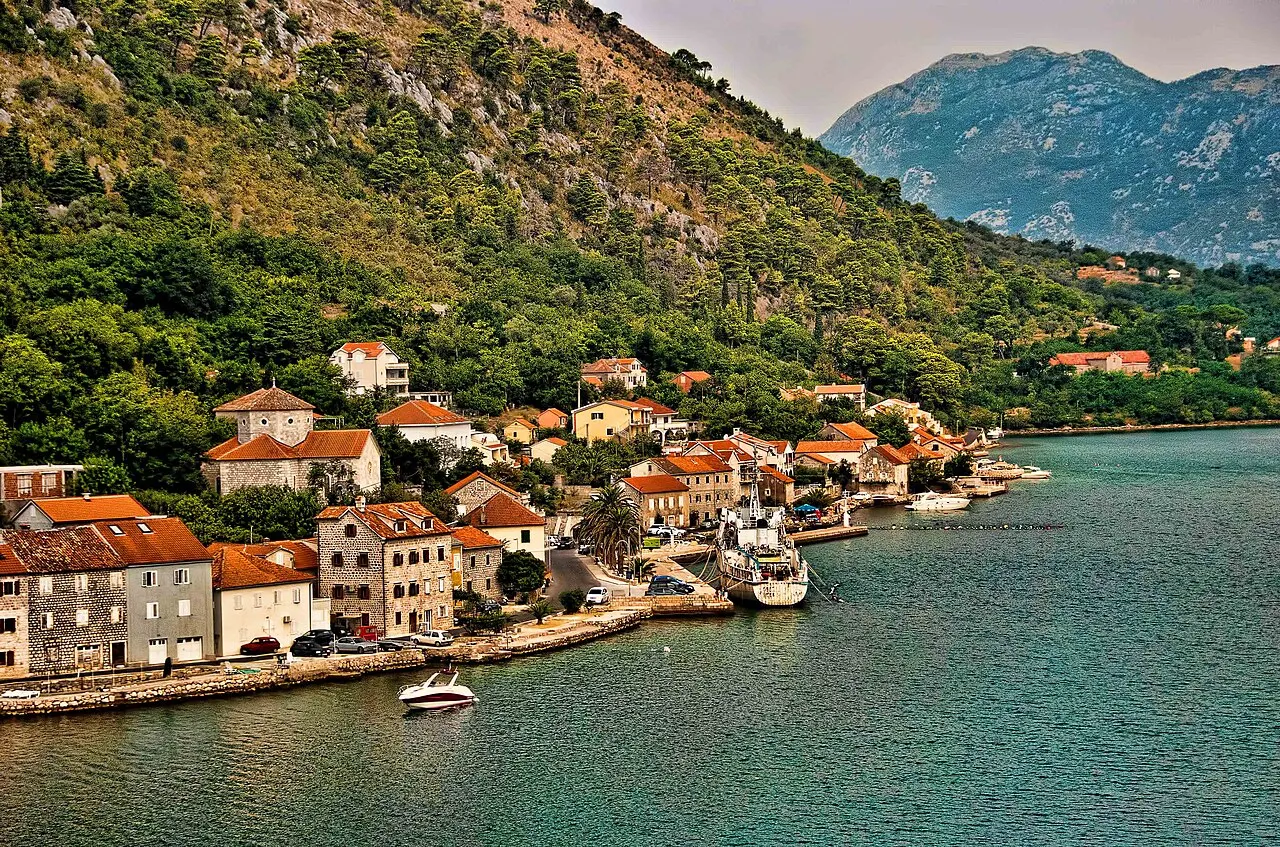
- Dobrota — quiet waterfront, swim spots, easy parking, flat walk into town; luxury palace hotels along the shore.
- Muo & Prčanj — calmer still, bay-view rooms, short drive or boat to Kotor; best for stillness and views.
- All three — better parking and quieter nights than the Old Town, at the cost of a short walk, drive or boat.


Perast, Tivat and Budva: the wider bay
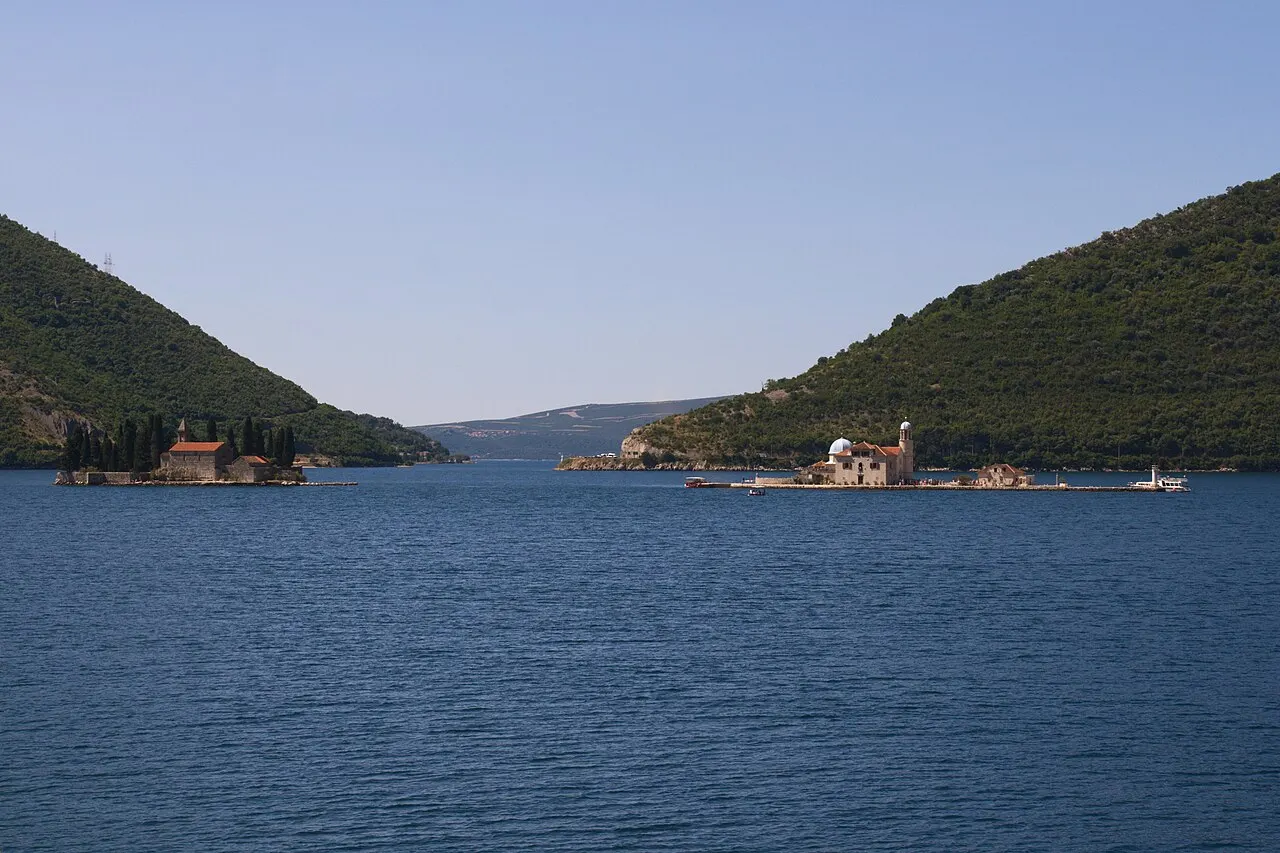
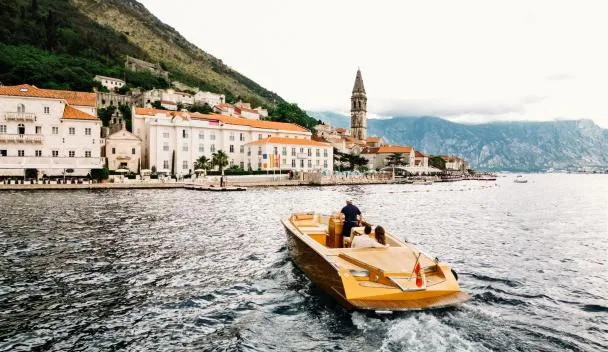
Further out, three very different bases suit very different trips. Perast, the baroque captains' town up the bay, is the slow, romantic choice — almost car-free, beautiful at dusk, with the island church of Our Lady of the Rocks on its doorstep. It suits couples and anyone happy to be a short drive or boat from Kotor in exchange for stillness and storybook setting. Tivat, on the far side of the Vrmac ridge, is the practical and luxury choice: Porto Montenegro's marina, fine dining, easy parking and the bay's nearest airport, at the cost of medieval atmosphere.
Budva, 30-40 minutes down the coast, is really a different holiday than a Kotor base — proper beaches, a busy walled old town and the Montenegrin coast's loudest nightlife. It works if you want sea-and-sand days with Kotor as a day trip, but it is not the Boka. Match the base to the trip: Perast for romance, Tivat for flights and yachts, Budva for beaches, and the inner bay for Kotor itself.


Car, walkability and noise — the deciding factors
The Old Town is car-free, so if you are touring Montenegro by car, a base with parking outside the walls almost always beats squeezing into the centre. Dobrota, Muo, Prčanj and Tivat are far easier for drivers; Perast keeps cars on its approach. If you will not have a car, the Old Town and Dobrota are the most self-sufficient on foot and by bus, while the opposite-shore villages and Perast lean on a drive or boat.
On noise: the Old Town is loudest, especially on cruise nights and in high summer, and the villages are progressively quieter the further you move from the Sea Gate. If you sleep lightly or are travelling with children, that alone may decide it. Whatever you choose, the bay's small size means you are never cut off — you can stay quiet and still be in the lanes for the magic of a near-empty early morning.

Where to stay at a glance
Use this quick card to match a neighbourhood to your trip — but verify the volatile details (room rates, parking charges, bus and ferry times) from an official or on-the-ground source before you book, as they change with the season.
- Old Town — most atmospheric, walkable, no car access, noisiest; best for couples and short sightseeing stays.
- Dobrota — quiet waterfront, easy parking, flat walk to town; best for families and drivers wanting Kotor close.
- Muo & Prčanj — calmest, bay-view rooms, short drive or boat; best for stillness and views.
- Perast — slow and romantic, car-light; best for couples and a baroque-bay base.
- Tivat / Porto Montenegro — marina, dining, easy parking, nearest airport; best for luxury and flights.
- Budva — beaches and nightlife, 30-40 min down the coast; a different holiday with Kotor as a day trip.
Budget tiers: what your money buys around the bay
Kotor spans the full range from backpacker hostel to palace hotel, and the neighbourhood often matters as much as the star rating. At the budget end, you find guesthouses and apartments in Dobrota and the bay villages, and a handful of hostels and simple rooms in and just outside the Old Town; staying a short bus ride from the centre, rather than inside the walls, is the single biggest saving most travellers can make without losing much time. Self-catering apartments — common right across the bay — stretch a budget further still, letting you shop the market and cook, which also suits families and longer stays.
In the middle, three- and four-star hotels and well-run boutique stays cluster in the Old Town, along the Dobrota shore and in Perast, where an atmospheric room with bay or lane views is the sweet spot for most couples. At the top, the bay has quietly become a luxury destination: restored captains' palaces inside the walls and along the water, marina resorts at Porto Montenegro, and spa hotels with pools that earn their keep in the summer heat. Prices climb steeply in July and August and around big cruise days, so the same room can cost very differently depending on when you book.
- Budget: hostels, guesthouses and apartments, cheapest a short bus ride out of the centre.
- Mid-range: boutique and 3-4 star hotels in the Old Town, Dobrota and Perast.
- Luxury: palace hotels, Porto Montenegro marina resorts and spa hotels with pools.


When to book and how the seasons change the bay
The bay's character — and its prices — swing hard with the calendar. July and August are peak: hot, busy, every cruise berth full, and the best-located rooms booked out weeks ahead, so reserve early if you must travel then and accept that the Old Town will be loud at night. May, June and September are the sweet spot for most visitors — warm enough to swim, the water and light at their best, the crowds thinner and the rates softer. By late autumn and winter the bay empties, many seasonal restaurants and boat operators wind down, and Kotor becomes a quiet, atmospheric town where an Old Town stay is calm rather than noisy.
Two booking habits pay off. First, if a quiet night matters to you in summer, lean toward Dobrota, the opposite-shore villages or Perast rather than the Old Town, and confirm whether a room faces a lane (noisy) or the water (calmer). Second, check what is actually open for your dates: a waterfront village can feel idyllic in June and a little shut-down in November. We keep specific rates, parking charges and exact opening windows out of this prose because they move with the season — verify them against an official or on-the-ground source before you commit.
- Peak July-August: hottest, busiest and dearest — book the good rooms well ahead.
- Shoulder May-June and September: the sweet spot for weather, light, crowds and value.
- Late autumn-winter: quiet and cheap, but many restaurants and boats wind down.