
Food & Drink in Kotor
The hub for eating and drinking in Kotor: buzara mussels and fresh fish off the bay, Njeguši prosciutto and cheese from the mountains, where to eat in the Old Town versus on the waterfront, cafés and wine bars, and a glass of Montenegrin Vranac by the sea.

Photo: Igor Ladigin / Unsplash
- ✓The bay's signature dish is buzara — mussels or shellfish simmered in white wine, garlic and olive oil, served in the pan with bread to soak up the broth.
- ✓From the mountains above town come Njeguši pršut (air-dried prosciutto) and firm Njeguši cheese — the heart of every Montenegrin meze board.
- ✓Fresh fish and seafood come straight off the Boka, usually grilled simply and priced by the kilo — ask what is local before you order.
- ✓Vranac is the robust Montenegrin red to order; Krstač and the crisp coastal whites suit a warm bay evening.
- ✓Eat a lane or two off the busiest squares for better value, head to the bay villages and Perast for the view, and book ahead on summer and cruise nights.
Say it like a local
Tap to hear each one spoken.
What to eat by the bay
Kotor's table is coastal, mountain-fed and unfussy, built on what the bay in front of it and the slopes behind it provide. The dish that tastes most of the place is buzara: mussels — or a mix of shellfish — simmered in white wine, garlic, olive oil and parsley, served in the pan with bread to mop up the broth. Order it to share, sleeves up, and you have the most local meal in town. Around it sits the rest of the Adriatic repertoire: black cuttlefish risotto, grilled squid, and whole fish brought to the table to be chosen and priced by weight.
The mountains supply the other half of the larder. Njeguši pršut — prosciutto air-dried and lightly smoked in the wind of the village on the serpentine road above Kotor — and the firm, salty Njeguši cheese turn up on every meze board, usually with olives, bread and a drizzle of local oil. Inland you will also meet heartier mountain cooking: slow-roasted lamb and veal cooked ispod sača (under a bell-shaped lid buried in embers), and hearty soups. Finish with a glass of Vranac, the country's deep, robust red, or a shot of rakija, the local fruit brandy.
- Start with buzara — the bay's signature mussels-in-the-pan dish.
- Build a meze board of Njeguši pršut, cheese, olives and oil from the mountains.
- Order fresh fish by the kilo, and a glass of Vranac to go with it.


Where to eat: squares, lanes, waterfront and Perast
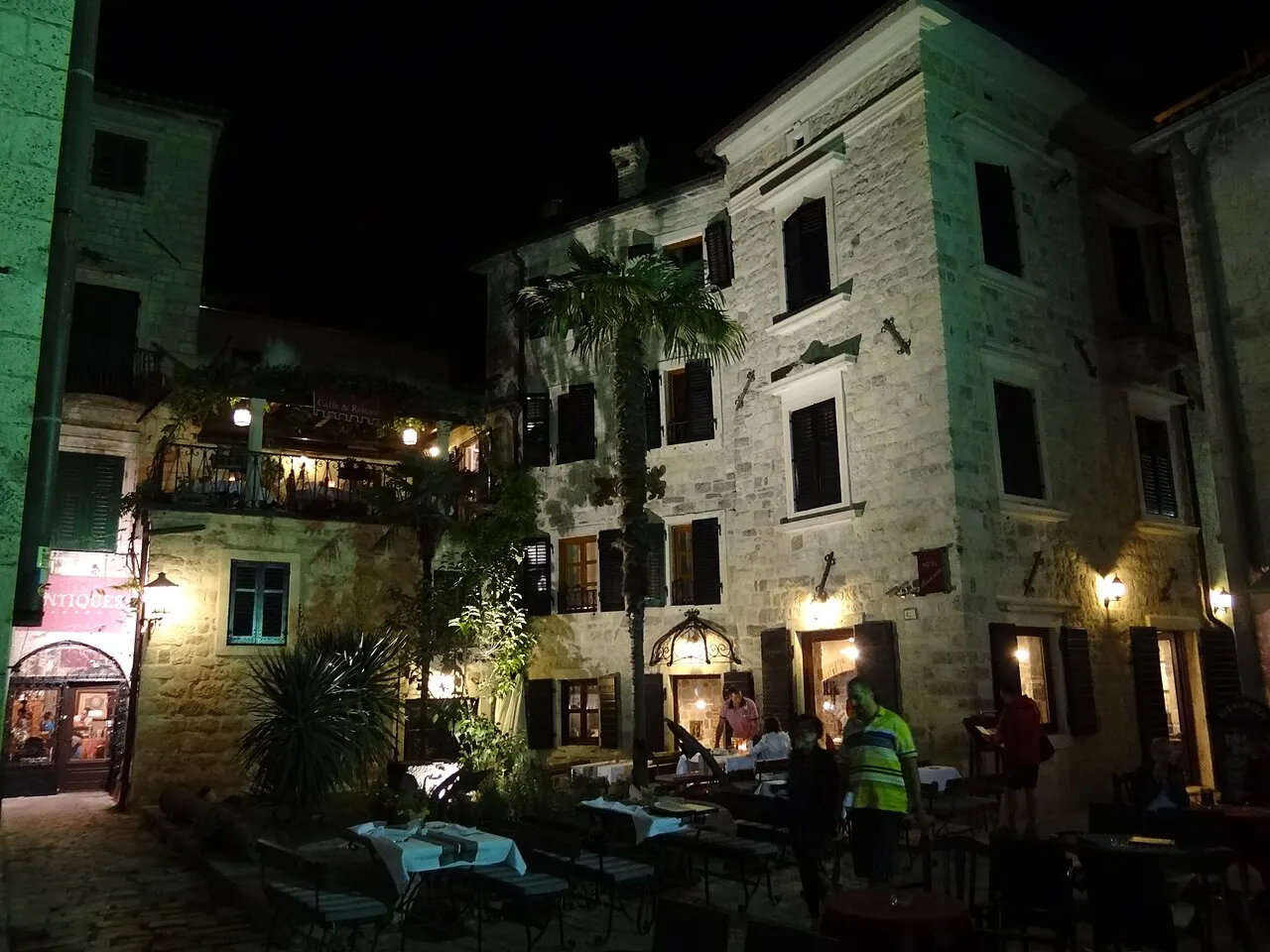
Where you sit shapes both the bill and the mood. The squares at the heart of the walled Old Town — Arms Square, Flour Square, the cathedral square — are the most atmospheric tables in Kotor and priced accordingly, full at midday with cruise crowds. Step one lane back off them and you usually eat better for less, in the quieter konobas tucked into the side alleys where locals and slow travellers go. After the day's last ship sails, those lanes turn lamplit and calm, and the Old Town becomes the place for a long, unhurried dinner.
Out along the bay, the character changes again. The waterfront restaurants of Dobrota, just north, and the konobas of Prčanj, Muo and Orahovac across the water serve the same seafood with more room, a breeze and a sunset over the mountains. And Perast — the baroque captains' town a short ride or boat up the bay — gives you waterside tables looking straight at Our Lady of the Rocks, which makes it the bay's most romantic place to eat at golden hour. Match the setting to the evening: squares for the buzz, lanes for value, the waterfront and Perast for the view.
 Best Restaurants in Kotor
The decision guide — by Old Town charm, waterfront views, romance, family ease and budget.
 Old Town Restaurants in Kotor
How to eat well inside the walls without settling for the busiest plaza tables.
 Perast Restaurants
Waterside tables facing the islands — the bay's most romantic dinner.
Map pins
Map data © OpenStreetMap contributors · Tiles © OpenFreeMap
Coffee, wine and the slow hours
Kotor runs on coffee, and a long sit over a single cup is a local right, not a waste of time. The Old Town squares fill with café tables from breakfast onward, and there is no better way to watch the town wake up — before the first ship — than a morning espresso on Flour Square with the cats winding between the chairs. Later, the wine bars come into their own: Montenegro's small but serious wine scene leans on Vranac for reds and Krstač for whites, and a glass of either with a plate of pršut and cheese is the easiest, most pleasurable early evening in town.
For the cheapest and most local eating, do not overlook the open-air market just outside the walls. A handful of euros buys bread, cheese, prosciutto, olives and fruit for a picnic that beats most restaurant lunches — carried to a bench by the bay or the Dobrota promenade, it is quietly one of the most romantic things to do in Kotor. Cards are widely taken, but smaller konobas, market sellers and boatmen still appreciate cash, so keep some on you.
- Linger over morning coffee on an Old Town square before the cruise crowds land.
- Try Montenegrin wine — Vranac (red) and Krstač (white) — at a wine bar with a meze plate.
- Build a cheap market picnic of bread, cheese, pršut and fruit to eat by the bay.


Eating well: timing, value and booking
Two simple habits separate a good Kotor food trip from a frustrating one. First, eat around the cruise rhythm: the Old Town is busiest and the tables fullest in the middle of a port day, so take your big meals early or late and use midday for a market picnic or a quieter bay-side lunch. Second, mind the gap between the squares and the lanes — the view from a main-square table is real, but so is the premium, and the same kitchen's cousin a few doors back often serves the same fish for less.
In high summer the good tables fill up, especially on cruise nights when the town is at capacity, so book ahead for dinner wherever you can. We keep specific prices, exact opening hours and the names of which places are 'best' out of the running prose, because both the bills and the businesses move with the season — verify them on the day, lean on the spoke guides for the current shape of the scene, and you will eat very well indeed by the bay.
- Take your main meals early or late to dodge the midday cruise crush.
- Eat off the main squares for value, or on the waterfront and in Perast for the view.
- Book ahead on summer and cruise nights, and carry some cash for small konobas.


Breakfast, bakeries and the Balkan sweet tooth
Mornings in Kotor belong to the bakery (pekara) as much as to the café. The Balkan staple is burek — a coil of thin filo filled with cheese, meat, spinach or potato, sold warm by weight and eaten on the move — alongside other pastries and the crusty bread that anchors a market picnic. A burek and a coffee is the cheapest, most local breakfast in town, and a pekara open early is a useful friend on a cruise morning when you want to be inside the walls before the crowds. Hotels and the square cafés serve a slower sit-down breakfast of eggs, pastries, cheese and ham if you would rather linger.
Save room for the sweet end of the table. Krofne (Balkan doughnuts), baklava soaked in syrup, and palačinke (thin pancakes) turn up across town, and there is usually good Italian-style gelato near the squares for the afternoon heat — a legacy of the bay's long Venetian connection. None of this is high cuisine, but it is the rhythm locals actually eat by, and following it costs little while keeping you out of the busiest restaurant windows.
- Grab a burek and coffee from a pekara for the cheapest, most local breakfast.
- Try krofne, baklava and palačinke for the Balkan sweet tooth.
- Gelato near the squares is an easy fix for the afternoon heat.


Families, dietary needs and a note on tap water
Kotor is an easy place to eat with a range of needs. Pizza, pasta and grilled meat make most konobas straightforward for children and fussy eaters, and the relaxed, share-the-table style of a meze board suits families well. Vegetarians do better than the meat-and-fish reputation suggests — grilled vegetables, fresh salads, cheese, bean and potato dishes, and cheese burek are all easy to find — though strict vegans should ask, as cheese and cured meat run through much of the local repertoire. English menus are common in the tourist-facing places, and staff in the Old Town are used to explaining dishes.
On drinks, Kotor's tap water is generally considered safe to drink, and many locals do, though plenty of visitors stick to bottled water by preference, especially in the heat. Coffee is taken seriously and slowly — a single espresso or a macchiato can hold a table for an hour without a raised eyebrow, and refusing the ritual is the one true tourist tell. Alcohol is relaxed and inexpensive by Western European standards, with local beer, Vranac and the fierce home-made rakija the everyday choices; the latter is often offered as a welcome or a digestif, and turning down a host's glass is gently frowned upon. As ever, we keep specific prices and the question of which exact places are 'best' to the spoke guides, because both shift with the season — but the shape of the scene above holds year-round, and following the local rhythm of slow coffee, an early or late main meal and a glass of something local will always serve you better than chasing a ranking.
- Pizza, pasta and grilled meat make most konobas easy for kids and picky eaters.
- Vegetarians do well; strict vegans should ask, as cheese and cured meat are everywhere.
- Tap water is generally considered safe; many visitors still prefer bottled in the heat.

