
Cats of Kotor
Why cats are part of the Kotor experience — the maritime backstory, where to find them in the Old Town, how to photograph and feed them responsibly, and the small charities that care for the bay's free-roaming cats.

Photo: Anastasiya D / Unsplash
- ✓Kotor's free-roaming cats are the town's unofficial mascots — you will meet them on windowsills, in squares and under café tables all over the walled Old Town.
- ✓The popular origin story ties them to the port: a maritime town needed cats against rats and mice, and sailors left their feline shipmates behind.
- ✓They are part of the place rather than a fenced attraction, so the best way to enjoy them is simply to wander and look — they find you.
- ✓Watch over the cats responsibly: admire and photograph freely, but feed only sensibly, never force handling, and support the local welfare charities.
- ✓A small charitable Cats Museum in the Old Town tells their story and funds their care.
The town that belongs to its cats
Walk through Kotor's stone gates and within minutes you will meet one: a cat stretched along a sun-warmed sill, another threading between the chair legs of a café, a third holding court in the middle of a square as if it owned the deeds. Kotor's free-roaming cats are not a sideshow here; they are part of the fabric of the place, as much a feature of the Old Town as the leaning clock tower and the cathedral bells. Visitors arrive for the walls and the bay and leave talking about the cats.
What makes them special is that they are not penned, ticketed or staged. They are simply there — well-fed, mostly relaxed around people, and entirely at home in the lanes. That easy coexistence gives the town a particular softness. The same alley that fills with cruise crowds at noon belongs, at dawn and dusk, to the cats, and watching the place through their unhurried rhythm is one of the quiet pleasures of a Kotor stay.
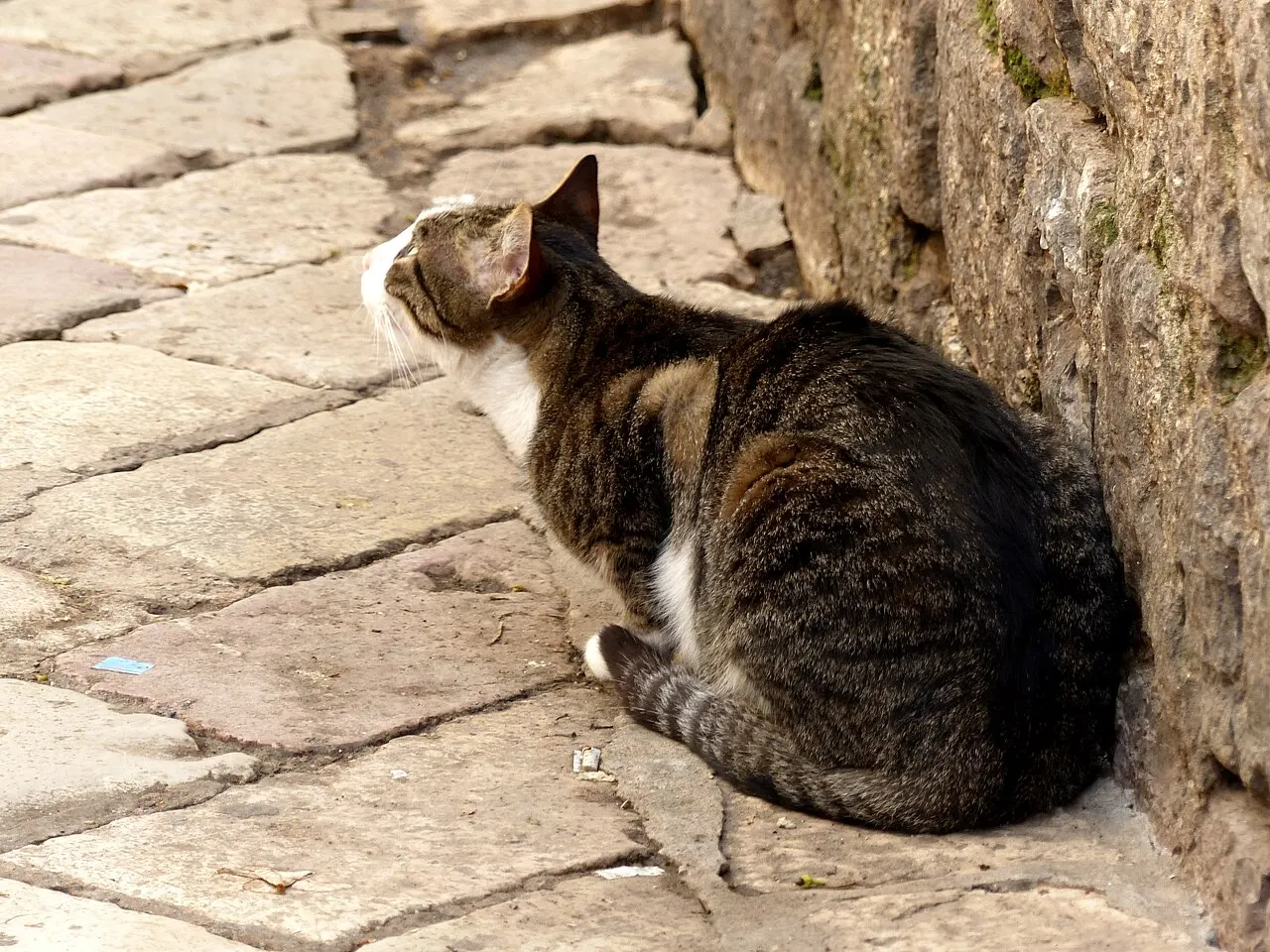

Why are there so many cats? The maritime backstory
The story most often told is a maritime one, and it is a good one even if it lives more in folklore than in documents. Kotor grew up as a walled port at the head of a sheltered bay, a place of warehouses, ships and traders. Ports breed rats and mice, and the time-tested defence against them was the cat. Ships carried cats as working crew, and a busy harbour town kept plenty more ashore. Sailors came and went; their cats often stayed, and bred, and the colony settled in for the long haul.
Whatever the precise history, the cats were useful and so they were tolerated, then welcomed. Generations of locals fed them, looked out for them, and folded them into the town's sense of itself. The result is what you see today: a confident, visible community of cats woven through daily life, regarded with affection rather than nuisance. The maritime origin is best enjoyed as the romantic explanation it is — plausible, beloved, and impossible to prove down to the last whisker.
Map pins
Map data © OpenStreetMap contributors · Tiles © OpenFreeMap
Where to find the cats
You do not really go looking for Kotor's cats — they find you. Still, some corners reliably reward a slow walk. They gather where it is warm and where there is food, which in practice means the cafés and squares of the Old Town, the shaded edges of the lanes, and the steps near the gates. Following them is itself a fine way to explore: a cat trail tends to lead you to the quiet, pretty corners away from the main flow.
Time of day matters. In the heat of a summer afternoon many cats retreat to shade and doze out of sight, so the lanes can look quieter than their reputation. Early morning before the cruise crowds, and the cool of the evening, are when they are most active and most visible — the same golden hours that flatter the town itself. Step a little off the busiest squares, too, and you will find the cats more relaxed and the scene more its own.
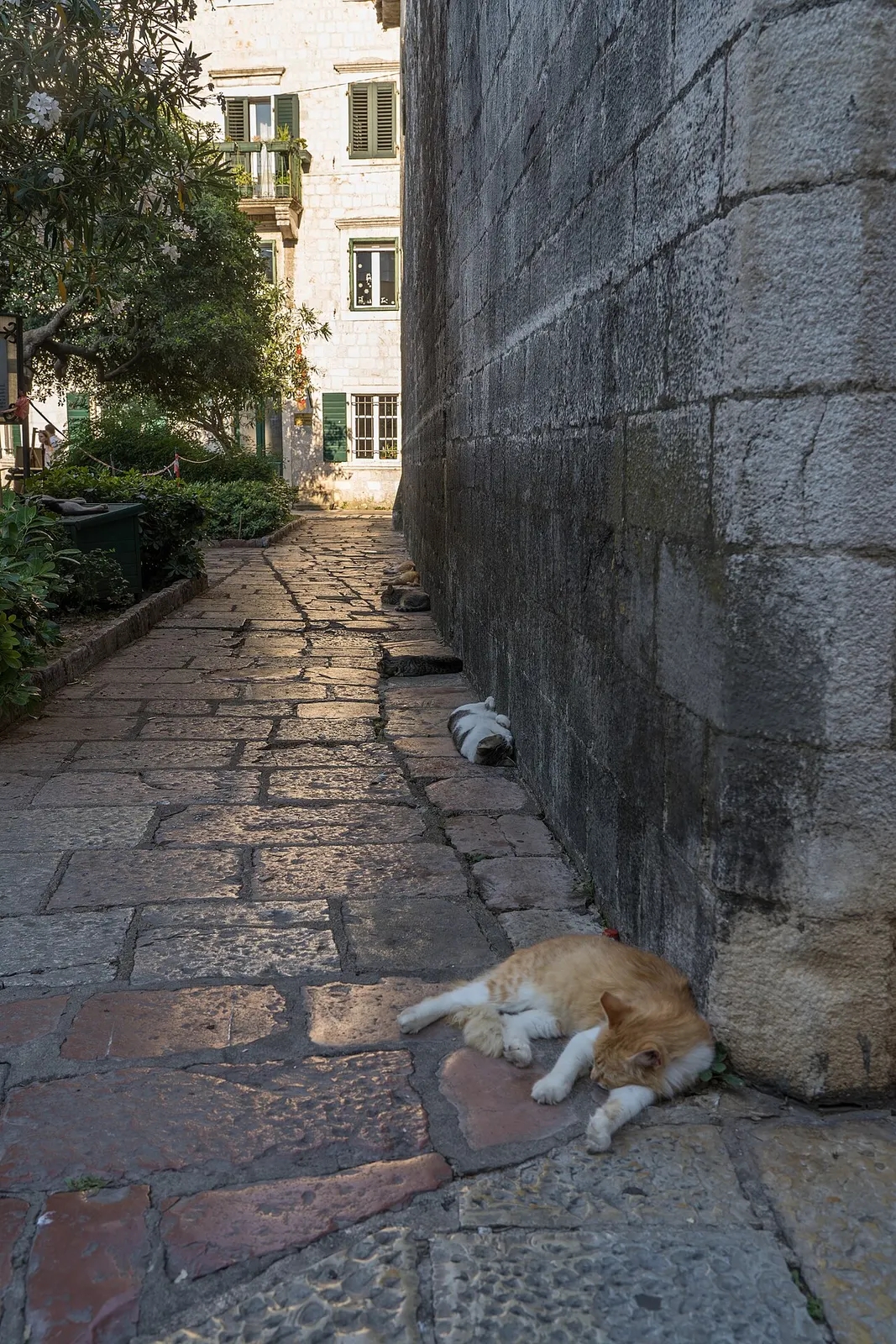
- Café terraces and squares — where warmth, scraps and laps are easiest to find.
- Near the Sea Gate and the lanes just inside the walls — high cat traffic.
- Shaded side alleys off the main squares — calmer cats, fewer people.
- Early morning and evening are the most active, most photogenic hours.
How to enjoy the cats responsibly
These are free-roaming community cats, not pets and not a petting zoo, and a little courtesy keeps both you and them happy. The golden rule is to let the cat set the terms. A cat that wants attention will come to you, lean in, and make it obvious; one that wants to be left alone will move off, and should be allowed to. Never corner, chase, pick up or pull a cat for a photo or a cuddle — it stresses the animal and can earn you a scratch.
Feeding is the trickier question. Locals and charities do feed the colonies, but casual visitor feeding can do harm: human snacks upset feline stomachs, half-eaten food draws pests, and crowds tossing scraps create squabbles. If you want to help, the kinder route is to support the welfare charities and the Cats Museum rather than hand out chips. And as always with strays anywhere, wash your hands afterwards, be gentle around children, and do not approach a cat that seems unwell or frightened.
- Let the cat come to you — admire and photograph, but don't grab, chase or carry them.
- Don't feed human snacks; if you want to help, donate to the welfare charities instead.
- Be calm and gentle, especially with children — these are wild-living animals, however friendly.
- Avoid any cat that looks sick, injured or scared; report serious cases to a local charity.
- Wash your hands after handling, and don't let kids kiss or carry the cats.
Photographing Kotor's cats
Kotor's cats are gifts to a camera: characterful faces, beautiful old stone backdrops, and pools of soft light in the lanes. The best shots come from patience and a low angle. Crouch to the cat's eye level rather than shooting down, wait for the animal to settle, and let the Old Town's textures — worn shutters, carved doorways, mossy steps — frame the portrait. The same gentle golden hours that suit the town suit the cats.
Shoot quietly and without flash, which startles them, and resist the urge to reposition a cat into a 'better' spot; the candid moment is always the better photograph anyway. If a cat walks off mid-shot, let it go — there will be another around the next corner. Treat the cats as collaborators rather than props and you will come away with the warm, lived-in images that make Kotor's feline reputation in the first place.
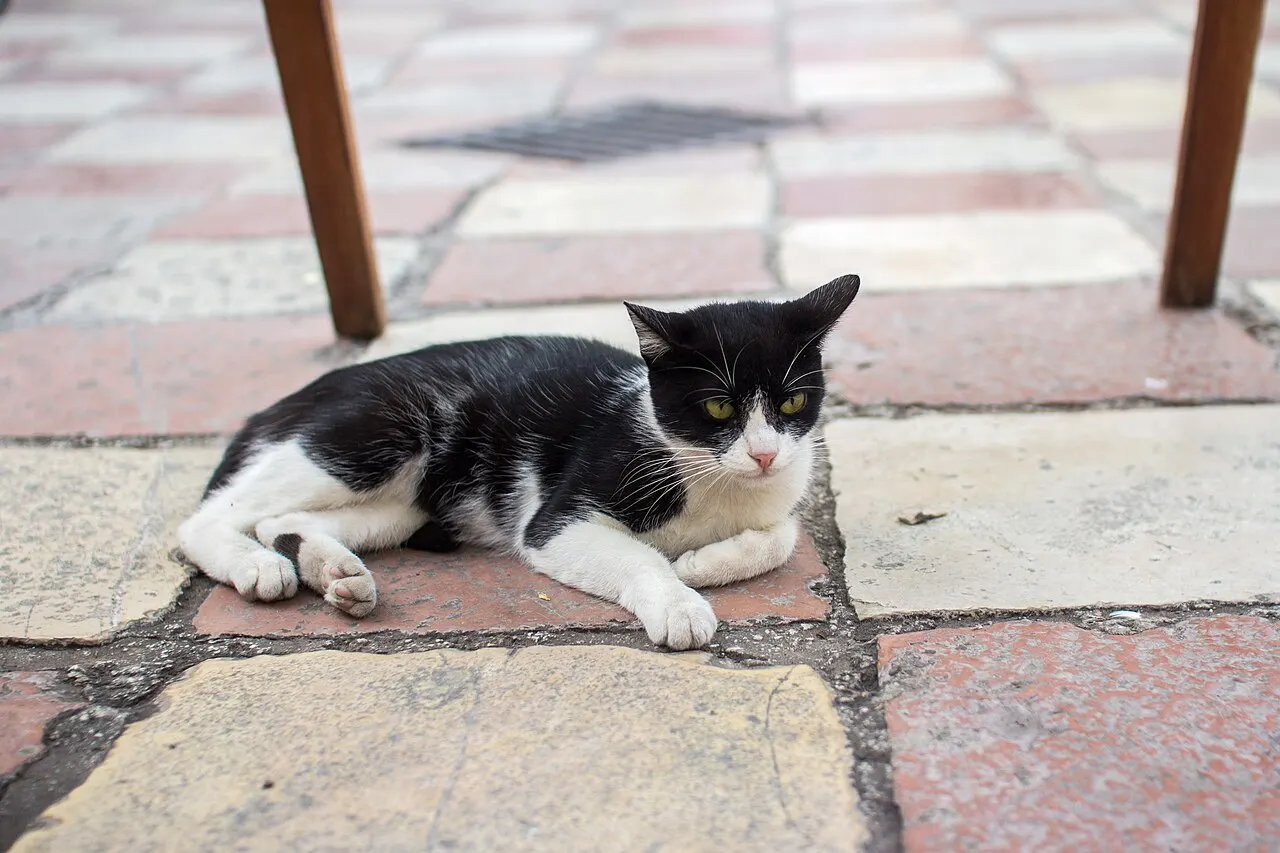
Helping the cats: charities and the museum
Behind the postcard-perfect scene is a real welfare effort. Local volunteers and small charities feed the colonies, run sterilisation programmes to keep numbers humane and healthy, and care for sick or injured animals. The cats look as relaxed and well as they do largely because of this quiet work, and visitors who fall for them can give something back.
The simplest way is the Cats Museum, which runs for charity so that its small entry donation flows to the cats' care; cat-themed souvenir shops around the Old Town often support the same cause. If you want to do more, look for the local welfare groups and donation points around town rather than feeding the cats yourself. It is the most effective kindness — and it means the cats will still be ruling these lanes for the next traveller who falls under their spell.
Cats of Kotor FAQ
Why are there so many cats in Kotor? The popular explanation is maritime: a busy walled port needed cats to control rats and mice, and sailors left their ships' cats behind. Over generations the colony settled in and locals adopted them as part of the town's identity. Treat the origin as cherished folklore rather than documented fact.
Are Kotor's cats friendly? Mostly, yes — they are well-used to people and many enjoy attention. But they are free-roaming animals, not pets, so let each cat decide whether it wants to be approached, and never force handling.
Can I feed or pet the cats? You can gently pet a willing cat that comes to you. Feeding is better left to the local charities; human snacks can make the cats ill and draw pests. To help, donate to the welfare groups or the Cats Museum instead.
Where are the best places to see them? All over the Old Town, especially around café terraces, the squares and the lanes near the gates. Early morning and evening are the most active times; summer afternoons see many cats dozing in the shade.
Is there a cat museum? Yes — a small, charitable Cats Museum in the Old Town, full of cat art and ephemera, whose proceeds support the community cats. It is a short, gentle stop ideal for a hot afternoon or a rainy day.
Are the cats healthy and looked after? Local volunteers and charities feed, sterilise and treat them, which is why they generally look well. If you spot a clearly sick or injured cat, report it to a local welfare group rather than intervening yourself.


Kotor Cats Museum
A playful but practical guide to Kotor's small Cats Museum in the Old Town — what's inside, who it's for, what it costs, and how to fit it into a lighter, cat-themed loop of the walled town.
Read guide
Kotor with Kids: Things to Do
Family-friendly Kotor — the car-free Old Town and its cats, an easy bay boat to Perast, swimming off the bay, the Dobrota aquarium, the cable car, and how to pace a day around the heat with younger children.
Read guideKotor Old Town: A Guide to Stari Grad
How to explore Kotor's walled Old Town (Stari Grad): the gates, the squares you navigate by, St Tryphon Cathedral, the small churches, the cats, the museums and the quiet corners away from the crowds.
Read guideMore in Things to Do
6
Aquarium Boka
Visit Aquarium Boka, Montenegro's public aquarium in Dobrota just north of Kotor's Old Town — what's inside, family timing, tickets, the species on show, and the flat bay-side walking route to reach it.
Read guide
Bay of Kotor Scenic Drives
The best drives around the Bay of Kotor: the shoreline loop through Perast and the captains' villages, the white-knuckle Kotor–Lovćen serpentine, the Kamenari–Lepetane ferry shortcut, plus photo stops, summer traffic and driving cautions for each.
Read guide
Beaches Near Kotor
Where to swim near Kotor: the honest truth about the inner-bay town beaches, the quieter bay swims at Dobrota, Prčanj, Stoliv and Muo, the clear-water Luštica coves like Žanjice, and the sandy options down the coast at Budva.
Read guideBest Tours in Kotor
Which Kotor tour to book and why: Old Town walking tours, the fortress climb guided or solo, bay boat trips to Perast and the Blue Cave, food and wine tours, Lovćen and Cetinje mountain day trips, cruise shore excursions, and private boats and yacht charters.
Read guide
Best Viewpoints in Kotor
The best viewpoints over the Bay of Kotor, ranked by effort and payoff — St John Fortress, the halfway church, the Ladder of Kotor, the cable car, the Vrmac ridge, the serpentine roadside pullouts and the angle from the water.
Read guideDobrota Promenade
The waterfront walk north of Kotor: how to stroll, swim and café-hop along Dobrota's seaside promenade, past captains' palaces and bathing ladders, with the walled Old Town and the mountains across the bay the whole way.
Read guide