
Dobrota Promenade
The waterfront walk north of Kotor: how to stroll, swim and café-hop along Dobrota's seaside promenade, past captains' palaces and bathing ladders, with the walled Old Town and the mountains across the bay the whole way.

Photo: Polina Rytova / Unsplash
- ✓Dobrota is the long ribbon of waterfront that runs north from Kotor's Old Town along the bay — flat, scenic and almost entirely traffic-calmed along its seaward edge.
- ✓The promenade is the village's spine: a near-continuous shoreline path past old stone captains' houses, votive churches and modern villas, with the bay on one side the whole way.
- ✓It is the easiest beautiful walk in Kotor — no climbing, no ticket, no opening hours — and the most convenient place to swim if you are staying in or near the Old Town.
- ✓Two grand bay churches anchor the village: St Eustace (Sveti Stasije) and St Matthew (Sveti Matej), reminders of Dobrota's seafaring fortune.
- ✓Waterfront konobas and cafés line the route, so you can turn the walk into a slow half-day of swims, coffee and a long lunch over the water.
- ✓Go early or late for the best light and the calmest water; bring water shoes, as you swim off ladders, rocks and concrete platforms rather than sand.
What Dobrota is, and why you walk it
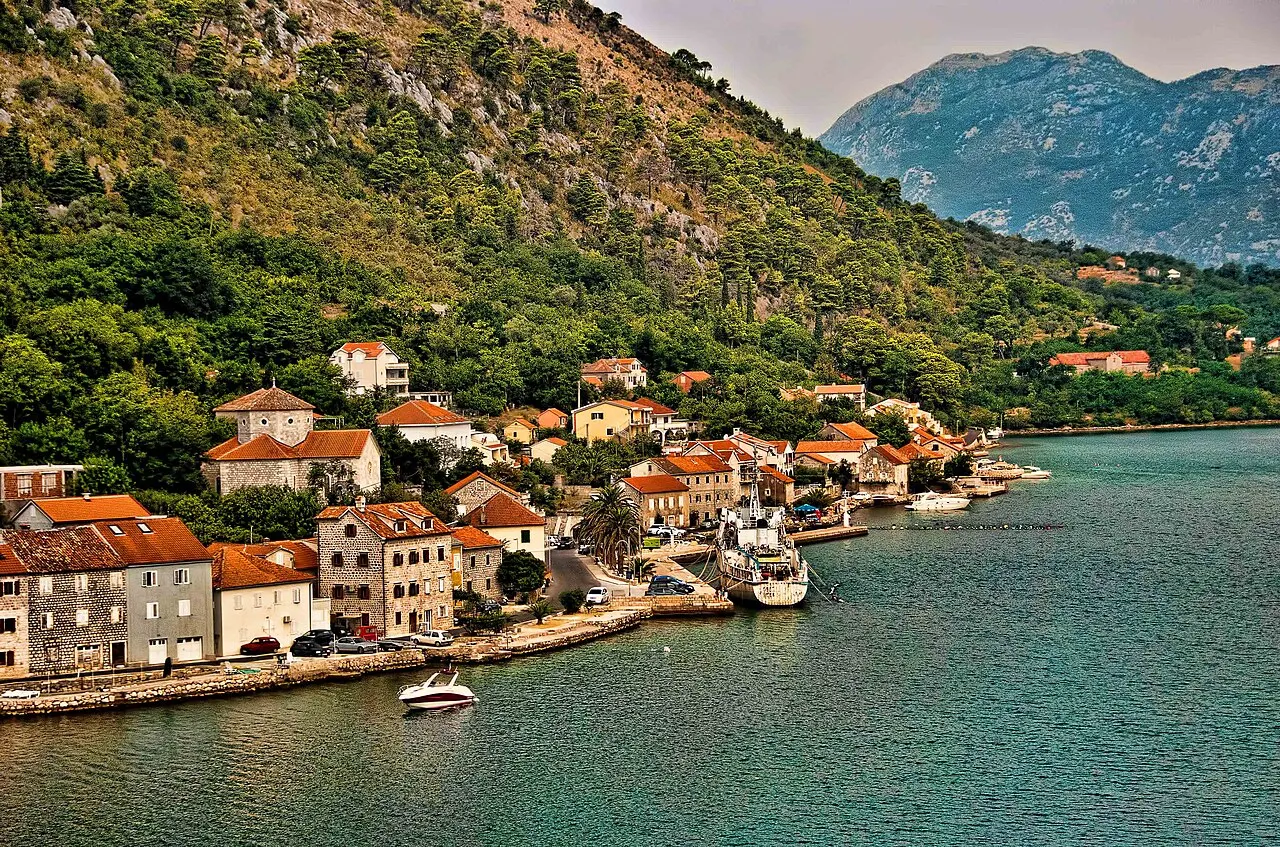
Dobrota is the bay suburb that begins where Kotor's Old Town ends and unspools northward along the water for several kilometres toward Perast and the Verige strait. For centuries it was a village of sea captains and shipowners, and its long, thin shape tells you why: everyone wanted a house on the water, so the settlement strung itself out along the shoreline rather than gathering into a square. The result, today, is the loveliest easy walk in the whole bay — a flat seaside promenade that hugs the edge of the water with the mountains rising sheer across it.
Where the climb to St John Fortress is the effortful, ticketed, heart-pounding side of Kotor, Dobrota is its gentle opposite. There is nothing to pay, nothing to book and nothing to climb. You simply step out of the Old Town, turn north along the bay, and walk for as long as the mood holds — past stone palaces and bathing ladders, with the walled town shrinking behind you and the water glassy at your feet. It is the stretch locals walk in the evening, swimmers slip into at dawn, and couples drift along at sunset.
Walking the promenade, end to end
The promenade is not a single tidy path with a start and finish so much as a near-continuous shoreline walk that you join wherever you like and follow as far as you please. The natural starting point is the northern edge of the Old Town, near the marina and the bus station: from there a seaside path leads north, threading between the bay on your right and a ribbon of old houses, gardens and small chapels on your left. The further you go, the quieter and more residential it becomes.
Distances are gentle. A short out-and-back of half an hour gets you into the heart of Lower Dobrota with its first churches and swimming spots; an hour each way takes you deep into the village toward Upper Dobrota, where the houses thin and the bay opens out toward Perast. There is no need to walk it all — the pleasure is in choosing a turnaround point, a café or a bathing ladder, and ambling back. The whole way is flat and pram-friendly, though the surface shifts between paved promenade, stone, and short stretches alongside the bay road, so watch your footing where the path narrows.
One landmark worth folding into the walk sits right on this stretch: Aquarium Boka, Montenegro's small public aquarium, a few steps off the Dobrota waterfront. Its tanks of Adriatic and Bay of Kotor sea life make an easy, family-friendly stop and a natural turnaround point — and, being indoors, a welcome one on a hot afternoon or a wet day.
Because the village hugs the water, the view never lets up. Look back and the Old Town sits ringed by its zigzag of fortress walls climbing the mountain; look across and the opposite shore villages of Muo and Prčanj catch the light; look down and the water is so clear you can count the stones. It is the kind of walk where you keep stopping — which is exactly the right way to do it.
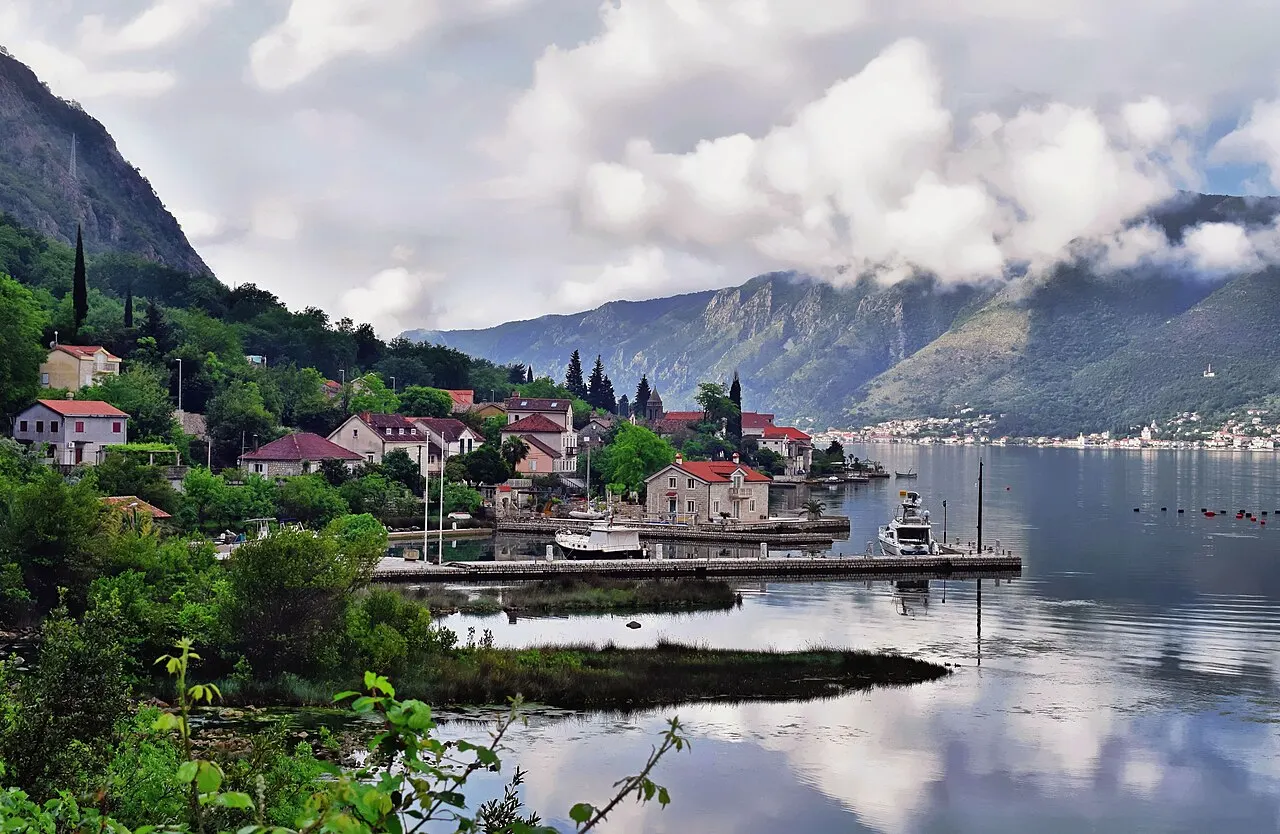
- Start near the Old Town's northern edge by the marina and bus station, then head north along the water.
- Short stroll: ~30 minutes into Lower Dobrota and back, past the first churches and swimming spots.
- Longer amble: ~1 hour each way into Upper Dobrota, where the bay opens toward Perast.
- Aquarium Boka, Montenegro's small public aquarium, sits a few steps off the promenade — an easy, indoor family stop.
- Flat and pram-friendly, but the surface varies — paved promenade, stone and short road-side stretches.
 Photography Spots in Kotor
The Dobrota shore gives the classic side-on view of the walled town and its fortress walls.
 Aquarium Boka
Montenegro's small public aquarium, a few steps off the Dobrota promenade — an easy indoor family stop.
 Kotor Walking Tours
Pair the in-town walking routes with a flat bayside stroll out to Dobrota.
Map pins
Map data © OpenStreetMap contributors · Tiles © OpenFreeMap
The churches and palaces along the way
Dobrota wears its history on the waterfront. The captains and shipowners who made fortunes in the 18th and 19th centuries poured them into grand stone houses on the shore and into the churches that still anchor the village. The two you cannot miss are St Eustace (Sveti Stasije) in Lower Dobrota and St Matthew (Sveti Matej) in Upper Dobrota — both large, baroque-leaning bay churches whose scale feels almost surprising for so strung-out a village, until you remember the money that built them.
Their treasures came from the sea and from devotion: votive offerings, embroidered work and silverwork given by sailors and their families in thanks for safe returns. The churches are not always open on a casual passing visit, and hours can be irregular, so treat a look inside as a bonus rather than a fixed plan — verify any specific opening times locally before you build a day around them. Between the churches, keep an eye out for the older captains' palaces: weathered stone facades, walled gardens and private bathing steps that tell the same story of a community that lived by and for the bay.
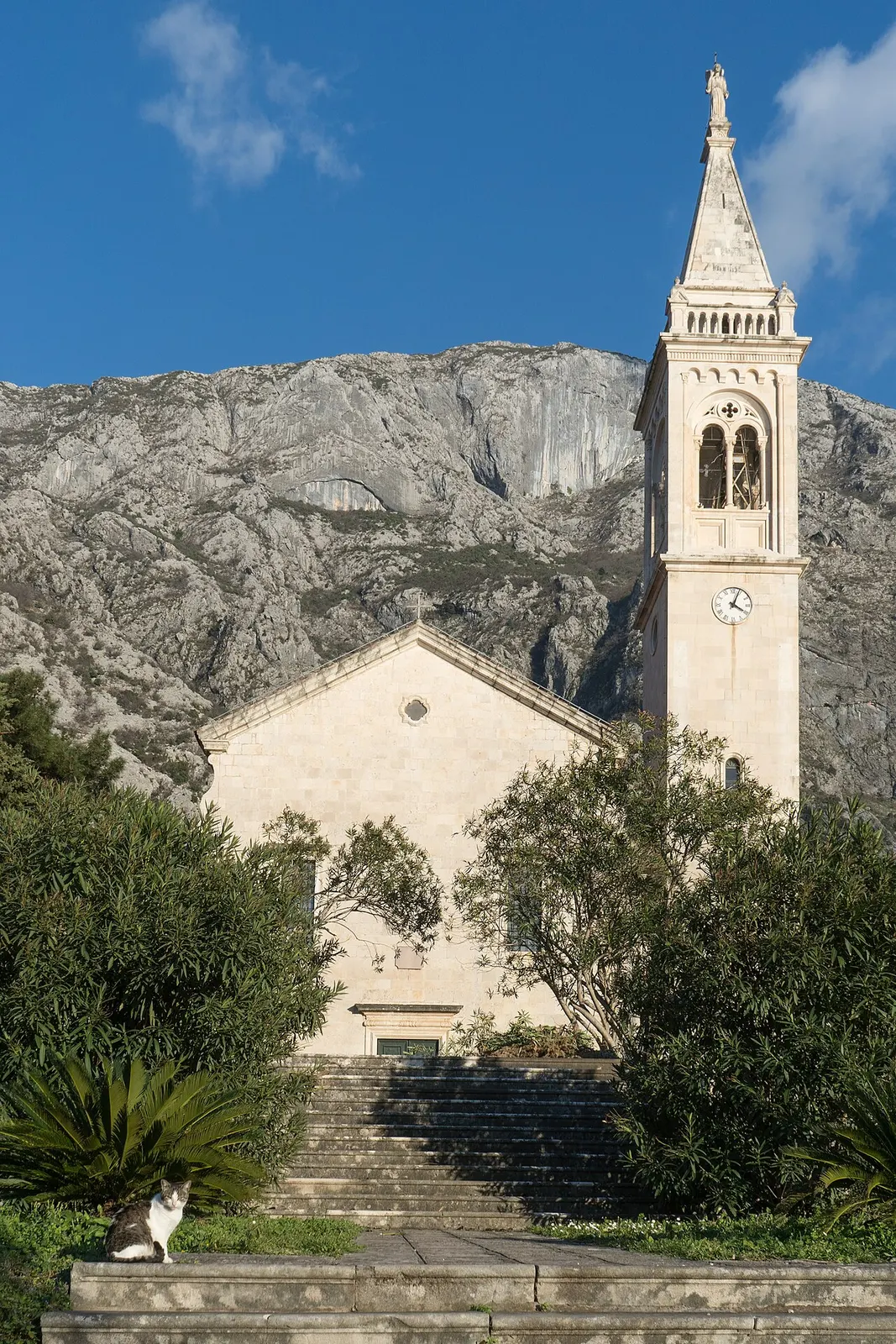
- St Eustace (Sveti Stasije) — the landmark church of Lower Dobrota, built on seafaring wealth.
- St Matthew (Sveti Matej) — its Upper Dobrota counterpart further north along the shore.
- Both hold votive offerings and treasures given by sailors; opening hours are irregular — verify locally.
- Watch for the old captains' palaces in between — stone facades, walled gardens and private bathing steps.
Swimming off the Dobrota shore
Dobrota is where most people staying near the Old Town actually swim. The inner Bay of Kotor has no broad sandy beach — it is a deep, steep-sided ria, a flooded river canyon — so swimming here means slipping into clear, deep water from ladders, flat rocks and concrete bathing platforms rather than wading off sand. Along the Dobrota promenade those spots come thick and fast: small pebble strips, swimming steps below the old houses, and platforms where locals lay out towels and dive straight into the bay.
The water is calm, clear and surprisingly deep close in, and it stays swimmable well into autumn once summer has warmed it. That depth is the one caution: the bottom drops away quickly, which makes it lovely for confident swimmers and a place to supervise children carefully rather than let toddlers paddle in the shallows. Bring water shoes for the pebbles and rock, pack your own shade and water for the quieter platforms, and check before you settle whether a particular spot is free public shoreline or part of a café or villa's setup.
- Swim off ladders, flat rocks and concrete platforms — no sand; bring water shoes.
- Water is calm, clear and deep close in, and stays swimmable into autumn.
- It deepens fast — good for confident swimmers, less so for tiny paddlers.
- Pack your own shade and water for the quieter spots; check whether a spot is free or part of a café/villa.
Coffee, konobas and a slow waterfront lunch
Half the joy of Dobrota is that the walk and the swim come with a steady supply of places to stop. Waterfront cafés and konobas — family seafood taverns — are dotted along the promenade, many with terraces built right out over the water on stilts and decking. This is the place to slow a Kotor day right down: a morning coffee with the bay at your feet, a swim, then a long lunch of the bay's own cooking as the boats drift past.
The food here is classic Boka coastal fare. Order buzara — mussels or mixed shellfish simmered in white wine, garlic and olive oil and served in the pan with bread — or fresh fish grilled simply and priced by the kilo, with a glass of Montenegrin Vranac or a crisp local white. Eating along the Dobrota shore is generally calmer and often better value than the busiest squares inside the Old Town walls, with the unbeatable bonus of the view. In high summer the best waterfront tables fill up, so it is worth booking ahead for dinner, especially on cruise nights when the whole bay is busy.
- Waterfront cafés and konobas line the promenade, many with terraces built out over the bay.
- Order buzara, fresh fish by the kilo and a glass of Vranac for the full Boka spread.
- Generally calmer and often better value than the busiest Old Town squares.
- Book ahead for dinner in high summer and on cruise nights; carry some cash for smaller konobas.


Timing it well: light, crowds and the seasons
Dobrota has no opening hours, which means you can choose your moment. The promenade is at its loveliest at the two soft ends of the day. Early morning brings glassy water, cool air and the village half-asleep — the swimmers' hour. Late afternoon and the golden hour wash the Old Town and the fortress walls across the bay in warm light, and the evening passeggiata fills the path with locals out for a stroll. Midday in summer is the one time to skip a long walk here: the bay reflects the heat and the shadeless stretches bake.
The seasons shift the mood, too. Spring and autumn are arguably Dobrota's best — warm enough to swim by late spring and into autumn, but without the peak crowds and heat of July and August. Winter is quiet and atmospheric but wet; Kotor is one of Europe's rainier towns in the cold months, so pack for showers if you visit off-season. Whenever you come, the great advantage of Dobrota is that it absorbs the day's flexibility: it is the perfect place to fill the hours when the cruise crowds pack the Old Town, or to unwind after the climb, with nothing more demanding than a walk, a swim and a coffee over the water.
- Best at first light (calm, cool, the swimmers' hour) and at golden hour (warm light on the Old Town across the bay).
- Skip a long midday walk in summer — the shadeless waterfront bakes.
- Spring and autumn are ideal: swimmable water without peak heat and crowds.
- Winter is quiet but wet — Kotor is one of Europe's rainier towns off-season, so pack for rain.

Dobrota promenade at a glance
Use this quick card to plan a Dobrota stroll. The walk, the swim and the view are free and evergreen; the volatile details — church opening hours, café and konoba prices, and whether any given bathing spot is free public shoreline or part of a business — change, so verify them locally before you build a day around them.
- What it is: a flat seaside promenade running several kilometres north of Kotor's Old Town along the bay.
- Cost & hours: free, open and unticketed — walk and swim any time.
- Getting there: walk north from the Old Town's northern edge (by the marina/bus station); easy on foot or a short drive.
- Swimming: off ladders, rocks and concrete platforms — bring water shoes; the bay deepens fast.
- Eat & drink: waterfront konobas and cafés along the route; book ahead in summer.
- Don't miss: the bay churches of St Eustace and St Matthew, Aquarium Boka, and the side-on view of the walled town.
- Best time: early morning or golden hour; spring and autumn over peak summer.
- Verify locally: church hours, café prices and free-vs-managed bathing spots.
Things to Do in Kotor
The best things to do in Kotor: the walled Old Town and its squares, St Tryphon Cathedral, the climb to St John Fortress, the cats, the viewpoints and a boat out onto the bay.
Read guide
Beaches Near Kotor
Where to swim near Kotor: the honest truth about the inner-bay town beaches, the quieter bay swims at Dobrota, Prčanj, Stoliv and Muo, the clear-water Luštica coves like Žanjice, and the sandy options down the coast at Budva.
Read guide
Bay of Kotor
How to explore the Bay of Kotor: the shape of the Boka's four linked basins, and the five ways to experience it — by boat, by bus, by car, on the waterfront on foot, and from a viewpoint above.
Read guideMore in Things to Do
6Aquarium Boka
Visit Aquarium Boka, Montenegro's public aquarium in Dobrota just north of Kotor's Old Town — what's inside, family timing, tickets, the species on show, and the flat bay-side walking route to reach it.
Read guide
Bay of Kotor Scenic Drives
The best drives around the Bay of Kotor: the shoreline loop through Perast and the captains' villages, the white-knuckle Kotor–Lovćen serpentine, the Kamenari–Lepetane ferry shortcut, plus photo stops, summer traffic and driving cautions for each.
Read guideBest Tours in Kotor
Which Kotor tour to book and why: Old Town walking tours, the fortress climb guided or solo, bay boat trips to Perast and the Blue Cave, food and wine tours, Lovćen and Cetinje mountain day trips, cruise shore excursions, and private boats and yacht charters.
Read guide
Best Viewpoints in Kotor
The best viewpoints over the Bay of Kotor, ranked by effort and payoff — St John Fortress, the halfway church, the Ladder of Kotor, the cable car, the Vrmac ridge, the serpentine roadside pullouts and the angle from the water.
Read guide
Cats of Kotor
Why cats are part of the Kotor experience — the maritime backstory, where to find them in the Old Town, how to photograph and feed them responsibly, and the small charities that care for the bay's free-roaming cats.
Read guide
Hidden Gems in Kotor
The quieter side of Kotor: the lesser-trodden squares and lanes inside the walls, small churches like St Luke and St Nicholas, the bay-shore corners of Dobrota and Prčanj, the Vrmac ridge views, and the low-crowd bay stops the day boats skip.
Read guide