
Kotor's UNESCO Heritage, and How to Visit It Well
What UNESCO World Heritage status means in Kotor: why the Natural and Culturo-Historical Region of Kotor was listed in 1979, which areas it covers, why it was once endangered, and how visitors can tread lightly.

Photo: olga brajnovic / Unsplash
- ✓Kotor's listing is the 'Natural and Culturo-Historical Region of Kotor' — it protects not just the walled town but the wider bay landscape around it, inscribed by UNESCO in 1979.
- ✓The site was placed on the List of World Heritage in Danger after the 1979 earthquake, then removed in 2003 once restoration had succeeded.
- ✓What's protected is a living place: people still live, work and worship inside the walls, so it is a town to respect, not a stage set.
- ✓The biggest modern pressures are cruise-day crowding, over-tourism and unmanaged development around the bay — areas where your choices genuinely help.
- ✓Travelling in the shoulder seasons, walking at the quiet edges of the day, and spending in local businesses are the simplest ways to reduce your footprint.
What 'UNESCO Kotor' actually means
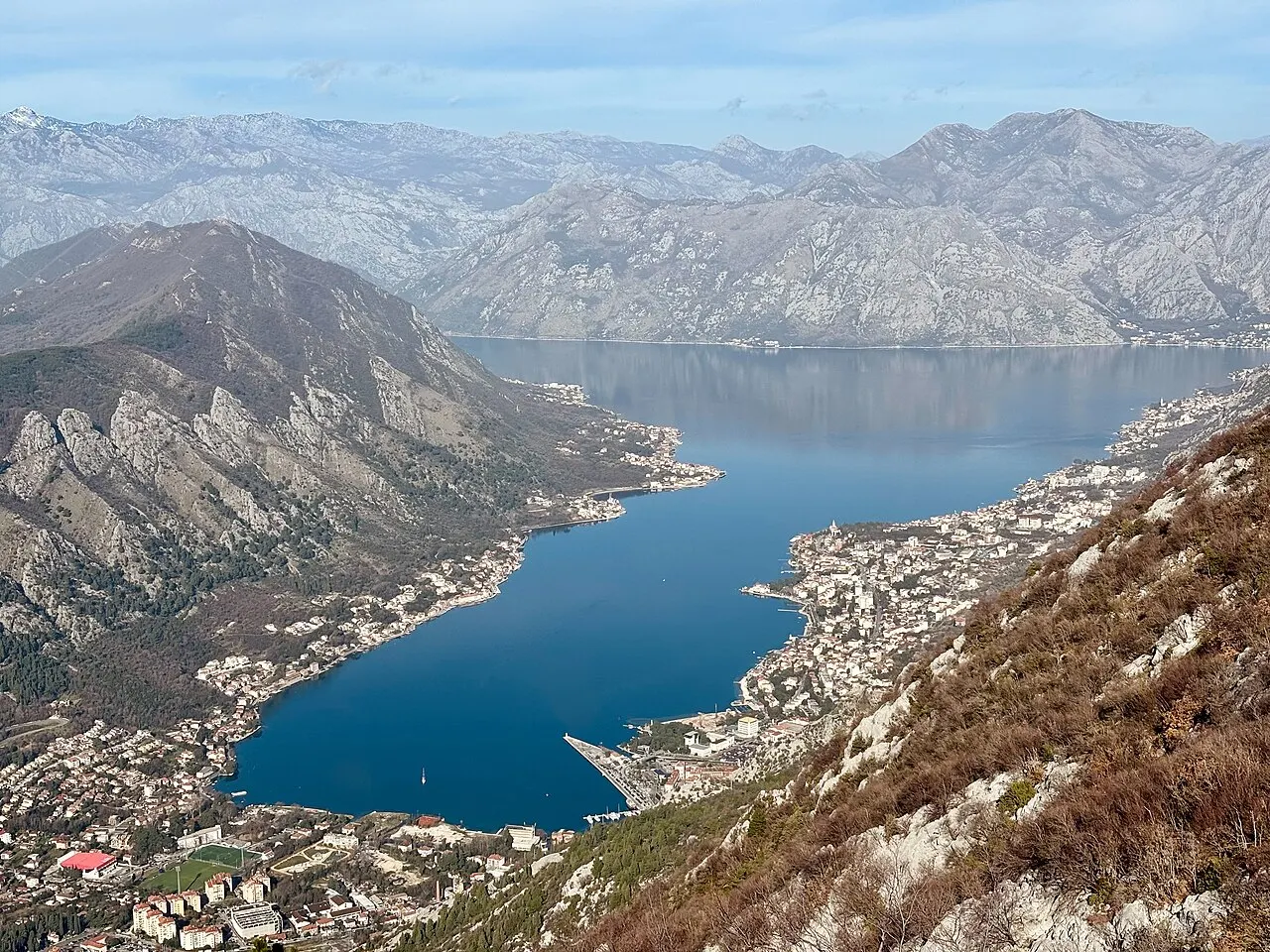
You will see 'UNESCO' on half the brochures in town, but it is worth knowing precisely what was listed and why, because it changes how you see the place. In 1979, UNESCO inscribed the 'Natural and Culturo-Historical Region of Kotor' on the World Heritage List. The wording matters: this is not just the medieval walled town but a combined natural-and-cultural region — the dramatic bay landscape, the fortified town, the captains' settlements along the shore, the churches and palaces, all recognised together as a single outstanding whole. The bay's improbable beauty and its layered human history were judged inseparable, and protected as one.
That is a more ambitious kind of listing than a single monument, and it explains the scale of what you are walking through. The 'outstanding universal value' UNESCO identified rests on the way medieval urban architecture, fortifications and a living maritime culture sit inside an extraordinary natural amphitheatre of mountains and water. Understanding this reframes a visit: you are not ticking off one famous building but moving through a protected landscape, from the lanes of the Old Town to the baroque waterfront of Perast and the fortified heights above. Every part of it is, in the formal sense, world heritage.

Why it was listed — the outstanding value
UNESCO listings hang on specific criteria, and Kotor's rest on the rare combination it offers. First, the architecture: the Old Town is an exceptionally well-preserved example of a medieval Mediterranean town, its Romanesque cathedral, its churches, its merchant palaces and its city walls forming a coherent ensemble shaped over many centuries. Second, the influence and the culture: this small bay was a genuine maritime power whose captains, navigators and trade left a mark across the Adriatic and beyond, and whose religious life wove together Catholic and Orthodox traditions in a single small place. Third, the setting: all of this sits inside one of the most striking natural harbours in the Mediterranean, where steep limestone mountains plunge to a deep, sheltered bay.
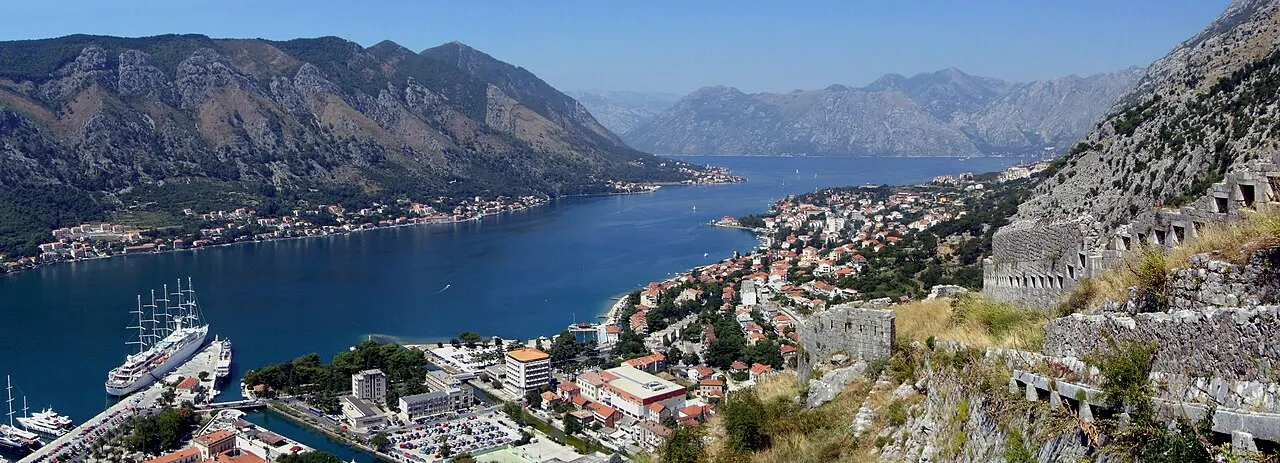
It is the fusion that earns the status. Plenty of places have a fine old town; plenty have a beautiful coastline; few have both so tightly bound, with the cultural story growing directly out of the geography. The walls climb the cliff because the cliff was the defence; the captains' towns line the shore because the sheltered water was their living; the cathedral and the island churches exist because faith and the sea were one. When you stand on the walls and take in the town, the water and the mountains in a single sweep, you are looking at exactly what the inscription was meant to protect — and why it had to be the whole region, not a single wall.
 Kotor City Walls
The fortifications that climb the cliff — heritage and the best overview at once.
 Perast Guide
The baroque captains' town that is part of the protected region.
Map pins
Map data © OpenStreetMap contributors · Tiles © OpenFreeMap
Earthquake, danger listing and recovery
There is a dramatic twist in Kotor's heritage story. The site was inscribed in 1979 — the very year a powerful earthquake struck the Montenegrin coast, causing severe damage across the bay and to the Old Town itself. In recognition of that damage and the threat it posed, the site was simultaneously placed on the List of World Heritage in Danger. For more than two decades Kotor carried that flag while a long, careful campaign of restoration and structural repair brought the town back. In 2003, satisfied that the recovery had succeeded, UNESCO removed Kotor from the danger list.
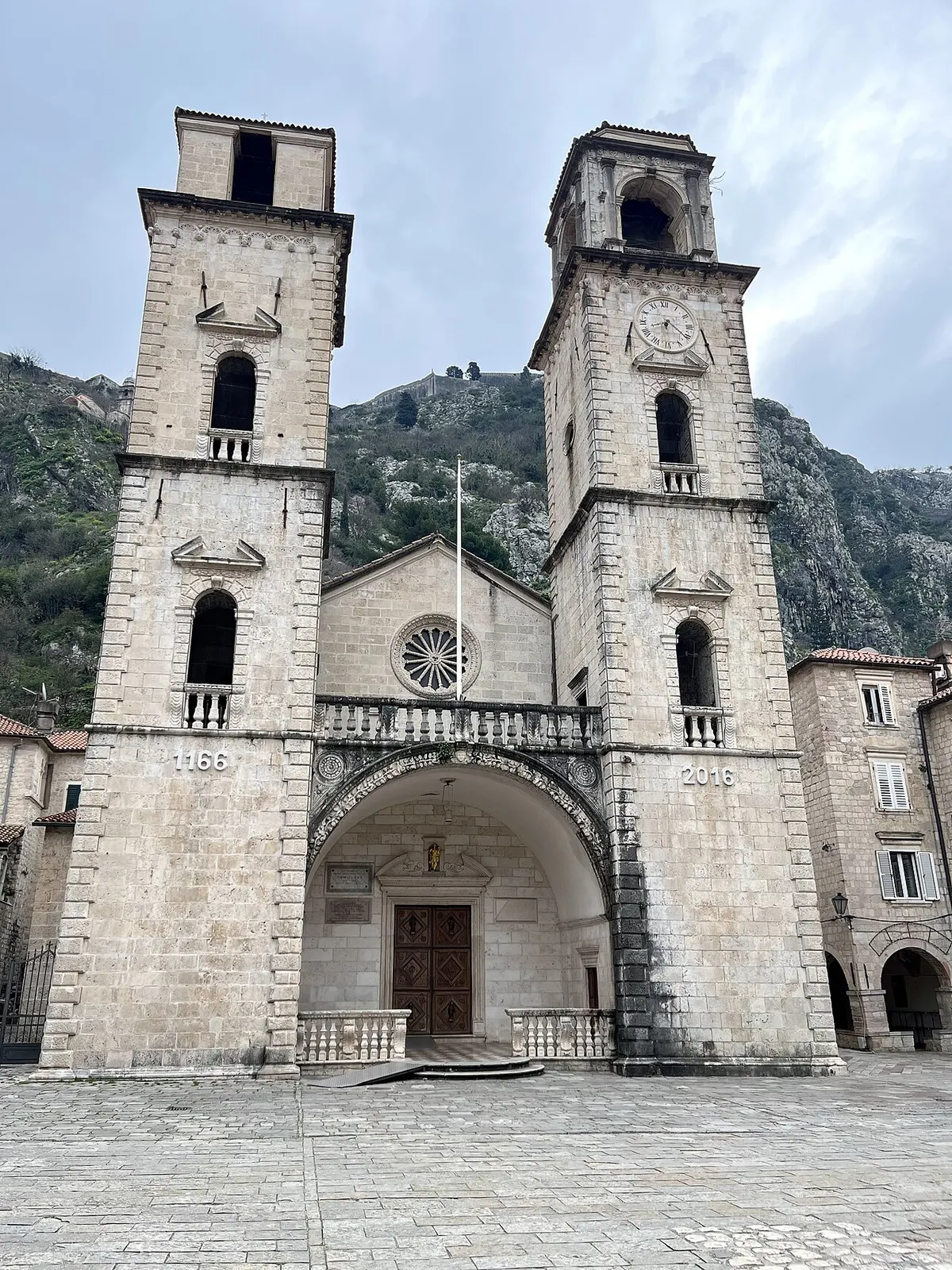
This is not just a footnote; it shapes what you see today. Much of the Old Town you walk through is the product of decades of meticulous, internationally supported conservation rather than untouched antiquity — and it is all the more precious for having been so nearly lost. The cathedral's two mismatched towers, the reinforced walls, the rebuilt palaces: these carry the marks of both the original builders and the restorers who saved their work. Knowing the town came back from the edge tends to make visitors gentler with it, which is exactly the point of telling you.
- Listed 1979; placed on the World Heritage in Danger list the same year after the earthquake.
- Removed from the danger list in 2003 once restoration had succeeded.
- Much of what you see reflects decades of careful conservation — handle it with care.

A living town, not a museum
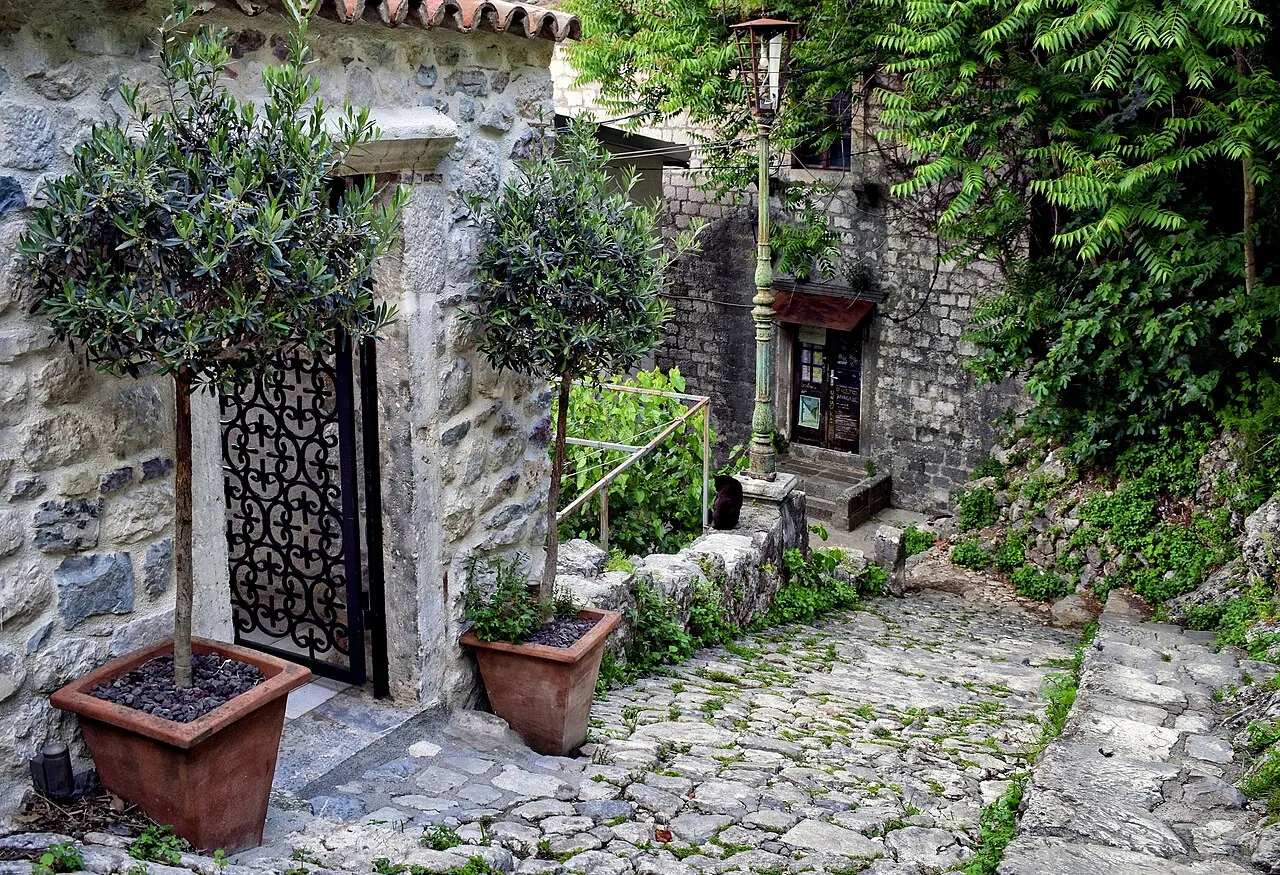
The most important thing to grasp about UNESCO Kotor is that people still live inside the walls. This is a working town: residents come and go through the gates with their shopping, children play in the squares, churches hold real services, and the cats belong to everyone and no one. The heritage status protects a living community, not a roped-off site — which is both its great charm and the source of its modern strain. When the lanes fill with cruise crowds at midday, it is someone's street that is blocked, someone's doorway you are photographing.
Treating Kotor as a living place rather than a backdrop is the whole ethic of visiting it well. Keep noise down in the residential lanes, especially early and late. Remember that open church doors are an invitation to worship, not a free attraction — dress modestly, stay quiet during services, and respect photography rules. Don't block narrow lanes or doorways for photos. None of this is onerous; it is simply the difference between visiting a community and trampling through it, and it is the least the place asks in return for letting you walk through a thousand years of its history.
The pressures: cruises, crowds and development
Heritage status does not freeze a place in time, and Kotor faces real modern pressures that a thoughtful visitor should understand. The most visible is cruise tourism: Kotor is a marquee Adriatic port, and on a big day several thousand passengers can land into a town you could cross in ten minutes, all within the same few hours. The result is intense midday crowding in the lanes, on the cathedral square and on the wall climb — the experience most people who complain about Kotor are really describing. Heritage bodies have repeatedly flagged the strain that mass tourism and cruise volumes place on the site.
Less visible but just as significant is development pressure around the bay. UNESCO and conservation organisations have, over the years, raised concerns about large-scale building, marinas and infrastructure projects on the bay's shores that could erode the very landscape values the listing protects — the open water, the modest waterfront villages, the unbroken sweep of mountain and sea. As a visitor you cannot solve these things, but you can choose not to add to them, and you can favour the kind of small, local, low-impact tourism that keeps the bay worth protecting. The good news is that the choices that lighten your footprint are also the ones that give you a far better trip.
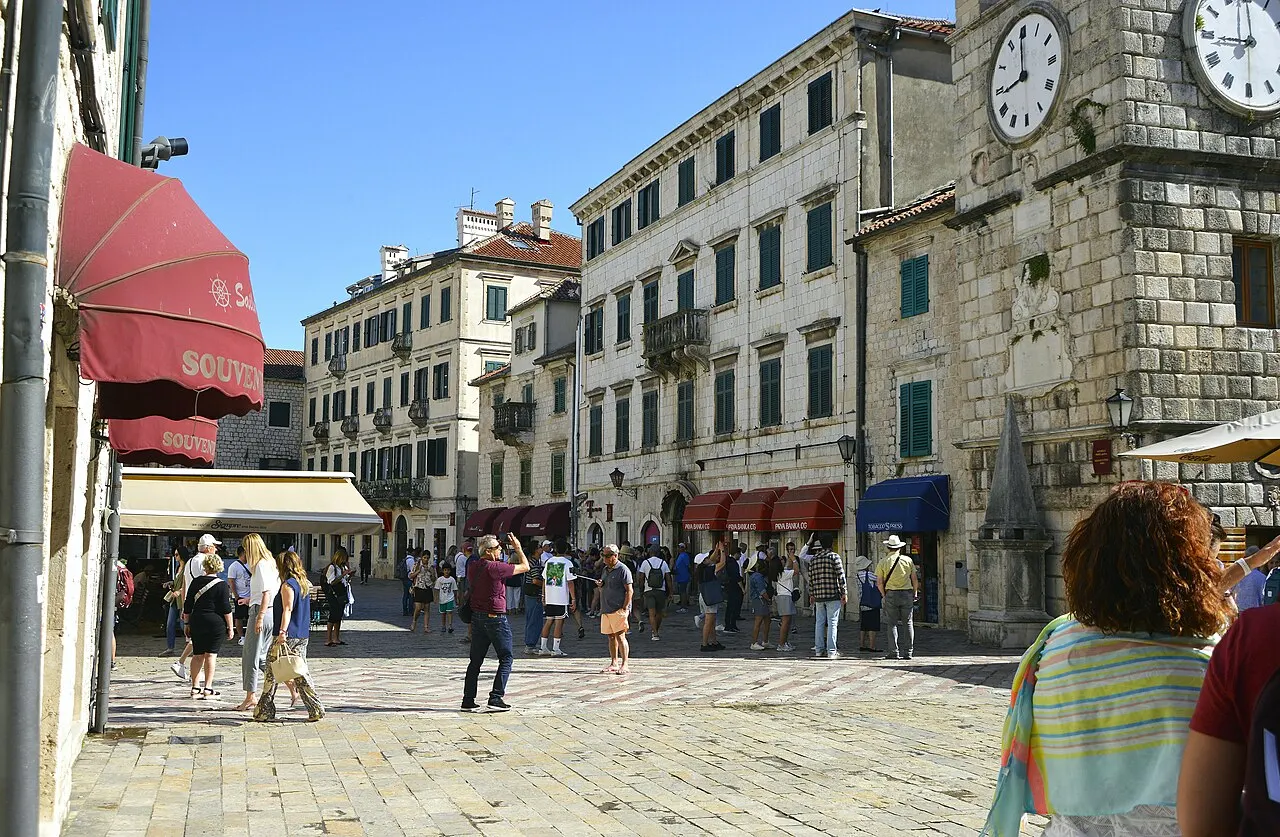
- Cruise volumes cause intense midday crowding in a town you can cross in ten minutes.
- Bay-shore development is a long-running concern for the landscape the listing protects.
- You can't fix these — but you can avoid adding to them and travel lighter instead.

How to visit Kotor well: a light-footprint checklist
The practical upshot is a short, easy ethic that improves both the town's future and your own trip. Come in the shoulder seasons if you can — late spring and early autumn give you kinder weather, thinner crowds and a town that is breathing rather than gasping. If you are here on a busy day, walk the Old Town at its quiet edges, early morning or evening, and let the midday crush pass you by on a café terrace or out on the water. Spend your money where it stays local: family konobas off the main square, the open-air market, independent guesthouses, small boatmen rather than only the biggest operators.
Beyond timing and spending, the small courtesies add up. Carry a refillable water bottle rather than buying single-use plastic for the wall climb. Take your litter with you, especially on the trails and the boats. Respect the churches as places of worship, the lanes as people's homes, and the bay as a protected landscape — don't pick at the old stone, don't drone where it isn't allowed, and don't treat the cats as props. Read a little of the town's history before you arrive so you understand what you are looking at. Do these things and you will not only leave Kotor as you found it; you will have had the version of the trip — quiet lanes, golden light, the bay nearly to yourself — that the crowds at noon never get.


Kotor Old Town: A Guide to Stari Grad
How to explore Kotor's walled Old Town (Stari Grad): the gates, the squares you navigate by, St Tryphon Cathedral, the small churches, the cats, the museums and the quiet corners away from the crowds.
Read guidePerast
The baroque captains' town on the Bay of Kotor: its seafaring palaces and churches, the waterfront walk, St Nicholas and its bell tower, the boats to Our Lady of the Rocks, the Fašinada, and how to arrive, stay and eat.
Read guide
A Traveler's History of Kotor
A traveler-friendly primer on Kotor's history before you walk the town: Illyrian and Roman roots, Byzantine and Serbian rule, four centuries under Venice, the bay's seafaring fortunes, earthquakes, the world wars and UNESCO protection.
Read guide