
Perast
The baroque captains' town on the Bay of Kotor: its seafaring palaces and churches, the waterfront walk, St Nicholas and its bell tower, the boats to Our Lady of the Rocks, the Fašinada, and how to arrive, stay and eat.

Photo: Biljana Martinić / Unsplash
- ✓Perast is a small baroque town of sea captains' palaces strung along the bay, about a 30-minute drive or a short boat ride from Kotor.
- ✓It faces two islands: man-made Our Lady of the Rocks, with its church and museum, and natural St George, with a Benedictine monastery and cypresses.
- ✓The town is built around St Nicholas church and its tall bell tower, the highest landmark on the waterfront.
- ✓Cars are kept out of the town itself; you park on the approach and walk the long stone waterfront.
- ✓Every 22 July the Fašinada sees a procession of boats add stones to the Our Lady of the Rocks reef after dusk.
- ✓Go early or late to have the quay to yourself — midday brings the bay's tour traffic — and verify boat, ferry and museum details before you build a day around them.
The captains' town on the bay
Perast is the Bay of Kotor distilled into a single, perfect stretch of waterfront. In its heyday it was a town of sea captains and shipowners, home to a celebrated school of navigation whose graduates served fleets across the Adriatic and beyond. When the seafaring fortunes faded, Perast was largely left as it was — and that is its gift to the traveller. There is no big road driven through its heart and barely a car in sight, just a long line of honey-coloured baroque palaces and churches facing the still water, with two small islands set just offshore.
The effect is of a town held in amber. Some of the palaces are restored and lived-in or turned to hotels and restaurants; others stand gracefully weathered, their coats of arms still over the doors. Above them rises the bell tower of St Nicholas, and beyond the quay the bay opens toward the Verige strait. Compact enough to walk end to end in twenty minutes yet rich enough to fill a slow half-day, Perast rewards lingering more than rushing: a coffee on the quay, a wander past the palaces, a boat to the island, and the light changing on the water.
There is real history under the postcard. Perast sat at the narrow waist of the bay, just inside the Verige strait, which made it a strategic guard post as well as a wealthy port; its captains served Venice and beyond, and one local commander, Matija Zmajević, rose to admiral in the Russian navy. The town's nautical college taught navigation to sailors from across the region — by tradition, even some sent by the Russian tsar. All that accumulated maritime pride is still legible in the palaces, the church treasury and the votive island offshore, which is what gives Perast its particular weight: it is a small place that once looked out at a very large world.


Walking the waterfront and the palaces
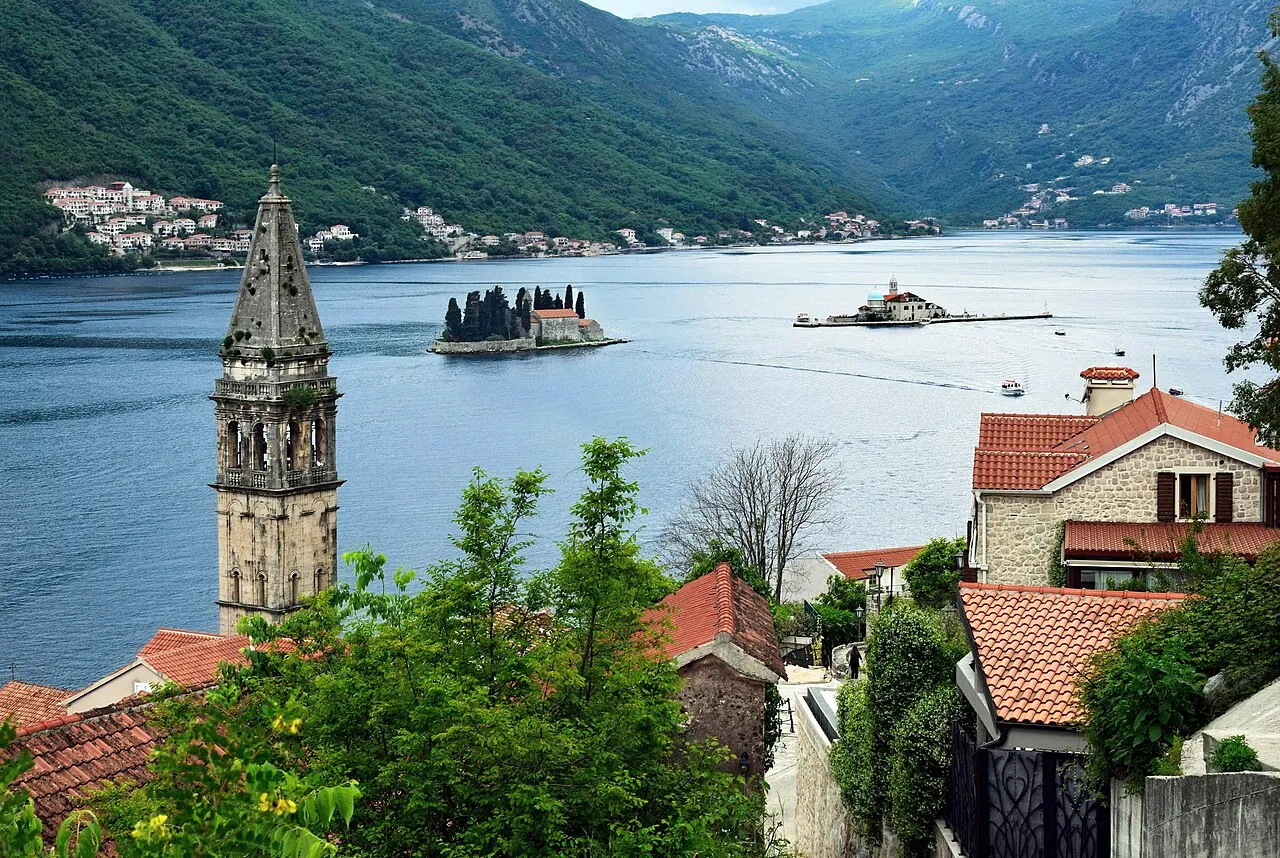
The whole town is essentially one long waterfront promenade, and walking it is the main event. From end to end you pass the grand captains' palaces — the Bujović, Smekja, Zmajević and other great houses whose names trace Perast's seafaring families — interspersed with smaller churches and chapels, all facing the islands across the water. It is flat, unhurried and endlessly photogenic, with the bay on one side and four centuries of baroque stone on the other.
At the centre stands the parish church of St Nicholas, never finished to its grand intended scale but crowned by a tall, free-standing bell tower that is the town's highest landmark. The church holds a treasury of votive offerings and silverwork from Perast's sailors, and — opening hours permitting — you can climb the bell tower for a sweeping view down over the rooftops, the islands and the bay. Treat museum and tower hours as variable and verify them locally; this is a small town where things keep their own time.
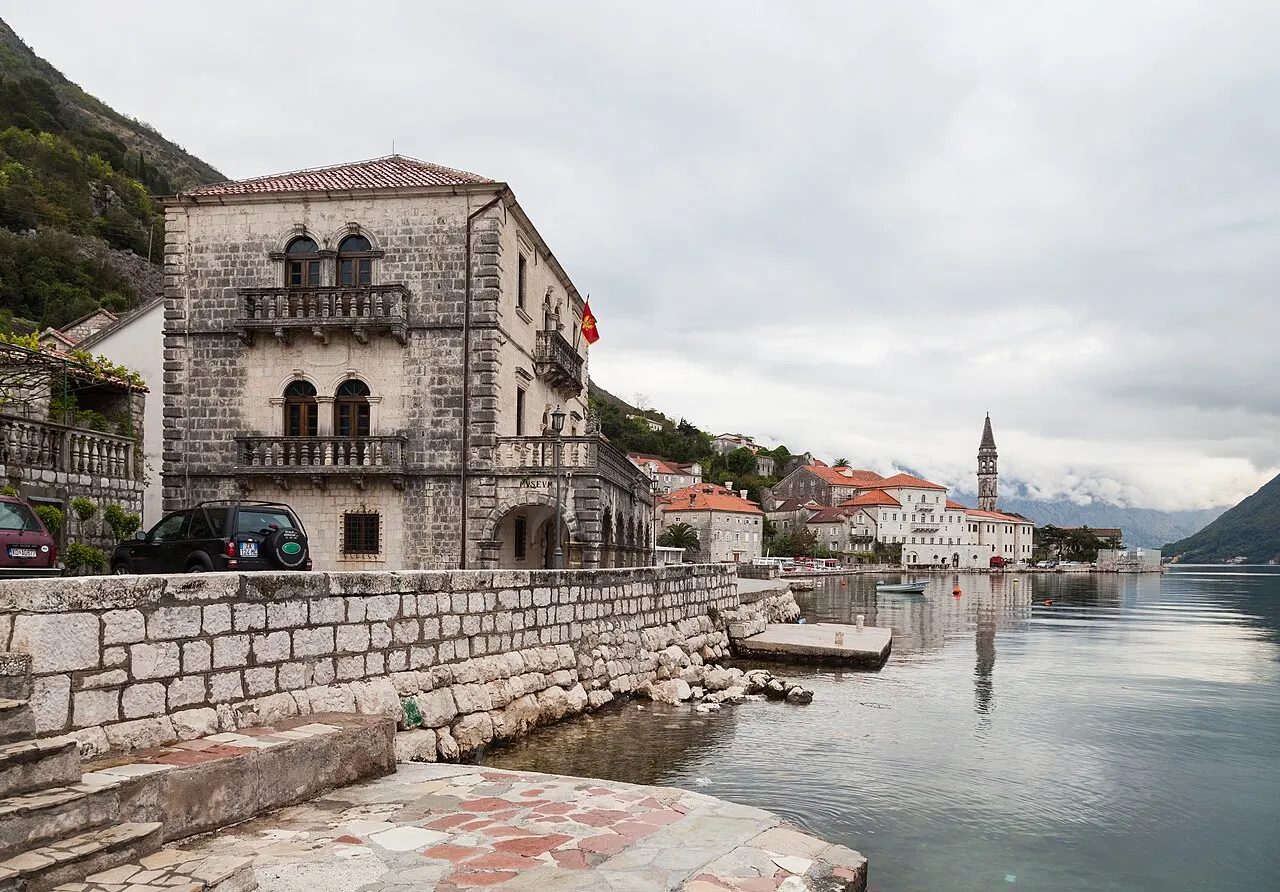
- Walk the single long waterfront past the captains' palaces — Bujović, Smekja, Zmajević and more.
- St Nicholas church and its tall free-standing bell tower anchor the centre.
- The church treasury holds sailors' votive offerings and silverwork.
- You can often climb the bell tower for the view — verify opening hours and any fee locally.
 St Nicholas Church
More on the bay's St Nicholas churches and their seafaring treasuries.
 Photography Spots
The Perast waterfront and bell-tower view are among the bay's best frames.
Map pins
Map data © OpenStreetMap contributors · Tiles © OpenFreeMap
The two islands: Our Lady of the Rocks and St George
Perast's two islands are its signature, and only one is open to visitors. Our Lady of the Rocks is man-made — a reef raised over centuries on the hulls of scuttled ships and on stones dropped by returning sailors, until it was large enough to carry a church. That 17th-century church holds a much-loved icon, a ceiling of baroque paintings and a small museum, and the views back across the water to Perast from its steps are the bay's classic postcard. Small boats run the short hop out from the Perast quay throughout the season.
Its neighbour, St George (Sveti Đorđe), is a natural island shaded by dark cypresses, home to a Benedictine monastery and an old graveyard. It is beautiful and much-photographed but not open to the public, so you admire it from the water or the shore rather than landing. Together the two islands — one built by hand and devotion, one natural and cloistered — give Perast its instantly recognisable silhouette and its quiet, votive atmosphere.
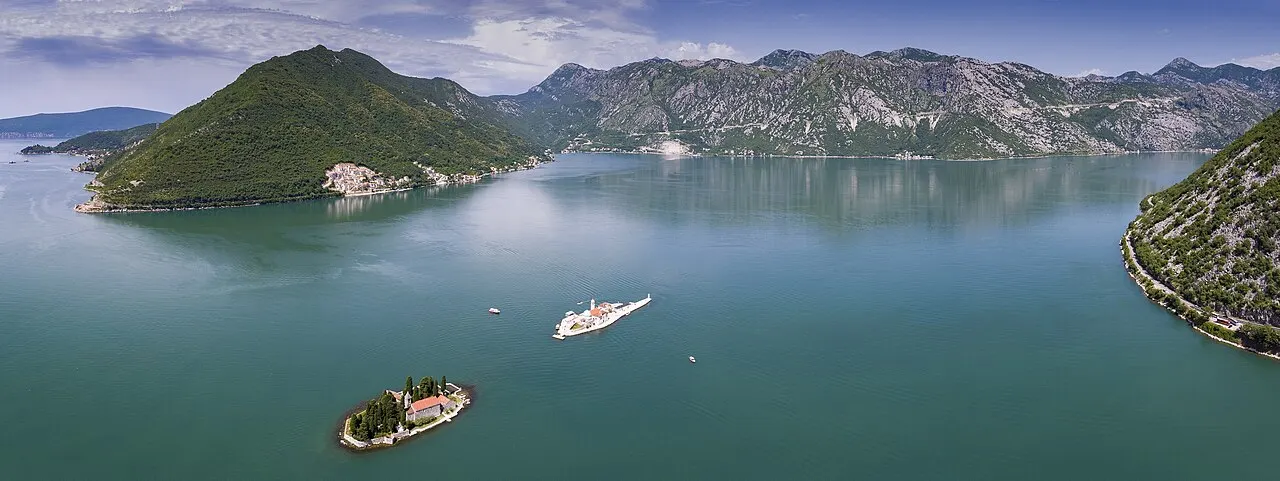
- Our Lady of the Rocks — a man-made island with a 17th-century church, baroque ceiling, icon and museum; reached by short boats from the quay.
- St George (Sveti Đorđe) — a natural, cypress-shaded island with a Benedictine monastery; admired from the water, not open to visitors.
- The view back to Perast from Our Lady of the Rocks is the bay's classic postcard.
- Verify the island boat fare and any church/museum entry locally — they change with the season.
The Fašinada and Perast's traditions
Perast keeps its old rituals, and the most beautiful is the Fašinada. Every 22 July, after dusk, a procession of decorated boats rows out from the quay to Our Lady of the Rocks, each carrying stones to drop onto the reef — repeating, year after year, the centuries-old act that built the island in the first place. It is a moving, candlelit sight and one of the bay's loveliest evenings; if your visit falls near that date, plan to be on the Perast waterfront for it. A traditional regatta and other festivities cluster around the same period.
The town's other set-piece is the Boka Navy, the ancient brotherhood of bay sailors whose ceremonial traditions and the famous kolo dance surface at festivals around the Boka. You do not need to time a festival to feel the seafaring spirit, though — it is written into the palaces, the church treasuries and the votive island itself. As with all event dates, confirm the year's exact programme and timing from a local or official source before you travel for it.

Getting there, staying and eating
Perast sits on the bay road between Kotor and the Verige strait, and you can reach it three ways. The simplest is the regular Kotor–Risan bus, which stops on the main road just above the town (you walk down to the waterfront). By car it is about a half-hour drive along the scenic shoreline, but cars are kept out of the town itself — park in the paid parking on the approach and walk in. Best of all is to arrive by boat as part of a bay tour, gliding up to the quay the way the captains did.
To stay, Perast is the bay's slow, romantic choice: a handful of boutique hotels and guesthouses in restored palaces give you the waterfront almost to yourself once the day-trip boats leave, with the islands lit across the water at night. To eat, waterfront konobas and restaurants serve the bay's seafood — buzara, fresh fish by the kilo, a glass of Vranac — with a terrace over the water; they are priced for the setting, so it is worth booking ahead in summer. Whenever you come, aim for early morning or late afternoon on the quay, when the light is kind and the midday tour traffic has thinned. Keep volatile details — bus and boat times, parking and room rates — to official or current sources, as they change.
- Getting there: the Kotor–Risan bus (stops above the town), a ~30-minute drive, or by boat on a bay tour.
- Parking: cars are kept out of the town — use the paid parking on the approach and walk the waterfront.
- Staying: boutique hotels and guesthouses in restored palaces — the slow, romantic bay base.
- Eating: waterfront konobas serving buzara and fresh fish; priced for the view, so book ahead in summer.
- Timing: early morning or late afternoon for the best light and the quietest quay.
Perast at a glance
Use this quick card to plan a Perast visit. The town, the waterfront walk and the island silhouette are free and evergreen; the volatile details — bus and island-boat times and fares, parking charges, church and bell-tower hours, hotel and restaurant prices, and the year's festival dates — change, so verify them from official or current sources before you rely on them.
- What it is: a small baroque captains' town on the Bay of Kotor, ~30 minutes from Kotor.
- Getting there: Kotor–Risan bus, car (park on the approach), or by boat on a bay tour.
- Don't miss: the waterfront palaces, St Nicholas and its bell tower, and the boat to Our Lady of the Rocks.
- The islands: Our Lady of the Rocks (man-made, visitable) and St George (natural, not open to visitors).
- Tradition: the Fašinada boat procession every 22 July after dusk.
- Staying & eating: palace-hotels and waterfront konobas — the slow, romantic side of the bay; book ahead in summer.
- Best time: early morning or late afternoon, before and after the midday tour traffic.
- Verify locally: bus/boat times and fares, parking, church and tower hours, and festival dates.

Our Lady of the Rocks
A guide to Our Lady of the Rocks off Perast: the legend and the votive stones that built the islet, the 17th-century church, its icon, silver tablets and museum, the short boat across, the Fašinada ritual, and how to time and photograph a visit.
Read guide
Staying in Perast
Where to stay in Perast, the tiny baroque captains' town on the Bay of Kotor: who it suits, the small palace-and-guesthouse stays you'll find, the car-light reality, the islands and waterfront on your doorstep, and the trade-offs versus sleeping in Kotor itself.
Read guide
Best Restaurants in Perast
Where and how to eat in Perast: waterfront tables looking straight out at Our Lady of the Rocks, fresh bay seafood and buzara, coffee on the quay, the bay's most romantic golden-hour dinner, and how to time and book a table when day-trippers fill the small stone village.
Read guideMore in Bay of Kotor
6
Bay of Kotor Boat Tours
Compare the kinds of boat trip on the Bay of Kotor: shared group tours, fast speedboat trips, private charters, the Perast and Our Lady of the Rocks classic, the Blue Cave route, and sunset cruises — what each suits, rough durations and the weather caveat.
Read guide
Best Swimming Spots in the Bay of Kotor
The best places to swim in the Bay of Kotor, compared by access, water, shade, families, boat traffic and view: the Dobrota platforms, the Muo and Prčanj rocks, the quiet Stoliv, Orahovac and Ljuta coves, and the clear-water Luštica beaches out toward the open sea.
Read guide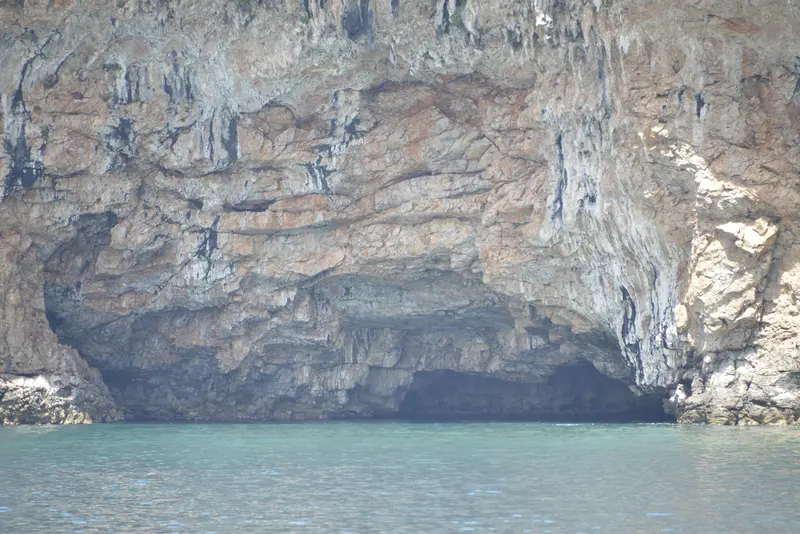
Blue Cave Montenegro
Is the Blue Cave (Plava Špilja) worth it from Kotor? What it is and why the water glows, where it sits near the bay mouth, how trips reach it, the sea-condition and timing realities, swimming inside, the crowds, and the honest verdict with alternatives.
Read guide
Kayaking & SUP in Kotor Bay
Where paddling works in the Bay of Kotor: the sheltered inner bay off Dobrota, Muo and Prčanj, the beginner-friendly routes, the all-important morning-wind safety rule, what to rent and which guided trips to join, and who kayaking and stand-up paddleboarding suit.
Read guide
Kotor Sunset Cruise Guide
When to book a sunset cruise in Kotor and what route to choose: why the bay is at its most beautiful at golden hour, the Perast run versus the open-bay loop, group boats versus going private, and how the high mountains change the sunset itself.
Read guide
Kotor to Perast by Boat
Every way to get from Kotor to Perast and Our Lady of the Rocks: boat tours (shared and private), the bay bus, taxi and driving — with steps, rough durations and the catch that there is no scheduled passenger ferry.
Read guide