
Quiet Places to Stay Around Kotor
Where to sleep away from Old Town noise and cruise crowds: why the walled town is loud, and the quiet bay alternatives — Dobrota, Muo, Prčanj, Perast and the further villages — ranked by stillness, view and how easily you reach the lanes.

Photo: Dean Milenkovic / Unsplash
- ✓Kotor's walled Old Town is the most atmospheric base and the loudest: stone lanes carry the sound of late-night tables and early-morning deliveries, and cruise mornings bring the Adriatic's heaviest crowds to your doorstep.
- ✓The quiet is just minutes away along the bay — the same view, the same town across the water, without the noise on your pillow.
- ✓Dobrota, on the same shore as the Old Town, is the easiest quiet base: calm nights, a waterfront promenade, and a flat walk back into the lanes.
- ✓Muo and Prčanj on the opposite shore are quieter still, with bay-view rooms looking back at Kotor lit up across the water after dark.
- ✓Perast and the further bay villages — Stoliv, the Luštica hamlets — offer the deepest stillness, traded against a longer trip into town.
- ✓Choose by how much you will give up for quiet: a short walk, a short drive, or near-total seclusion — Kotor's bay has a base for each.
Why the Old Town is loud — and why that matters
Kotor's walled Old Town is the most beautiful place to sleep in the bay and, by some distance, the noisiest. The reasons are baked into the stone. The lanes are narrow and hard-surfaced, so sound bounces and carries: a lively restaurant terrace three turns away can feel like it is under your window, and the late tables of a summer evening run well past midnight. Then the rhythm flips — the early-morning deliveries, the clatter of café set-up and the first bins of the day arrive over the same echoing stone before dawn. Between the two, the quiet hours can be short.
On top of the daily cycle sits the cruise cycle. Kotor is a marquee Adriatic call, and on a big cruise morning the entire walled town fills at once: the lanes, the cathedral and the climb to St John Fortress are at their busiest, and the buzz reaches every Old Town room. For travellers who came for the postcard and do not mind the soundtrack, that energy is part of the appeal. For light sleepers, families with early bedtimes, couples after calm and anyone recharging between long travel days, it is exactly what they are trying to escape.
The happy truth is that you do not have to choose between Kotor's beauty and a good night's sleep. The quiet is only minutes away around the bay, on the same water, with the same walled town in view — often a better view, side-on and lit up across the bay after dark. This guide is about finding that stillness without giving up the Kotor you came for, and choosing how far from the lanes you are willing to sleep to get it.
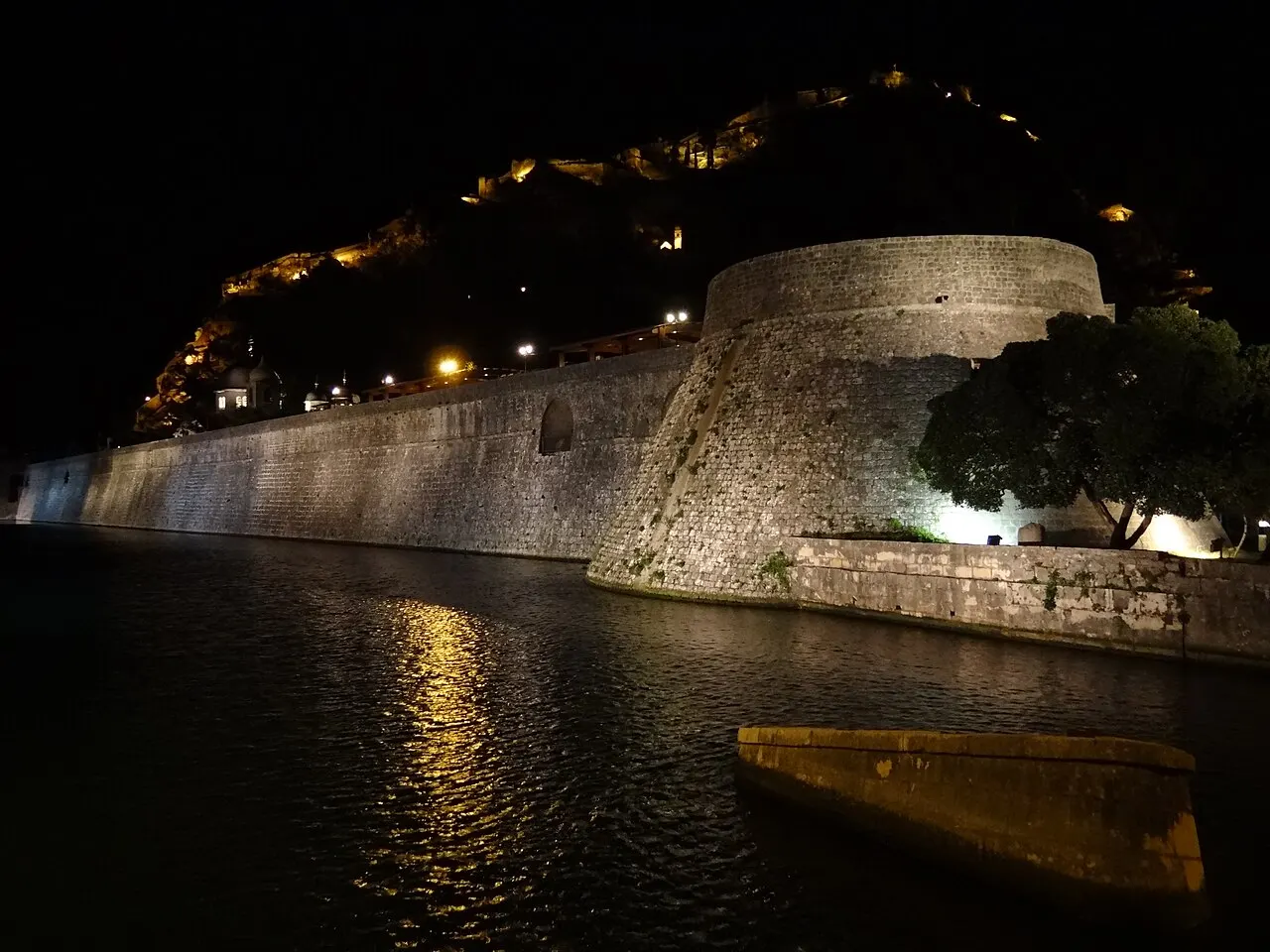


Dobrota: the easiest quiet base
If you want quiet without sacrificing convenience, Dobrota is the answer most people land on. It is the long, residential waterfront village that begins exactly where the Old Town ends and unspools north along the same shore. Because it is on Kotor's side of the bay, you keep the walled town within an easy, flat walk — roughly fifteen to forty minutes depending on how far north you are — while sleeping somewhere the loudest thing is usually the water. You get the calm nights and the space without the loop around the bay, which is why Dobrota is the bay's most natural compromise base.
The character is gentle and lived-in: a near-continuous seaside promenade for morning coffee and evening walks, swimming off ladders and platforms, old captains' houses and quiet modern apartments, and waterfront rooms that look back at the walls. Within Dobrota, the further north you stay (Upper Dobrota, Gornja Dobrota) the quieter and greener it gets, while Lower Dobrota (Donja) keeps you closest to the gates. Either way, the trade you make is small — a short walk or drive into town — for a real gain in stillness, space and a parking space the Old Town cannot give.
Dobrota suits almost everyone after quiet: families wanting early nights and easy parking, couples wanting a bay-view room and a sunset promenade walk, and any traveller who likes a base that feels like a real place rather than a stage set. It is the quiet base with the least sacrifice.
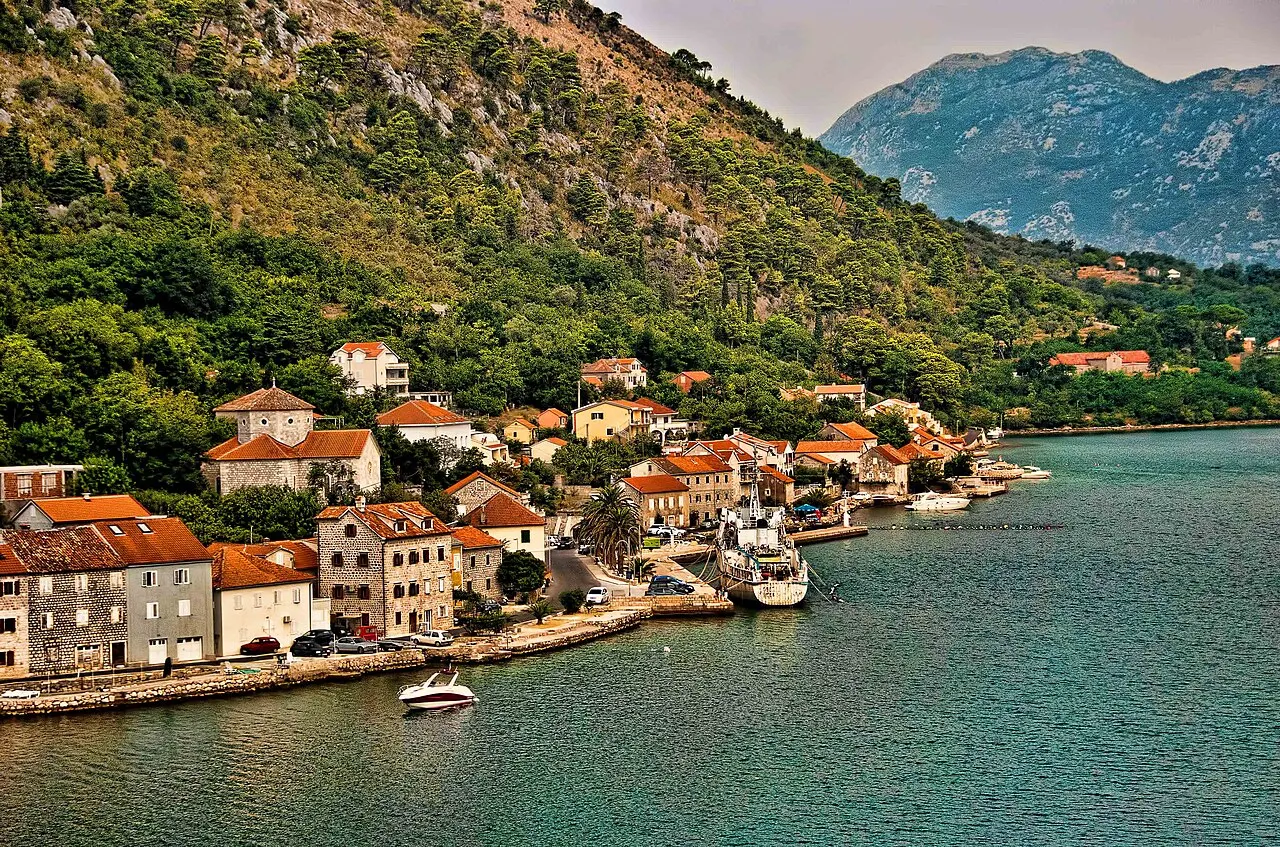
- Same shore as the Old Town — walk in (about 15–40 minutes) rather than drive around the bay.
- A flat seaside promenade, swimming off ladders, and quiet, spacious waterfront rooms.
- Upper Dobrota is quietest and greenest; Lower Dobrota keeps you closest to the gates.
- The least-sacrifice quiet base — calm and parking, with the Old Town still walkable.
Map pins
Map data © OpenStreetMap contributors · Tiles © OpenFreeMap
Muo and Prčanj: quieter still, across the water
For deeper quiet with the Old Town still in easy reach, cross to the opposite shore. Muo and Prčanj sit beneath the Vrmac ridge directly across the bay from Kotor, strung along the water as calm, residential villages with little through-traffic and a slower pulse than even Dobrota. Their great gift is the view: rooms here look straight across the bay at the walled town and its fortress walls zigzagging up the mountain, a sight that turns magical after dark when Kotor lights up across the still water and you watch it from your own quiet terrace.
The trade is distance. You are across the bay rather than beside it, so reaching the Old Town means a short, scenic drive or taxi around the shore, or a longer walk — a few minutes more separation in exchange for a noticeably stiller night and the best side-on view in the bay. Parking is rarely a problem, swimming is off the village platforms, and the evenings are properly peaceful. Muo, slightly closer to Kotor, is the marginally more convenient of the two; Prčanj, a little further with its grand old church and captains' houses, is the more secluded and romantic.
Muo and Prčanj suit couples and quiet-seekers above all — anyone who wants stillness, a bay view and a romantic base, and is happy to drive or taxi the few minutes into the lanes for dinner and the sights. If your priority is calm and the view, and you do not mind crossing the water, this is the bay's sweet spot.
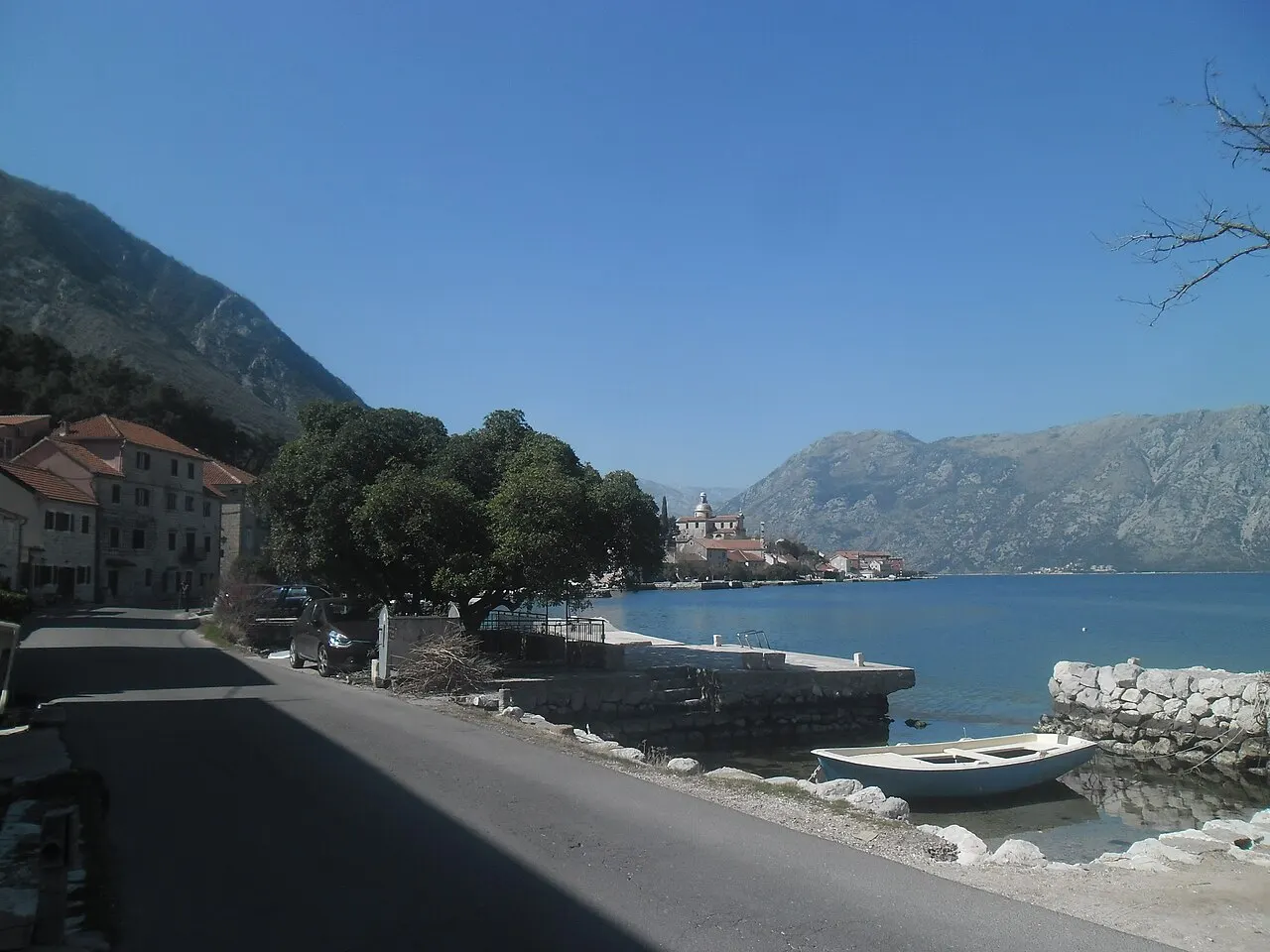
- Opposite shore beneath the Vrmac ridge — calmer and slower than Dobrota, with little traffic.
- The best side-on view in the bay, magical when the Old Town lights up across the water after dark.
- The trade: a short scenic drive or taxi into the Old Town rather than a flat walk.
- Muo is the slightly more convenient; Prčanj the more secluded and romantic.
Perast and the further villages: the deepest stillness
For the quietest stays of all, go further along the bay. Perast, the small baroque town of captains' palaces about half an hour from Kotor, keeps almost no through-traffic and barely any cars — just a long stone waterfront facing two island churches and the bell of St Nicholas above. Staying overnight in Perast is a particular pleasure, because the day-tour boats leave by evening and the town empties into a hush; you have the waterfront, the islands and the sunset largely to yourself. It is the bay's most romantic, most still base, and the trade is simply that Kotor itself is a drive or boat trip away rather than a walk.
Quieter and more secluded again are the smaller villages that ring the bay and the peninsula beyond. Stoliv, tucked under Vrmac near Prčanj, is a sleepy waterfront hamlet known for its old chestnut woods. Across the bay mouth, the Luštica peninsula's villages and the fishing settlements toward Rose offer near-total seclusion — bay-view stays where the nights are silent and the nearest crowd is a long way off. These are for travellers whose whole aim is to switch off, who will happily drive for dinner and sights, and who treasure stillness above convenience.
The further you go, the more you commit to the car and the more you plan ahead, because shops, restaurants and transport thin out. That is the bargain of deep quiet around Kotor: the stillness is real and the views are extraordinary, but you trade the spontaneity of the lanes for the peace of the water. Decide honestly how much of that trade you want before you book a base an hour from the nearest restaurant.
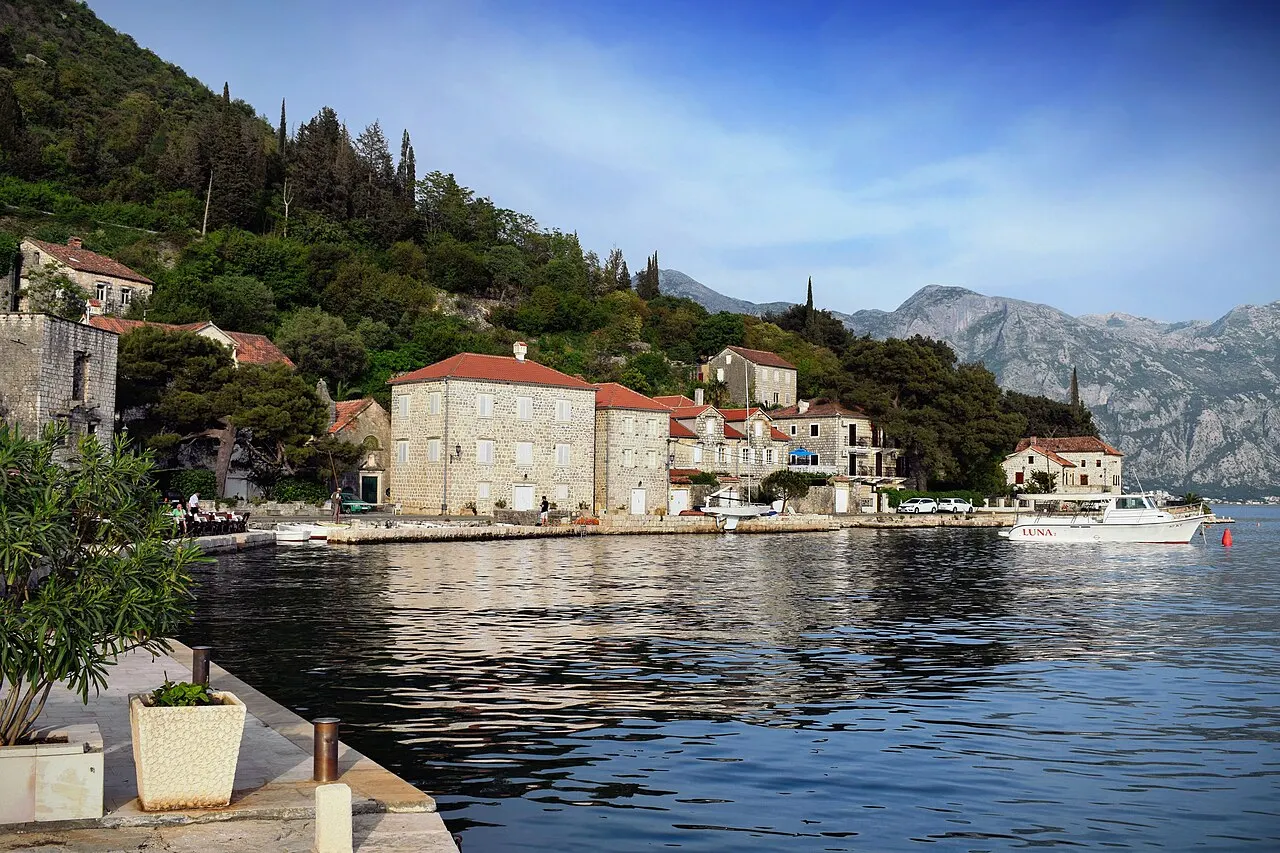
- Perast: baroque, near-carless and beautifully still once the day boats leave — the bay's most romantic overnight.
- Stoliv and the Vrmac hamlets: sleepy waterfront villages for real seclusion near Prčanj.
- Luštica and the villages toward Rose: near-total quiet across the bay mouth, for switching off entirely.
- The further out, the more you rely on the car and plan ahead — peace over spontaneity.
How to lock in quiet wherever you book
Choosing a quiet village is half the job; choosing a quiet room within it is the other half. Even in a calm village, a room over a restaurant terrace or facing a bar can undo the whole plan, while a bay-facing or garden-facing room a floor up can be silent in the busiest spot. So ask the host directly what the room looks onto and whether there is any nightlife, café set-up or a road below the window. In the Old Town in particular, if you are determined to stay inside the walls, a room high up and away from the busy squares is far quieter than one at street level on a restaurant lane — and worth seeking out specifically.
Timing matters too. The cruise season and the July–August peak are when the Old Town is loudest and the whole bay busiest; the shoulder months of spring and autumn bring real calm to everywhere, including the walled town, along with kinder weather. If quiet is your priority and your dates are flexible, the quieter months do more for a peaceful stay than any village choice. And check the bay's event calendar — a festival or a saint's day can fill a sleepy village for one memorable, un-quiet night.
As ever, we keep the volatile details out of the prose. Room rates, exact bus and taxi times into town, and seasonal opening all change, so verify them directly before you book. Montenegro uses the euro and cards are widely taken; carry a little cash for the smaller guesthouses and the village konobas where quiet stays cluster.
- Ask what the room faces: a bay- or garden-facing room can be silent even in a busy spot.
- Avoid rooms over restaurant terraces, bars or roads; in the Old Town, go high and off the busy squares.
- Spring and autumn are quieter than the July–August and cruise peaks across the whole bay.
- Check the local event calendar — a festival can fill even a sleepy village for a night.
- Verify directly: room rates, bus and taxi times into town, and seasonal opening.


Quiet places to stay at a glance
Use this quick card to weigh quiet against convenience. The pattern — a loud, beautiful Old Town and a ring of quieter bay villages minutes away — is evergreen; the volatile details (room rates, bus and taxi times, seasonal opening) change with the property and the season, so verify them directly before you book.
- Why look beyond the walls: the Old Town's stone lanes carry late-table and early-delivery noise, and cruise mornings are the loudest hours.
- Easiest quiet base: Dobrota — calm nights, a promenade and a flat walk into the lanes.
- Quieter still: Muo and Prčanj across the water, with the best side-on view of the lit-up town.
- Deepest stillness: Perast and the further villages (Stoliv, Luštica) — most peace, longest trip into town.
- Within any village, choose a bay- or garden-facing room off the road, and favour spring or autumn for calm.
- Verify directly: room rates, transport times into town, and seasonal opening.

Staying in Dobrota
Where to stay in Dobrota, the long bayfront village just north of Kotor's Old Town: who it suits, the waterfront promenade and swimming, the calmer nights, parking and how easily you reach the walled town on foot or by car.
Read guide
Staying in Muo & Prčanj
Where to stay in Muo and Prčanj across the bay from Kotor: the front-row view of the walled town, waterfront guesthouses and captains' palaces, swimming off the Vrmac shore, and the driving and parking notes you need for a far-shore base.
Read guide
Staying in Perast
Where to stay in Perast, the tiny baroque captains' town on the Bay of Kotor: who it suits, the small palace-and-guesthouse stays you'll find, the car-light reality, the islands and waterfront on your doorstep, and the trade-offs versus sleeping in Kotor itself.
Read guideMore in Where to Stay
6Accessible Hotels & Stays in Kotor
Where to stay in Kotor for step-free access: why the cobbled, stepped, car-free Old Town is the hardest base for limited mobility, the flatter bay alternatives like Dobrota and the modern wider-bay hotels, and the access questions to ask before you book.
Read guide
Best apartments in Kotor
How apartment stays work around the Bay of Kotor: why they're the dominant choice here, what a kitchen and space buy you, where to find them by area, and the practical realities — stairs, parking, air-con, bay views and self check-in — to weigh before you book.
Read guide
Best boutique hotels in Kotor
How to find Kotor's most atmospheric boutique stays: restored stone palaces and captains' houses inside the Old Town walls, along the Dobrota and Muo–Prčanj shore, and in baroque Perast — and how to choose by atmosphere, noise, stairs and view.
Read guide
Best budget hotels in Kotor
How to stay cheaply around the Bay of Kotor without losing your days to buses, parking or steep walks: where the value is, what budget looks like here, the shoulder-season and cruise-day pricing tricks, and the hidden costs to weigh before you book.
Read guide
Best family hotels in Kotor
Where families should stay around the Bay of Kotor: why the car-free Old Town is rarely the best base, the calmer bayfront bases that give space, parking, pools and swimming, and the practicalities — kitchens, prams, deep water — that matter most with kids.
Read guide
Best Hotels in Kotor by Area
A practical framework for choosing where to stay around the Bay of Kotor — matching the Old Town, Dobrota, Muo and Prčanj, Perast and Tivat to first-timers, couples, families, drivers, luxury travellers and cruise extensions, with the booking checks that matter.
Read guide