
Staying in Perast
Where to stay in Perast, the tiny baroque captains' town on the Bay of Kotor: who it suits, the small palace-and-guesthouse stays you'll find, the car-light reality, the islands and waterfront on your doorstep, and the trade-offs versus sleeping in Kotor itself.

- ✓Perast is the bay's most romantic base — a single stone waterfront of baroque captains' palaces strung along the water, facing the two famous islets, with almost no cars and only a handful of places to stay.
- ✓It is small and quiet by design: there is essentially one long seafront street, so nearly every room is a short stroll from the same restaurants, churches and boat jetty.
- ✓Stays skew boutique and intimate — restored palazzo hotels, waterfront guesthouses and apartments rather than big resorts — and they book up early for such a tiny town.
- ✓Choose Perast for stillness, golden-hour light and a slow pair-of-nights stay; choose Kotor if you want the walled Old Town, nightlife and the most dining choice on your doorstep.
- ✓The town is largely car-free along the seafront, so expect to park on the approach above the village and walk in with your bags down to the water.
- ✓You are about a 20-30 minute drive from Kotor's Old Town (verify with your host or the bus timetable), so day trips to the walls, the cathedral and the wider bay are easy from here.
What Perast is, and who should stay here
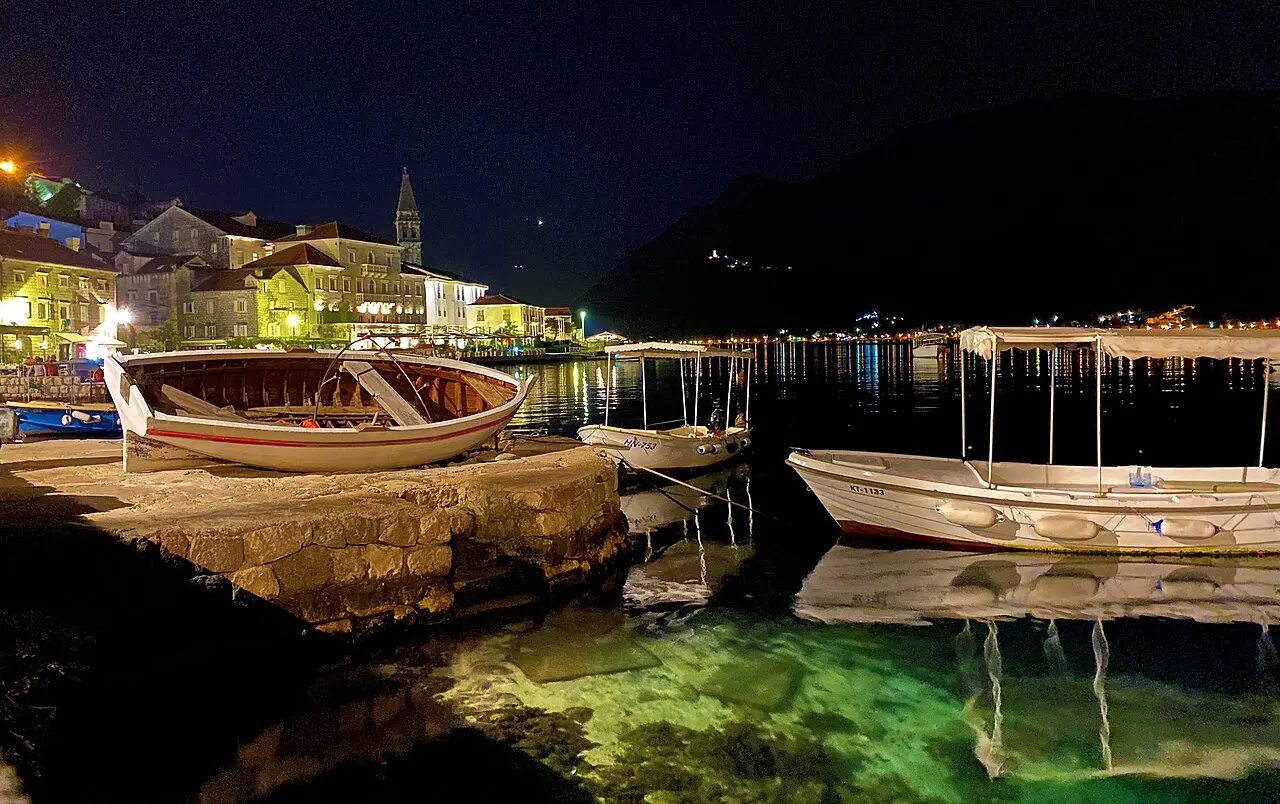
Perast is the Bay of Kotor distilled to its most beautiful, slowest moment. Once home to a celebrated nautical school and a fleet of sea captains, it spent its wealth on baroque palaces and churches and then, when the ships and the fortunes went, simply stopped growing. What is left is a single curved stone waterfront a few hundred metres long, lined with palazzi and crowned by the tall bell tower of St Nicholas, looking out at the two islets that make this the bay's signature view. There is no big road through the heart of it, barely any traffic, and a hush that the rest of the bay only finds at dawn.
As a base, Perast is for travellers who want to be inside that hush rather than visiting it. Most people come on a boat or a bus for an hour or two; staying overnight means you keep the waterfront after the day-trippers leave and again before they arrive — the magic golden-hour bookends when the light goes soft and gold and the water turns to glass. It is the bay's most quietly romantic place to sleep, made for couples, honeymooners, slow travellers and anyone who would rather have one perfect, still village than a busy town's worth of choice.
It is the wrong base if you want a wide choice of restaurants and bars at midnight, if you are travelling with restless teenagers who need things to do, or if you need to be able to drive to your room's door. Perast is tiny and gentle; it rewards people who treat a stay here as the calm centre of a Montenegro trip and are happy to drive or bus the short way into Kotor for the headline sights and the buzz.
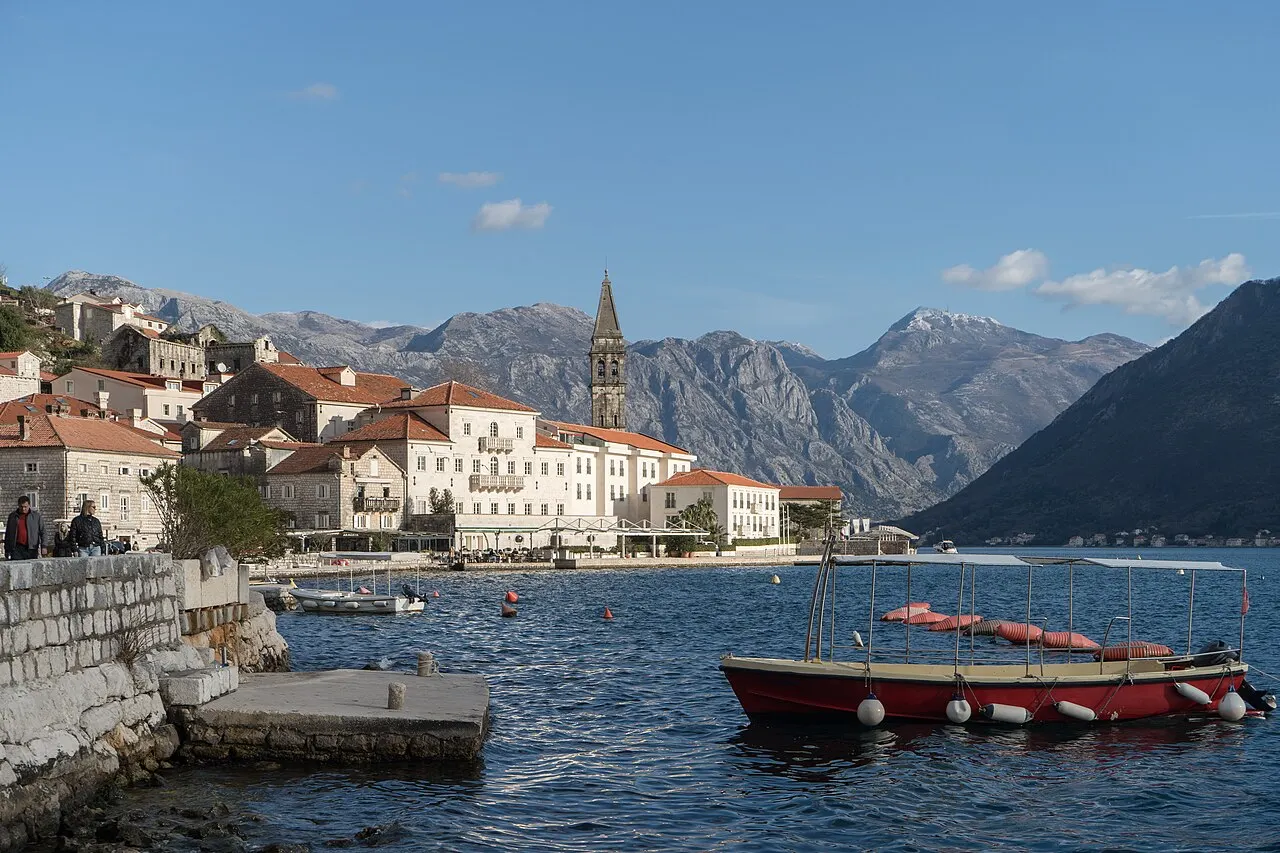

The kinds of stays you'll find
Perast has no resorts and no high-rises — protected heritage and a lack of land see to that — so accommodation here is small, characterful and overwhelmingly waterfront. At the top sit a few boutique and palace hotels: restored baroque captains' houses turned into intimate stays of a handful of individually styled rooms, often with stone walls metres thick, a breakfast terrace over the water and personal, family-run service in place of resort facilities. These are the romantic splurge of the bay, and the ones that book earliest because there are so few rooms in the whole town.
Alongside them are waterfront guesthouses and apartments — self-catering studios and rooms in old stone houses, some with their own little jetty or swimming ladder, ideal if you want space, a kitchen or a slightly gentler price than the palace hotels. Because the village is so compact, the difference between properties is less about location — almost everything is on or just behind the one seafront street — and more about the view, the number of stairs, and whether you are right on the water or a row back. The single most useful question to a host is simple: is the room on the seafront with a bay view, or set behind on the hillside lane?
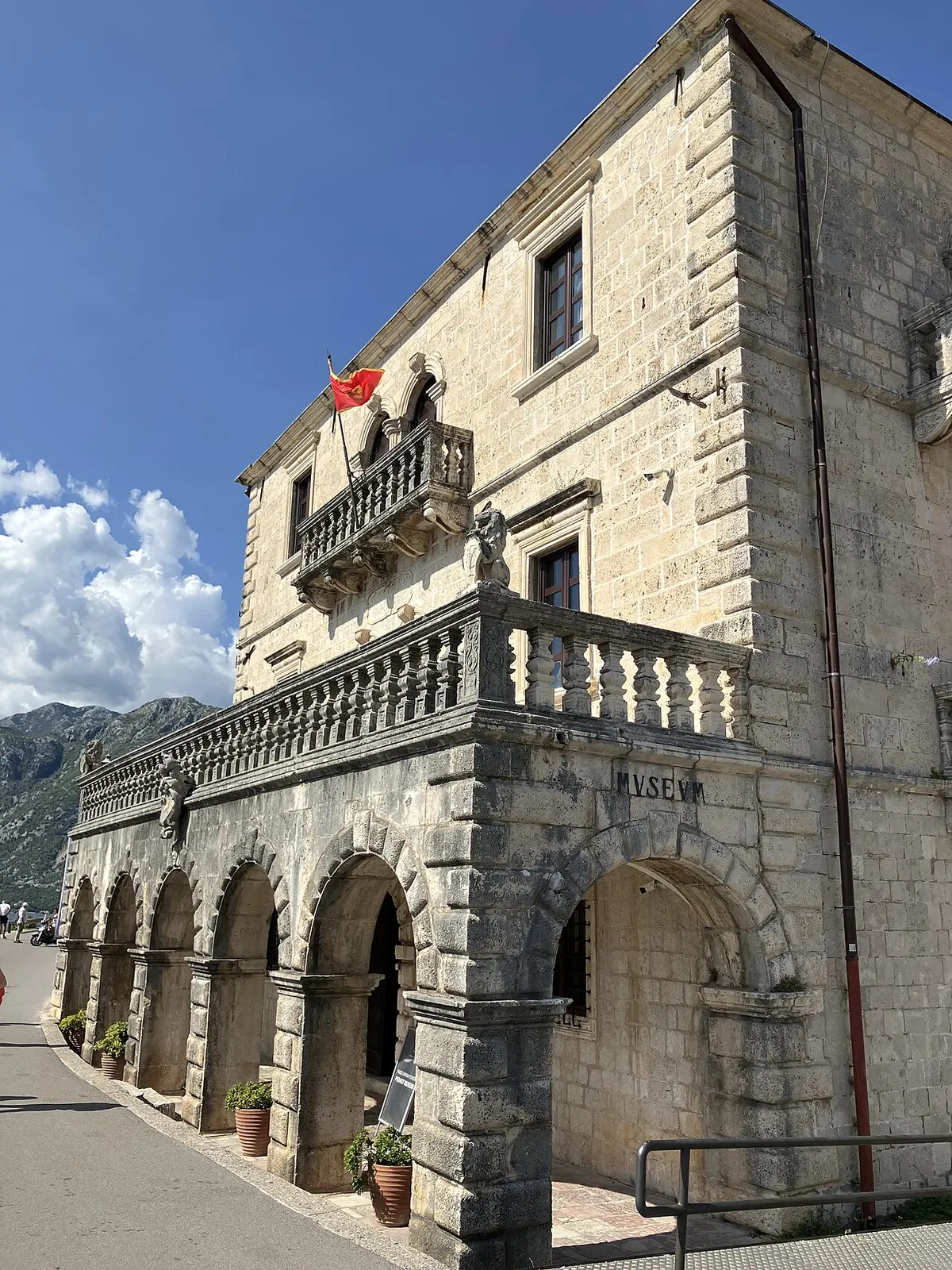
- Boutique & palace hotels — a few rooms in restored baroque captains' houses; the romantic splurge, book early.
- Waterfront guesthouses & apartments — family-run, often with a jetty or swimming ladder, good for space and value.
- Almost everything is on or just behind one seafront street, so ask about the view and the stairs, not the neighbourhood.
- The whole town has very few rooms — for summer dates and special occasions, reserve well ahead.
 Romantic Hotels in Kotor Bay
Where Perast's palazzo stays sit among the bay's most romantic rooms for couples.
 Luxury Hotels in Kotor Bay
Higher-end bay stays, including Perast's restored-palace boutique hotels.
Map pins
Map data © OpenStreetMap contributors · Tiles © OpenFreeMap
The island, the waterfront and the daily rhythm
The reason to wake up in Perast is the view from your window and the rhythm it sets. Step out onto the seafront and the bay is right there: the long stone promenade, the tall churches, and offshore the two islets — natural St George with its cypresses and Benedictine monastery, and man-made Our Lady of the Rocks with its blue-domed church, raised over centuries on the hulls of scuttled ships and stones dropped by returning sailors. Small boats run the short hop out to Our Lady of the Rocks from the waterfront, and staying here means you can take that trip first thing, before the day boats arrive, with the island almost to yourself.
The pleasure of a Perast stay is that there is gloriously little to organise. The town has no beach in the sandy sense — the bay is a deep, steep-sided ria, so you swim off ladders, flat rocks and a couple of small bathing concrete platforms, in clear, calm, surprisingly deep water that stays swimmable well into autumn. The days fill themselves: a swim and a coffee on the quay, the short boat to the island, a long seafood lunch over the water, an afternoon doze, and then the evening that you came for — the day-trippers gone, the light turning, the bell of St Nicholas marking the hour, and the whole waterfront yours.
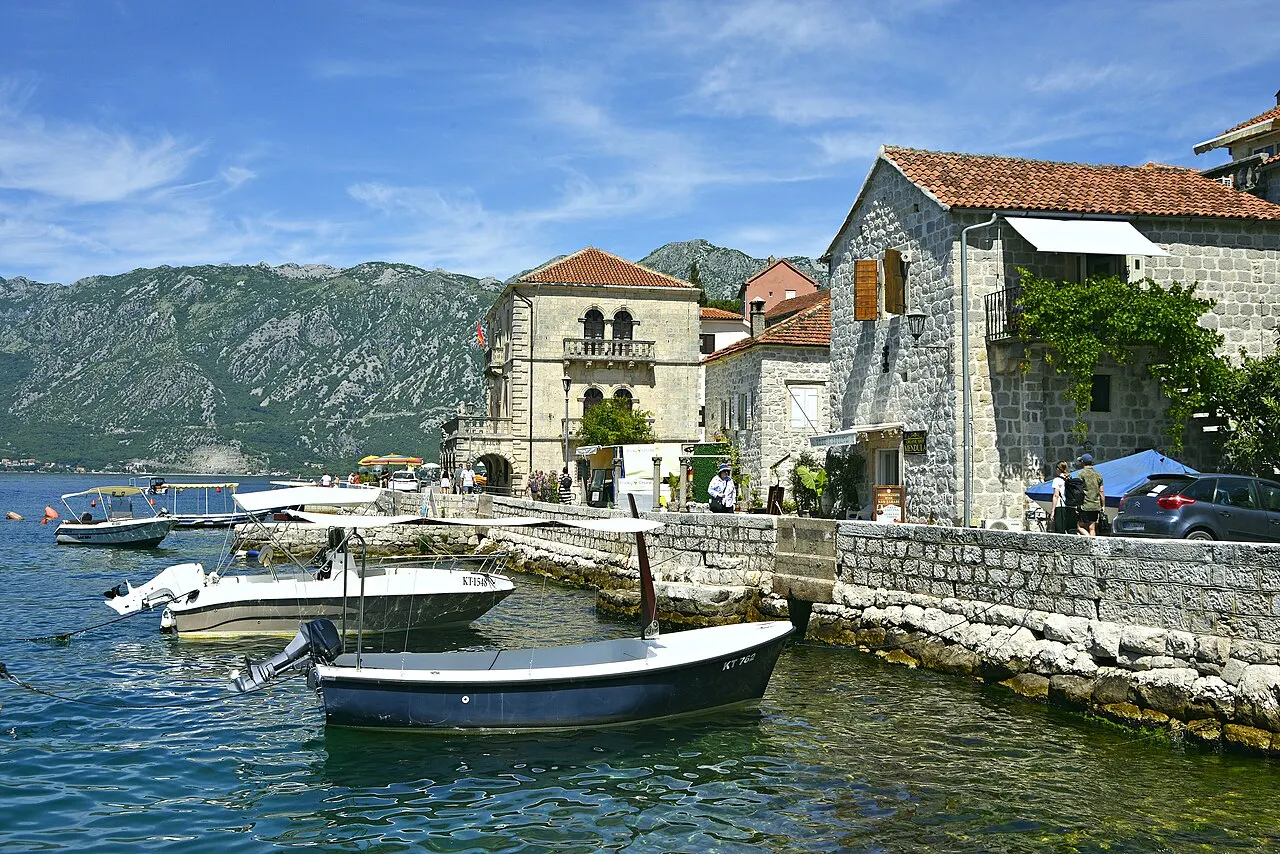
- Take the short boat to Our Lady of the Rocks early, before the day boats arrive, while you have the island to yourself.
- There's no sandy beach — swim off ladders, rocks and small platforms in clear, deep, calm water; bring water shoes.
- St George islet has a monastery and cypresses but is not open to visitors — it's the one you admire, not land on.
- The whole point of staying is the quiet evening and early morning, when the day-trippers have gone and the waterfront is yours.


Eating and the slow evenings
Perast eats the way it lives — slowly, by the water, in a handful of places rather than a strip. Waterfront konobas and restaurant terraces are built right out over the bay, and the food is classic Boka coastal fare: buzara, the bay's signature dish of mussels or mixed shellfish simmered in white wine, garlic and olive oil and served in the pan with bread; fresh fish grilled simply and priced by the kilo; Njeguši prosciutto and cheese from the mountain villages above; and a glass of robust Montenegrin Vranac or a crisp local white as the sun drops behind the ridge. Because the town is so small, dinner here feels less like choosing a restaurant and more like settling into the evening.
Staying overnight changes the meal entirely. By day the seafront tables compete with tour groups; by evening they belong to the few people who are sleeping in town, and a Perast dinner becomes one of the most peaceful, romantic meals in the whole bay — candlelight on the water, the islands fading to silhouettes, the lights of Kotor's mountains away to the south. There are only so many tables in such a small place, so in high summer it is worth booking your dinner ahead, and worth remembering that for a wider choice of restaurants and any real nightlife you'll be making the short trip into Kotor.
- Waterfront konobas and restaurant terraces sit right over the bay — order buzara, fresh fish by the kilo and a glass of Vranac.
- Evenings are the prize: once the day-trippers leave, a Perast dinner is among the bay's most romantic meals.
- There are only a few places to eat, so book dinner ahead in high summer and carry some cash for smaller konobas.
- For a wider restaurant choice and any nightlife, plan to head into Kotor — Perast itself is quiet after dark.


Cars, parking and getting in with your bags
The single practical thing to understand before booking Perast is the car situation. The seafront through the town is closed to general traffic, so you cannot drive to most properties' front doors. Instead, you park on the approach road above the village — there is paid parking on the entrance — and walk down into the town and along the waterfront to your stay, wheeling your cases over stone. It is a short walk, but a real one, so pack lighter than usual, ask your host exactly where to park and how far the room is from it, and check whether they can help with bags. For a tiny baroque town built for boats and feet, this is part of the deal.
Getting to Perast in the first place is straightforward. It sits on the bay road between Kotor and the Verige strait, roughly a 20-30 minute drive from Kotor's Old Town (verify the current journey time, as the bay road can be slow in summer traffic). The regular Kotor-Risan buses stop in Perast, so you can arrive and explore without a car at all, and a taxi or a pre-booked transfer is easy. If you are touring Montenegro by car, you can still base here — you simply keep the car in the approach parking and walk in, using it for day trips to Kotor, the mountains and beyond.
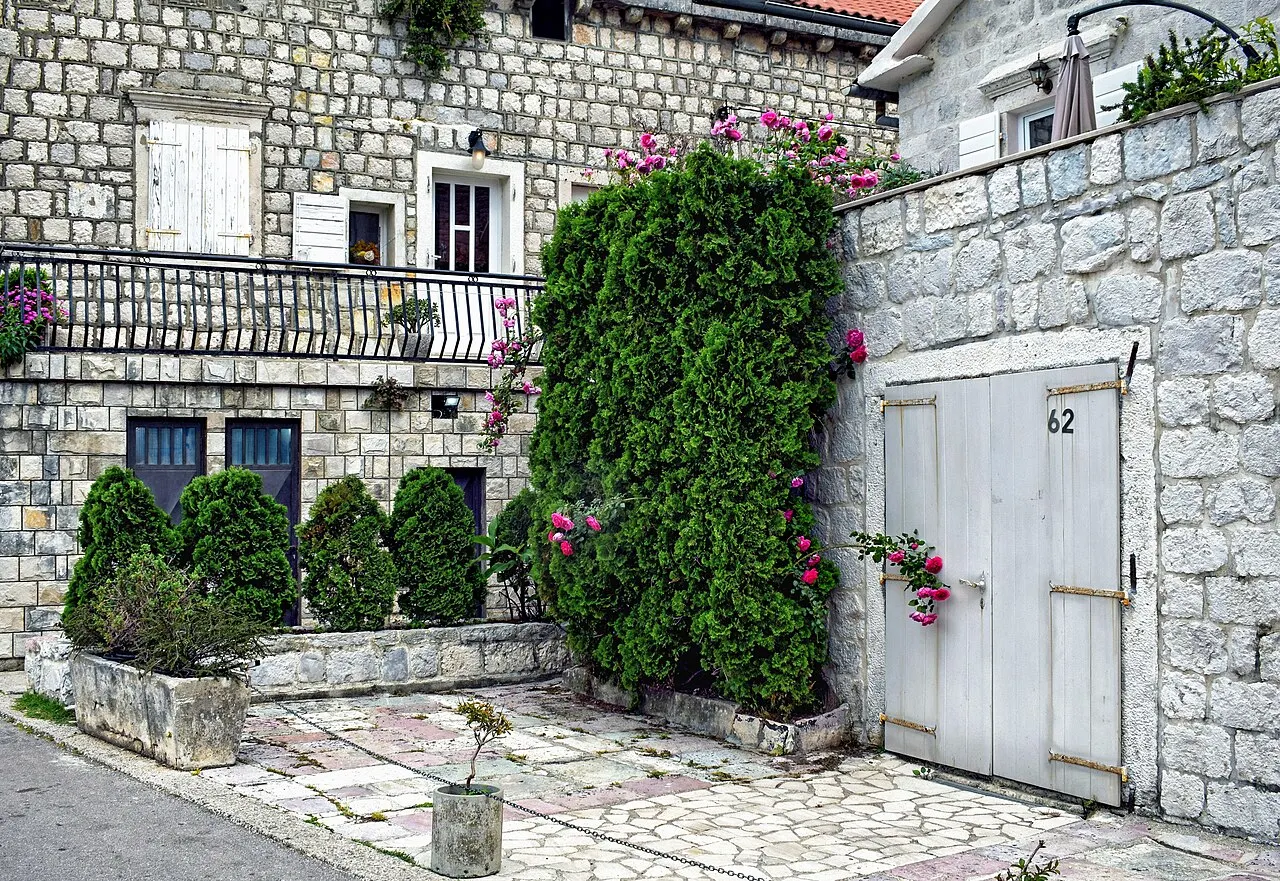
- The seafront is largely car-free — park on the approach above the village (paid) and walk down to your stay with your bags.
- Pack light, and ask your host exactly where to park, how far the room is, and whether they can help with luggage.
- Perast is roughly a 20-30 minute drive from Kotor's Old Town on the bay road — verify the current time, slower in summer.
- The Kotor-Risan bus stops in Perast, so you can base here car-free and still reach Kotor and the bay villages easily.
Perast versus Kotor: which base is for you
The honest way to choose between Perast and Kotor is to picture your ideal evening. If it is a quiet table over still water, the islands going dark offshore, and almost no one else around, Perast wins outright — it is calmer, more romantic and more beautiful at golden hour than anywhere in the bay, and a couple of nights here is the slow heart of many a Montenegro trip. If your ideal evening is wandering lamplit medieval lanes with a dozen restaurants and a few bars to choose from, and rolling out of bed into the cathedral square and the start of the walls climb, Kotor's Old Town is the better base.
Many travellers do not choose at all — they split the stay, giving Kotor a night or two for the Old Town, the walls and the buzz, and Perast a night or two for the quiet and the view. Because the two are only a short bay-road hop apart, that is genuinely easy to arrange. Whichever you pick, treat Perast as the place you come to slow right down: book early because there are so few rooms, ask the right questions about the view and the stairs, and keep the volatile details — room rates, parking charges, bus and boat times — verified before you build a budget or a day around them, because in a town this small the prose stays evergreen and the numbers are yours to confirm.


Staying in Perast at a glance
Use this quick card to weigh Perast as a base. The shape of the town, the car-light waterfront, the islands and the quiet evenings are evergreen; the volatile details — hotel and apartment rates, exact bus and boat times, parking charges and restaurant prices — change with the season and the property, so verify them directly before you book.
- What it is: a tiny baroque captains' town on the bay, one quiet stone waterfront facing two famous islets.
- Best for: couples, honeymooners and slow travellers who want stillness, golden-hour light and a view.
- Property types: a few boutique palace hotels plus waterfront guesthouses and apartments — all small; book early.
- On your doorstep: the short boat to Our Lady of the Rocks, swimming off ladders, long waterfront dinners.
- Cars: the seafront is largely car-free — park on the approach above town (paid) and walk in with your bags.
- Access: roughly a 20-30 minute drive or a Kotor-Risan bus ride from Kotor's Old Town — verify the current time.
- Trade-off: the bay's most romantic, quietest base, but little dining choice and no real nightlife — head to Kotor for that.
- Verify directly: room rates, bus and boat times, approach-parking charges and restaurant prices.

Perast
The baroque captains' town on the Bay of Kotor: its seafaring palaces and churches, the waterfront walk, St Nicholas and its bell tower, the boats to Our Lady of the Rocks, the Fašinada, and how to arrive, stay and eat.
Read guideBest romantic hotels in Kotor
How to choose a romantic hotel around Kotor for two: Old Town character stays, bay-view rooms in Dobrota and across the water, palace stays in Perast, spa and pool retreats, and how to weigh atmosphere against quiet, parking and cruise-day noise.
Read guide
Best Restaurants in Perast
Where and how to eat in Perast: waterfront tables looking straight out at Our Lady of the Rocks, fresh bay seafood and buzara, coffee on the quay, the bay's most romantic golden-hour dinner, and how to time and book a table when day-trippers fill the small stone village.
Read guideMore in Where to Stay
6
Accessible Hotels & Stays in Kotor
Where to stay in Kotor for step-free access: why the cobbled, stepped, car-free Old Town is the hardest base for limited mobility, the flatter bay alternatives like Dobrota and the modern wider-bay hotels, and the access questions to ask before you book.
Read guide
Best apartments in Kotor
How apartment stays work around the Bay of Kotor: why they're the dominant choice here, what a kitchen and space buy you, where to find them by area, and the practical realities — stairs, parking, air-con, bay views and self check-in — to weigh before you book.
Read guide
Best boutique hotels in Kotor
How to find Kotor's most atmospheric boutique stays: restored stone palaces and captains' houses inside the Old Town walls, along the Dobrota and Muo–Prčanj shore, and in baroque Perast — and how to choose by atmosphere, noise, stairs and view.
Read guide
Best budget hotels in Kotor
How to stay cheaply around the Bay of Kotor without losing your days to buses, parking or steep walks: where the value is, what budget looks like here, the shoulder-season and cruise-day pricing tricks, and the hidden costs to weigh before you book.
Read guide
Best family hotels in Kotor
Where families should stay around the Bay of Kotor: why the car-free Old Town is rarely the best base, the calmer bayfront bases that give space, parking, pools and swimming, and the practicalities — kitchens, prams, deep water — that matter most with kids.
Read guide
Best Hotels in Kotor by Area
A practical framework for choosing where to stay around the Bay of Kotor — matching the Old Town, Dobrota, Muo and Prčanj, Perast and Tivat to first-timers, couples, families, drivers, luxury travellers and cruise extensions, with the booking checks that matter.
Read guide