
Fašinada in Perast
A guide to the Fašinada — Perast's centuries-old tradition, held every 22 July, when at dusk a procession of boats rows out to Our Lady of the Rocks and drops stones to reinforce the island — with its legend, timing and how to watch respectfully.

Photo: Fatih Beki / Unsplash
- ✓The Fašinada is held every year on 22 July in Perast — one of the bay's oldest and most moving traditions.
- ✓At dusk, a procession of decorated boats rows out from the Perast waterfront to Our Lady of the Rocks, dropping stones to reinforce the man-made island.
- ✓The ritual re-enacts the centuries-old custom that built the island church reef by reef, stone by stone.
- ✓It is a solemn local rite, not a tourist show — by convention the rowing boats carry only men, and the mood is reverent.
- ✓Watch quietly from the Perast waterfront at dusk; the date is fixed at 22 July, but verify the year's start time before you go.
What the Fašinada is
The Fašinada is one of the most beautiful and least touristy traditions in the whole Bay of Kotor — a quiet, centuries-old ritual that the people of Perast keep every year on 22 July. As the light fails, a procession of boats sets out from the Perast waterfront and rows out to Our Lady of the Rocks, the man-made islet in the bay. There, the boats drop stones into the water around the island, repeating the act that, over generations, built the reef the church stands on. The name comes from the bundles and loads of material historically used to shore up the islet.
Our Lady of the Rocks is not a natural island. By tradition it grew from a votive habit: after a holy icon was found on a rock in the bay, sailors returning safe from voyages would drop stones at the spot, and over the centuries — supplemented by deliberately sunk, stone-laden old ships — the reef rose enough to build a church on. The Fašinada is the living continuation of that act: a community rowing out each year to add to the island that its ancestors made, so that the tradition, and the island, endure.
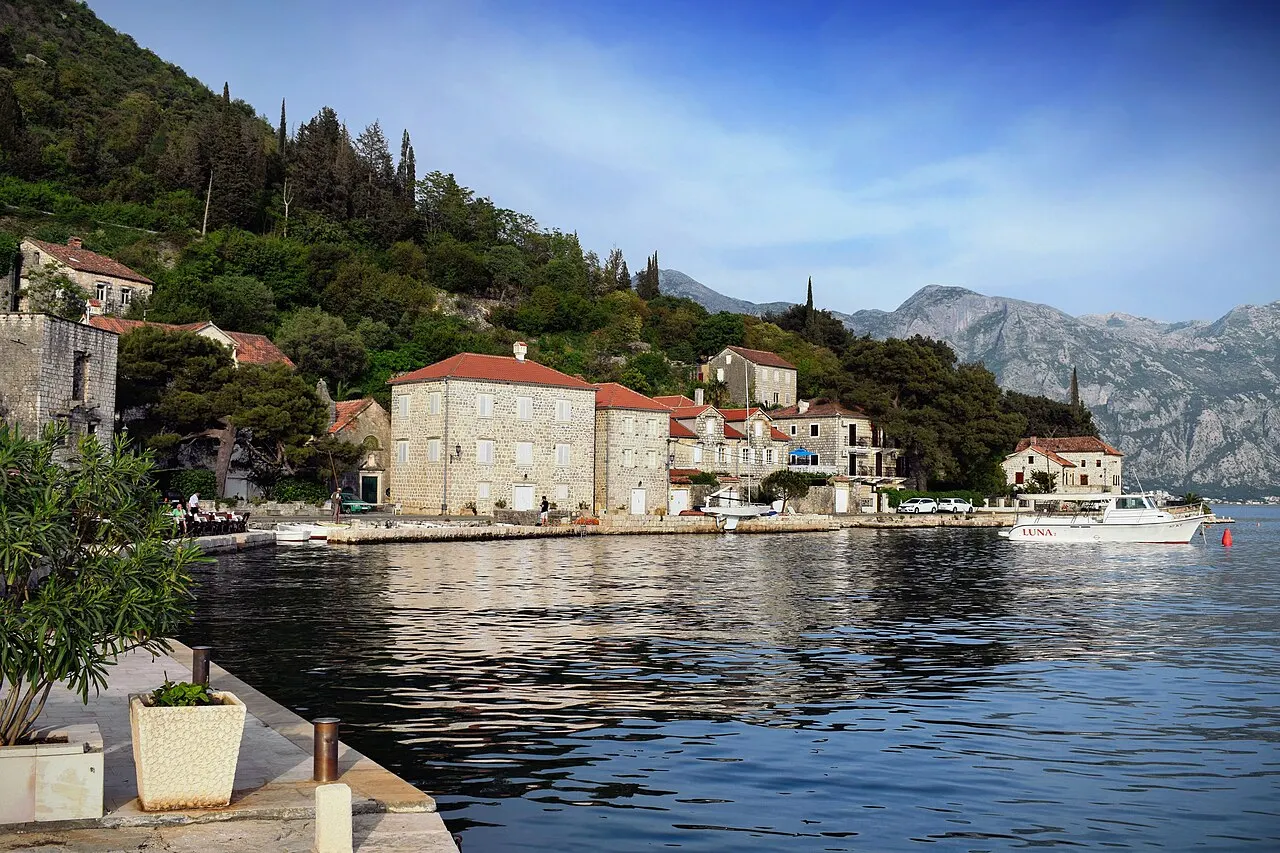
The legend and the meaning
Behind the ritual lies the bay's most cherished story. The traditional account tells of two brothers from Perast who, in the 15th century, found an image of the Madonna and Child on a rock rising from the sea, and of a vow made to build a church on that spot. Because there was barely any land, the only way to make the place was to make the land — and so the custom of fašinada was born, with locals laying stones and sinking old vessels until an islet emerged. The church that crowns it today, with its blue dome, votive offerings and silver plaques, is the result of that patient, centuries-long act of devotion.
Understanding this is what makes witnessing the Fašinada moving rather than merely picturesque. It is not a re-enactment staged for visitors; it is a vow being kept. The boats that row out at dusk carry that history with them, and by convention the rowers are men of Perast, the rite passed down through families. Knowing the meaning is also why visitors are asked to watch with the respect due a religious procession, not a fireworks show.
- Tradition holds an icon of the Madonna was found on a rock in the bay, prompting a vow to build a church there.
- With almost no land, locals raised an islet by dropping stones and sinking stone-laden old ships over centuries.
- The Fašinada re-enacts that vow each 22 July — a living act of devotion, not a staged spectacle.
Map pins
Map data © OpenStreetMap contributors · Tiles © OpenFreeMap
When and where to watch
The Fašinada is fixed to the evening of 22 July, and it happens at dusk — the procession sets out as the light goes, so the timing follows the sunset rather than a clock. The natural place to watch is the Perast waterfront, the long stone quay that faces the two islands, where you can see the boats gather and row out across the still bay toward Our Lady of the Rocks. There is no ticket and no grandstand; you simply find a place along the waterfront and watch quietly as the procession passes.
Get to Perast in good time before dusk. The town is small and cars are kept out of its core, with paid parking on the approach; you can also come by the regular Kotor–Risan bus or, more romantically, by boat as part of a bay trip. Aim to be in place with light to spare so you can settle on the quay and let the evening unfold. Because the exact start moves with the sunset and the year's arrangements, treat the precise hour as something to confirm locally rather than a number to rely on.
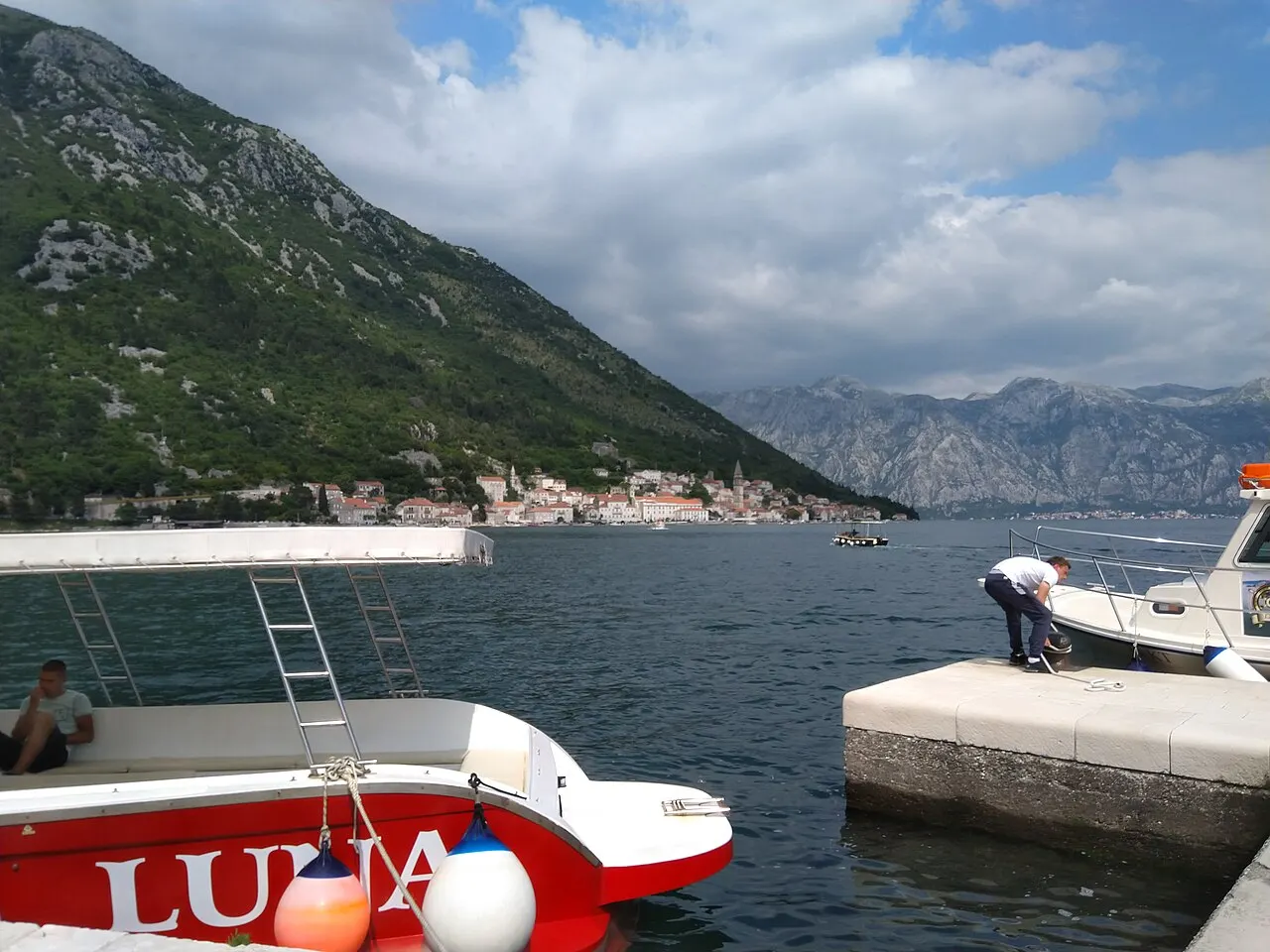
- Fixed date: every 22 July, beginning at dusk — the timing tracks the sunset, not a set clock hour.
- Watch from the Perast waterfront facing the two islands; it is free and open, with no ticket or grandstand.
- Arrive before dark: Perast is car-free at its core (paid parking on the approach), or come by bus or bay boat.

Watching respectfully, and making an evening of it
The single most important thing for a visitor is to treat the Fašinada as the solemn local rite it is. This is a community keeping a vow, not a performance laid on for tourists. Watch quietly, keep your distance from the boats and the rowers, do not try to join or follow the procession on the water, and be discreet with photography — no flash, no pushing for a shot, no treating the participants as scenery. The mood on the quay is reverent, and the experience is far richer if you let it stay that way.
Made part of a wider evening, it is one of the bay's most romantic nights. Perast at dusk — the captains' palaces, the bell tower of St Nicholas, the two islands on glassy water — is cinematic before a single boat moves. Come early for a slow dinner on the waterfront, watch the procession at dark, and let the stillness do the rest. In high July the good waterfront tables fill, so book ahead, and keep your plan loose enough to simply stand and watch when the boats row out.
- It is a religious tradition — watch quietly, keep clear of the boats, do not join the procession, and be discreet with photos.
- Make an evening of it: a slow Perast waterfront dinner before dusk, then the procession at dark.
- Book a waterfront table ahead in peak July, and keep your plan flexible enough to just stand and watch.

Kotor Events Calendar
The year-round guide to Kotor's festivals and traditions: the winter and summer Carnivals, the KotorArt summer festival, the great Bokeljska Noć on the bay, the Fašinada at Perast, the Boka Navy's St Tryphon traditions, and the festive season.
Read guide
Our Lady of the Rocks
A guide to Our Lady of the Rocks off Perast: the legend and the votive stones that built the islet, the 17th-century church, its icon, silver tablets and museum, the short boat across, the Fašinada ritual, and how to time and photograph a visit.
Read guide
Perast
The baroque captains' town on the Bay of Kotor: its seafaring palaces and churches, the waterfront walk, St Nicholas and its bell tower, the boats to Our Lady of the Rocks, the Fašinada, and how to arrive, stay and eat.
Read guideMore in Events
6Boka Navy Traditions in Kotor
A guide to the Boka Navy (Bokeljska Mornarica) of Kotor — one of the world's oldest maritime confraternities, its ties to St Tryphon and the 3 February feast, the ceremonial kolo round dance before the cathedral, and the gold-braided historic uniforms, plus how to witness it and where it fits in a Kotor stay.
Read guide
Bokeljska Noć (Boka Night)
A guide to Bokeljska Noć — Kotor's late-summer festival of decorated, illuminated boats on the bay, closing with fireworks over the water — including where to stand, the waterfront crowds and where to stay.
Read guide
Camellia Days in Stoliv
A guide to Camellia Days (Praznik kamelija) in Stoliv — the quiet Vrmac-shore village that is the Bay of Kotor's camellia heart, a flower the captains brought home from the Far East and now a symbol of the Boka, celebrated each spring with blooms, a camellia ball and gentle bay walks, plus how to fold it into a Kotor stay.
Read guide
Christmas & New Year in Kotor
What Christmas and New Year are like in Kotor — a quiet, lamplit, often wet off-season Old Town with festive lights and a New Year's Eve celebration on the squares, hearty winter food and the calm the summer never offers.
Read guideKotor Carnival Guide
A planning guide to Kotor's Carnival in both its forms — the centuries-old winter Carnival of masks and parades through the off-season Old Town, and the summer Carnival in the warm months: what to expect, when each falls, hotel timing and crowds.
Read guideKotor Children's Theatre Festival
A family guide to Kotor's international children's theatre festival — a long-running summer fixture that fills the Old Town's squares with puppetry, street theatre, shows and a children's parade — with how to find the programme, when shows run, ticket and free-event tips, and where to stay with kids.
Read guide