
Kotor Cruise Schedule Guide
How to check Kotor cruise calls and use the schedule to plan your day — when ships arrive and leave, why call size matters, and how to time the Old Town, the walls climb, restaurants and boat trips around the calendar.

- ✓Knowing which ships call on your date — and how big they are — is the key to planning Kotor around the crowds rather than into them.
- ✓Ships generally arrive in the morning and sail in the late afternoon or evening, so the town surges to a midday peak and drains by dusk.
- ✓Read the schedule for two things: the number of ships and their size. One small ship is a quiet day; several large ones together is the busiest.
- ✓Use a ship-free or single-ship morning for your headline experiences — the climb, the cathedral, a slow lunch.
- ✓We don't print live call counts or times here because they change daily — always verify the current schedule against your dates.
Where can I check the Kotor cruise schedule?
The Kotor cruise calendar is published and updated by the port and mirrored on the cruise-tracking sites travellers use everywhere, so checking it takes a minute once you know to look. Search the current season's schedule for your specific dates rather than relying on a remembered pattern, because calls shift from year to year and even week to week. We deliberately don't reproduce live call counts, ship names or times on this page — they change daily, and a figure printed here would mislead you the moment it's stale. Treat the official port schedule as the source of truth and verify it close to your trip.
If you're sailing in on a ship yourself, your own line's itinerary tells you your arrival and all-aboard times, which is the most important pair of numbers you'll plan around. If you're staying in town and want to choose calm days, the port calendar lets you see in advance which mornings are quiet and which are busy — information worth its weight when Kotor's tiny walled centre fills as fast as it does.
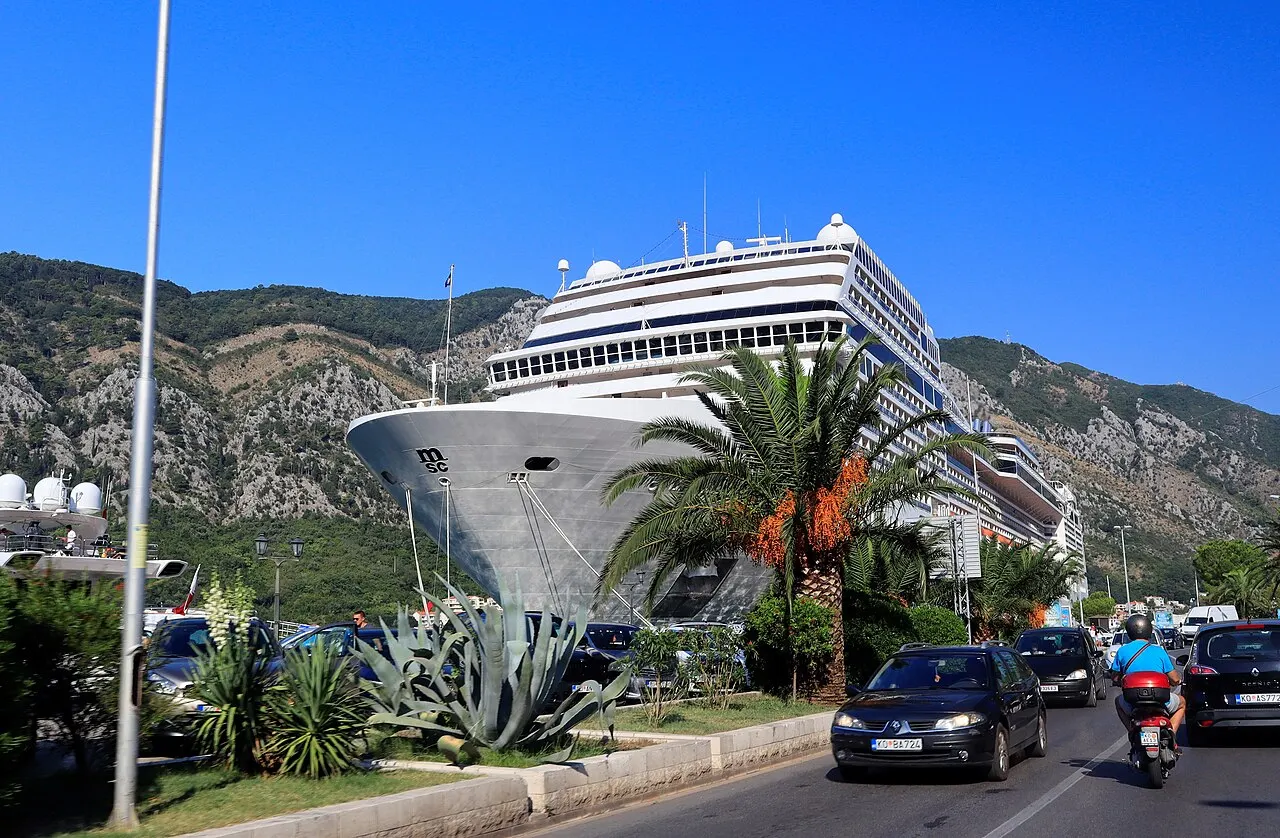
When do cruise ships arrive and leave Kotor?
As a rule, ships calling at Kotor arrive in the morning and depart in the late afternoon or early evening, giving passengers a single port day ashore. That means the town doesn't fill steadily through the day — it surges. The lanes are quiet at dawn, build through the late morning as tenders run and passengers land, peak around midday, and then empty noticeably once all-aboard calls begin and ships pull away. By dusk the Old Town that felt like a corridor at noon has exhaled back into lamplight and quiet.
Exact arrival and departure times vary by ship and by day, so check your own date rather than assuming a fixed window. The pattern, though, is reliable enough to plan around: think of the day as a curve that peaks at midday, and aim your best experiences at the cool, empty edges of it. If you're a passenger, write down your all-aboard time and build a generous buffer back to the tender — the bay road and the walls both move slowly in summer heat.
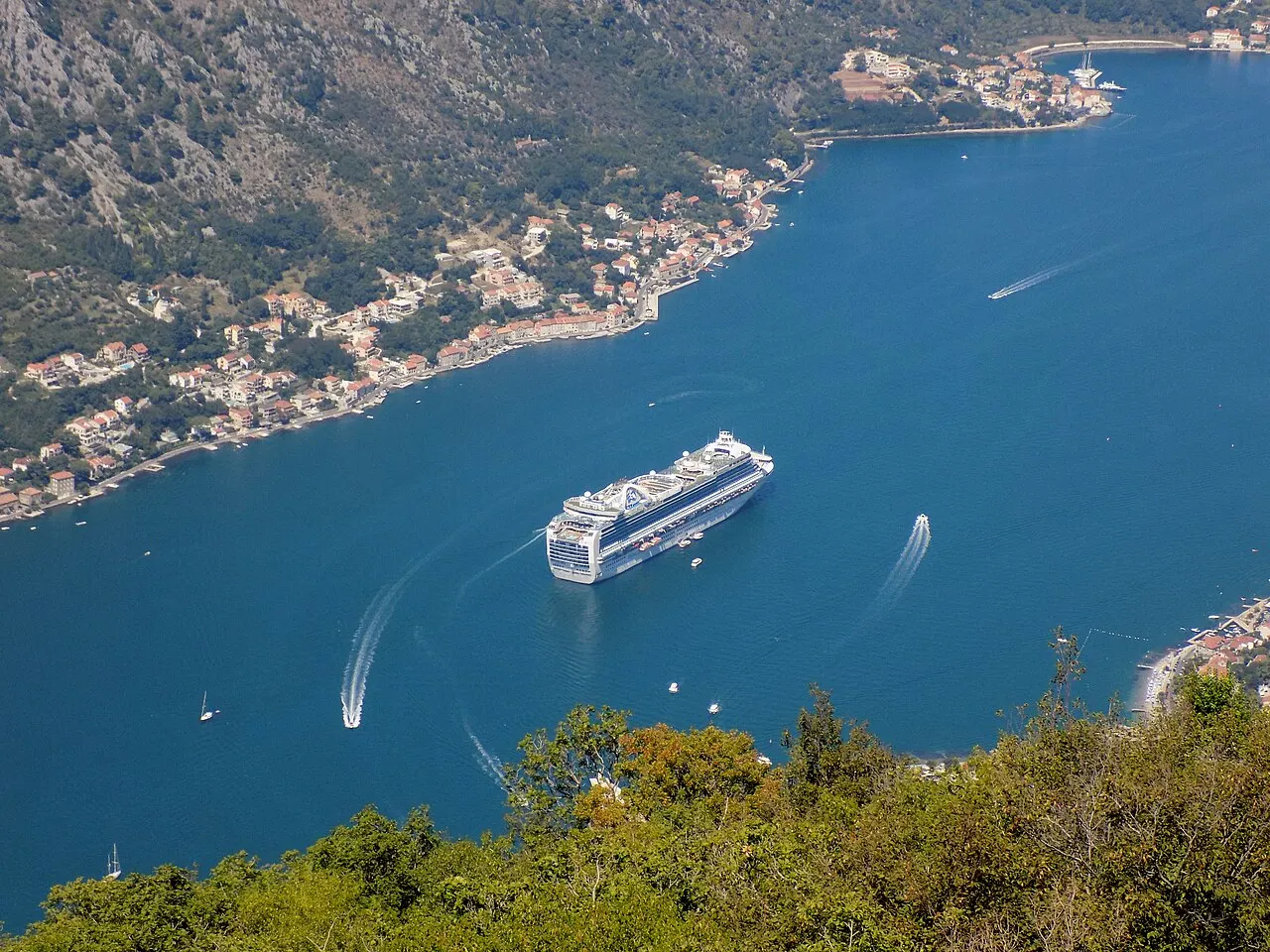
- Typical shape: arrive morning, sail late afternoon or evening — a single port day.
- The crowd surges to a midday peak and drains by dusk.
- Times vary by ship and day — verify your own date's arrival and all-aboard.
- Passengers: note your all-aboard time and leave a buffer back to the tender.
Map pins
Map data © OpenStreetMap contributors · Tiles © OpenFreeMap
Why does the size and number of ships matter?
Because Kotor's walled town is tiny and its berth sits right outside the Sea Gate, the schedule's headline isn't just whether ships call — it's how many and how large. A single smaller ship barely changes the town's mood; you'll hardly notice it. A day with two or three large vessels in port together is a different experience entirely, with the cathedral, the main squares and the staircase up the walls all hitting their fullest. When you read the calendar, read it for both figures, and weight a day with several big ships accordingly.
This is where the schedule becomes genuinely useful rather than just informative. If you have any flexibility in your dates, a glance at ship counts lets you choose a quieter day for your headline plans — the climb, a long lunch, the cathedral — and save errands or downtime for the busiest one. Even without flexibility, knowing a big day is coming tells you to be early and to have a bay or mountain escape ready for the midday peak.
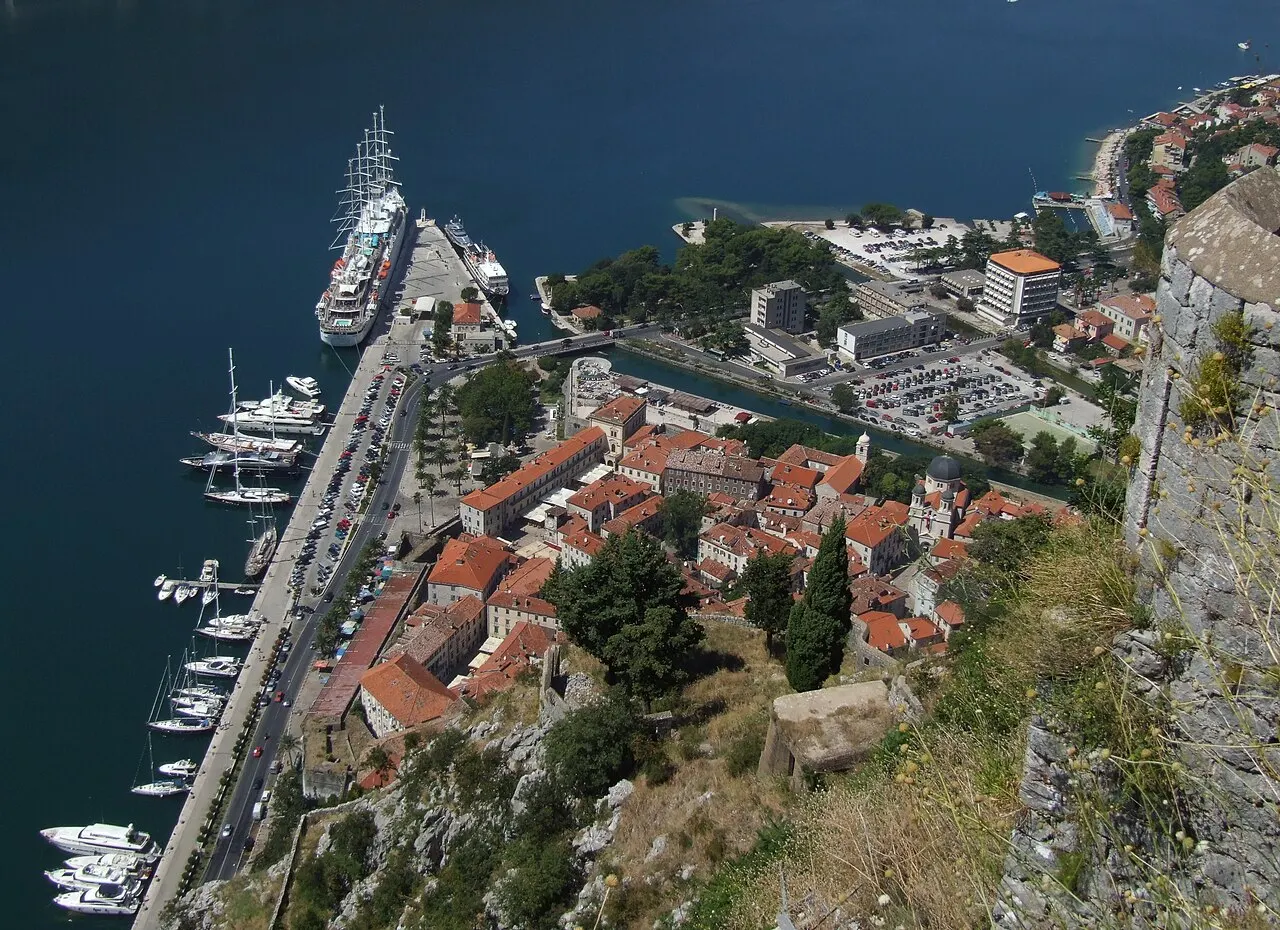
- One small ship: a quiet day, barely noticeable in the lanes.
- Several large ships together: the busiest the town gets — plan to be early or elsewhere.
- Flexible dates: pick a quieter call day for your headline experiences.
- Fixed dates: if it's a big day, go early and keep a bay or mountain escape ready.
How do I plan my day around the schedule?
Start at the edges. Do your headline experiences — the climb to St John Fortress and the cathedral — at first light, before the tenders run, while the stone is cool and the lanes near-empty. Let the late-morning surge be your cue to get on the water or up the mountain: a sheltered Perast and Our Lady of the Rocks boat, or the cable car toward Lovćen, both run quiet exactly when town is busiest. Drift back as ships sail and the afternoon softens, and save dinner for the evening, when the Old Town turns to lamplight and a table a lane off the busiest square feels like a different place.
For restaurants specifically, the schedule is your friend twice over: book ahead for dinner on big cruise nights when the town is full, and lean on the quiet evenings when the calendar is light. Boat trips work the same way — a private boat lets you set departure around your own all-aboard time and beat the island queues. The whole trick is simple once you've read the calendar: do your big things early, spend the midday peak where the crowd isn't, and let the quiet evening be the reward.
- First light: the walls and the cathedral before the tenders run.
- Late morning to midday: a Perast boat or the cable car — quiet while town peaks.
- Book dinner ahead on big cruise nights; lean on quiet evenings when calls are light.
- A private boat lets you time departure around your own all-aboard.


How to Avoid Cruise Crowds in Kotor
How to enjoy Kotor on busy cruise-port days — why the walled town fills up, how to read the cruise schedule, the early-and-late rhythm that dodges the crush, the bay and mountain escapes, and where to base for a calmer stay.
Read guide
Kotor Cruise Port Guide
Arriving in Kotor by cruise ship: whether you dock or tender, the short walk to the Old Town, the best shore excursions, currency and crowds, and how to build a back-on-board buffer around the bay's slow roads and the walls climb.
Read guide
One Day in Kotor from a Cruise
A realistic, hour-by-hour port-day route for Kotor: off the ship and into the Old Town early, the walls or cable car before the heat, a bay boat or Perast, a long lunch, and a safe back-on-board buffer — with three variants for different energy levels.
Read guideMore in Cruise Port
6
Accessible Kotor Cruise Port
Step-free cruise-port planning for Kotor — the dock-versus-tender question, the short level walk into the Old Town, the cobbled lanes and stair-bound walls, taxis and boat access, toilets, and which shore excursions fit a wheelchair or limited-mobility traveller.
Read guide
Best Kotor Shore Excursions
Compare the best Kotor shore excursions for a cruise day: the self-guided Old Town, the fortress walls, the cable car, a Perast and Our Lady of the Rocks boat, the Blue Cave, Lovćen and Cetinje, Budva, and private guides — by who they suit, effort and timing risk.
Read guide
Boat Tours for Cruise Passengers
The boat-tour options that genuinely fit a Kotor cruise call, ordered by timing risk: the short Perast and Our Lady of the Rocks run, a private boat, and the higher-risk Blue Cave — with the weather, buffer and all-aboard rules that keep you safe.
Read guide
Can Cruise Passengers Climb the Walls?
Whether the Kotor wall climb to St John Fortress fits your cruise call: the heat and fitness reality, how to time it around all-aboard, the seasonal ticket, and gentler alternatives if the full climb is too much.
Read guide
Cruise Port to Kotor Old Town
How to get from the Kotor cruise port or tender pontoon to the Old Town: the few-minute walk, the route to the Sea Gate, accessibility on the flat-but-cobbled approach, meeting points, and the tender-day note.
Read guide
Private Shore Excursions in Kotor
When a private shore excursion beats the ship's group tour in Kotor — for Perast, Lovćen and Cetinje, Budva, the Blue Cave and families — what going private buys cruise passengers on a clock, the routes that fit a port day, and how to choose and verify an operator.
Read guide