
How to Avoid Cruise Crowds in Kotor
How to enjoy Kotor on busy cruise-port days — why the walled town fills up, how to read the cruise schedule, the early-and-late rhythm that dodges the crush, the bay and mountain escapes, and where to base for a calmer stay.

- ✓Kotor's berth and tender point sit right outside the Old Town walls, so when ships are in, the crowd lands straight into a tiny, car-free maze — the pressure is concentrated, not spread.
- ✓The crush is predictable: it builds through the late morning, peaks at midday, and drains in the late afternoon as ships sail. Beat it by being early or staying late.
- ✓Check how many ships call and how big they are before you plan your day — a single small ship feels nothing like three large ones landing together.
- ✓The walls climb to St John Fortress is the single most crowded experience on a cruise morning; do it at first light or after the ships leave.
- ✓When the town is full, the smart move is to leave it — the bay, Perast, the cable car and the mountains are emptier exactly when the lanes are busiest.
- ✓Sleeping outside the walls — in Dobrota, Prčanj, Muo or Perast — and eating late buys you the quiet, golden Kotor most day-visitors never see.
Why Kotor fills up the way it does
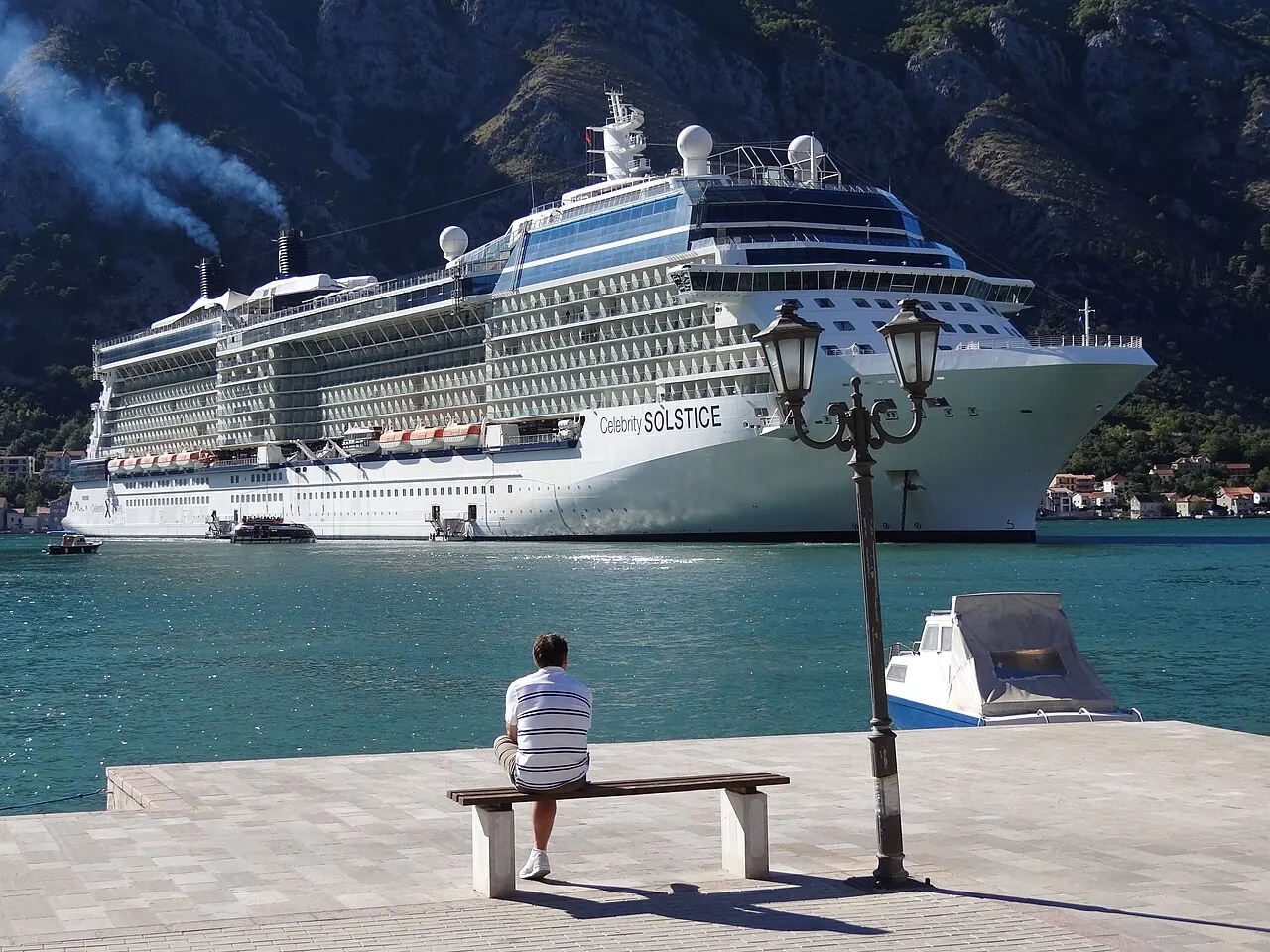
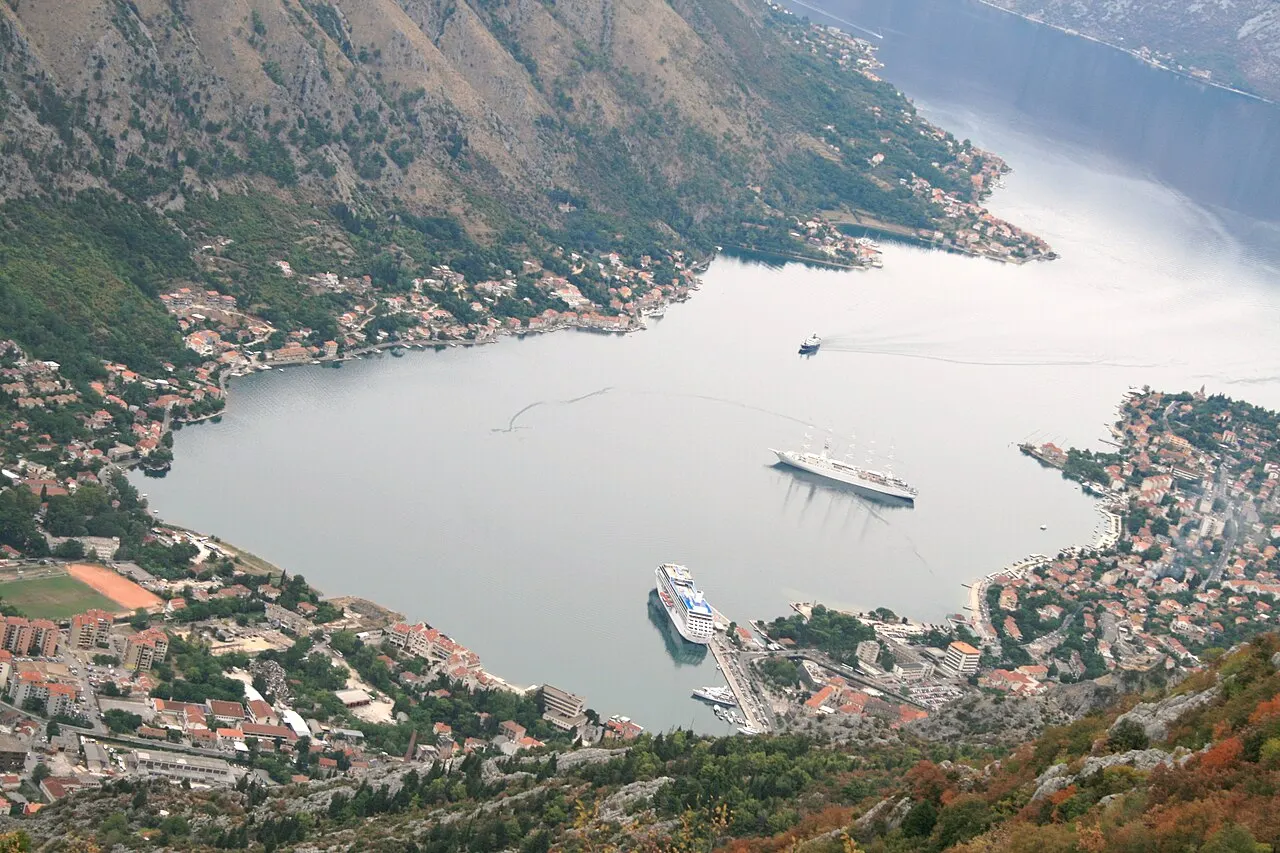
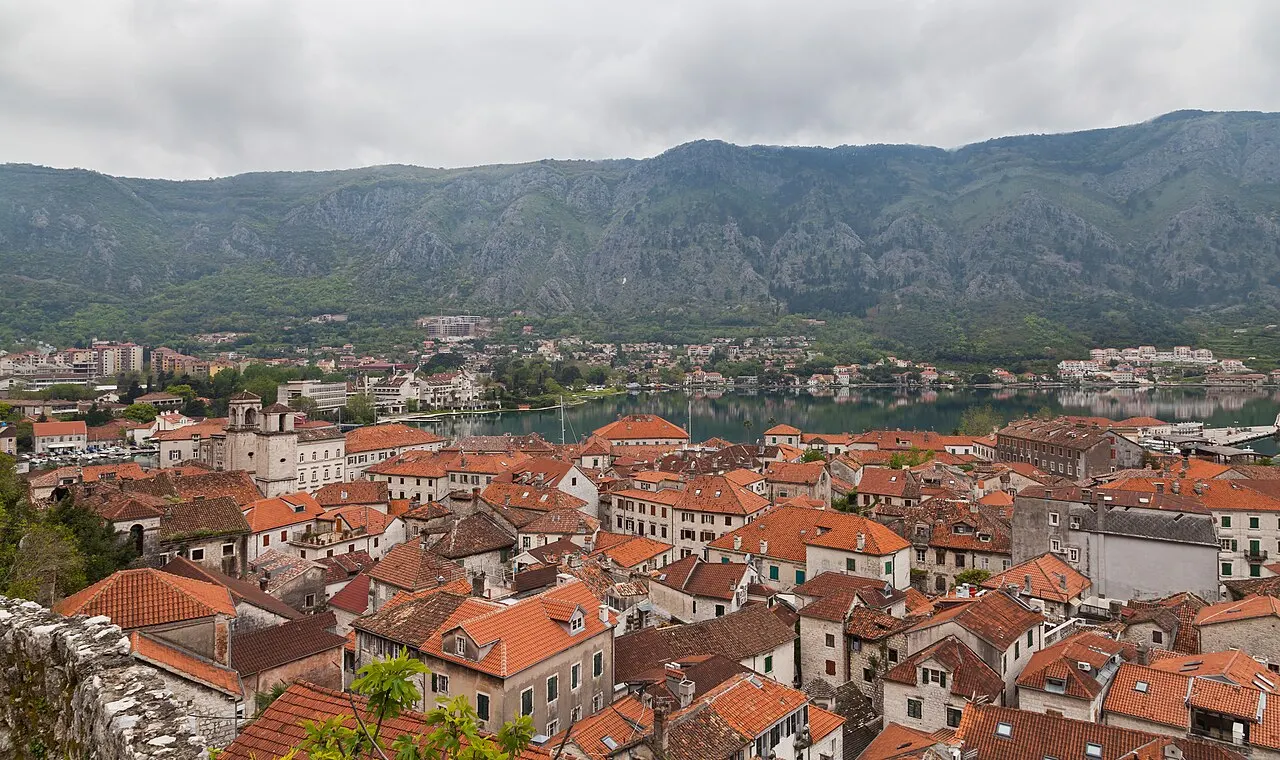
Kotor's cruise crowds are not a matter of sheer numbers so much as geometry. The berth and the tender landing sit on the quay directly outside the Sea Gate, so passengers don't filter in from a distant terminal — they step off and are inside the walls within a few minutes. The Old Town they pour into is a UNESCO-listed knot of stone lanes you can cross in ten minutes, with no cars to spread anyone out and only a handful of squares wide enough to hold a crowd. Pack a morning's worth of ships into that, and the same lanes that feel like a film set at dawn feel like a corridor at noon.
It helps to picture the rhythm rather than the headcount. Ships typically arrive in the morning, send their passengers ashore in a wave, and sail in the late afternoon or early evening. So the town doesn't fill steadily — it surges. The cathedral, the main squares and above all the staircase up the city walls hit their peak in the late-morning-to-midday window, then empty noticeably once the all-aboard calls start and the tenders ferry everyone back. Understand that curve and you can plan around the top of it instead of walking straight into it.

Read the schedule before you plan the day
The single most useful thing you can do is check the cruise calendar before deciding when to climb, when to eat and when to wander. Not all cruise days are equal: a quiet day with one small ship barely registers, while a day with two or three large vessels in port together transforms the town. Knowing in advance which kind of day you're facing lets you choose your hours — and, if you have flexibility, choose your day. A ship-free morning is the best gift Kotor can give you, and the calendar tells you where to find one.
We don't print live call counts or passenger totals here, because they change daily and would mislead you the moment they're out of date. Instead, check the current schedule against your dates and read it for two things: how many ships call, and how big they are. If you're staying overnight, plan your headline experiences — the climb, a long lunch, the cathedral — for the emptiest window you can find. If you're here for just a day yourself, the same schedule tells you when the lanes will be at their worst so you can be somewhere better.
- Check the cruise schedule for your dates before fixing your plan — see our schedule guide for how.
- One small ship ≠ three large ones; read for ship count and ship size, not just whether any are in.
- Staying overnight: protect the emptiest window for the climb and a slow lunch.
- Here for a day: use the schedule to know when to leave the lanes for the bay or the mountains.
 Kotor Cruise Schedule Guide
How to check the day's calls and use them to plan around the crowds.
 Kotor Cruise Day Itinerary
A ready-made plan that times the walls and the bay around the crush.
Map pins
Map data © OpenStreetMap contributors · Tiles © OpenFreeMap
Be early, be late: the rhythm that beats the crush
The most reliable trick in Kotor needs no booking and costs nothing: shift your day to the edges. The hour after dawn belongs to the cats and the deliveries — the lanes are empty, the light is soft, the cathedral doors swing open quietly, and you can climb the walls in the cool with the rooftops glowing below and almost no one ahead of you. By the time the tenders are running and the squares are filling, you've already had the best of the town and can drop your pace to a coffee and a slow wander.
The late afternoon and evening are the day's other gift. As ships sail, the pressure lifts almost visibly; by dusk the Old Town that felt like a turnstile at noon exhales into lamplight, quiet squares and a hush you'd never guess from the midday photos. That is when Kotor is most romantic and most itself — a long dinner a lane off the busiest square, the walls lit above you, the cats back on the warm stones. If you only remember one thing from this page, make it this: do your big things early, do nothing in particular at midday, and save the evening for the town the day-visitors miss.
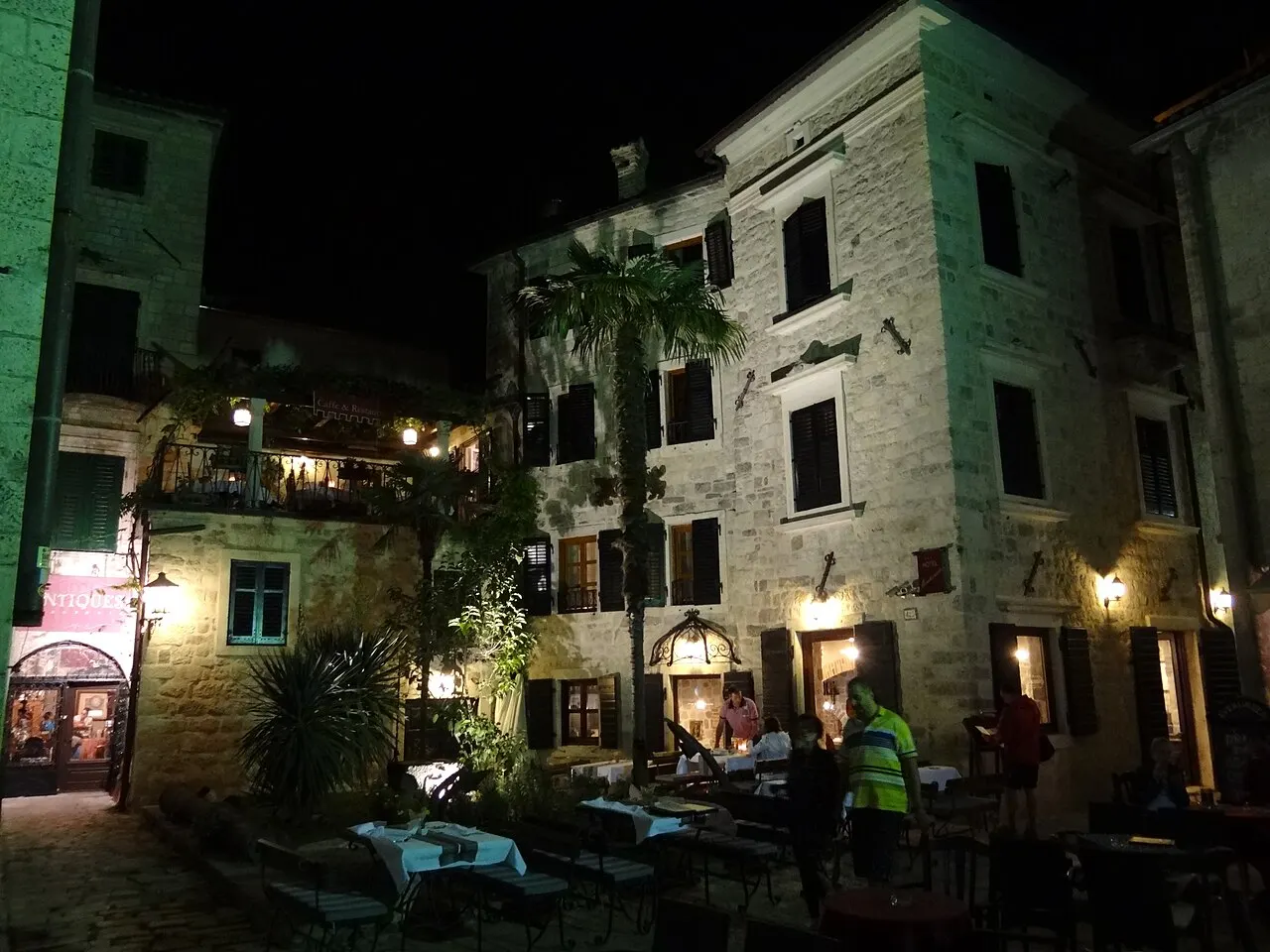
- First light: climb the walls and see the cathedral before the tenders run — cool, soft and near-empty.
- Midday: don't fight the peak — coffee, shade, or leave town entirely.
- Late afternoon onward: the crowd drains as ships sail; the lanes reopen and quieten.
- Evening is the prize — a long, lamplit dinner in a Kotor the day-visitors never see.
When town is full, leave it
Here's the counter-intuitive heart of it: a busy cruise morning is the perfect time to be out of the walls, because the very thing that crowds the lanes empties everywhere else. The water is the obvious escape. A boat up the sheltered inner bay to Perast and Our Lady of the Rocks reads the Boka the way it was built to be read — captains' towns along the shore, the pinch of the Verige strait, the island church on its man-made reef — and at the busiest town hour you can have stretches of it almost to yourselves, especially on a private boat that sets its own timing.
The mountains work the same magic in reverse. The cable car or the serpentine road lifts you out of the heat and the press toward Lovćen and the old royal capital of Cetinje, with a stop at Njeguši for the prosciutto that built half the bay's menus — a whole world above the crowded quay. Closer in, the cable-car upper station and the ridge viewpoints give you the famous panorama without the staircase scrum, and a quiet swim cove below Prčanj or out toward Luštica turns a packed midday into the best hours of the day. The rule is simple: when the lanes are at their fullest, go up or go out.
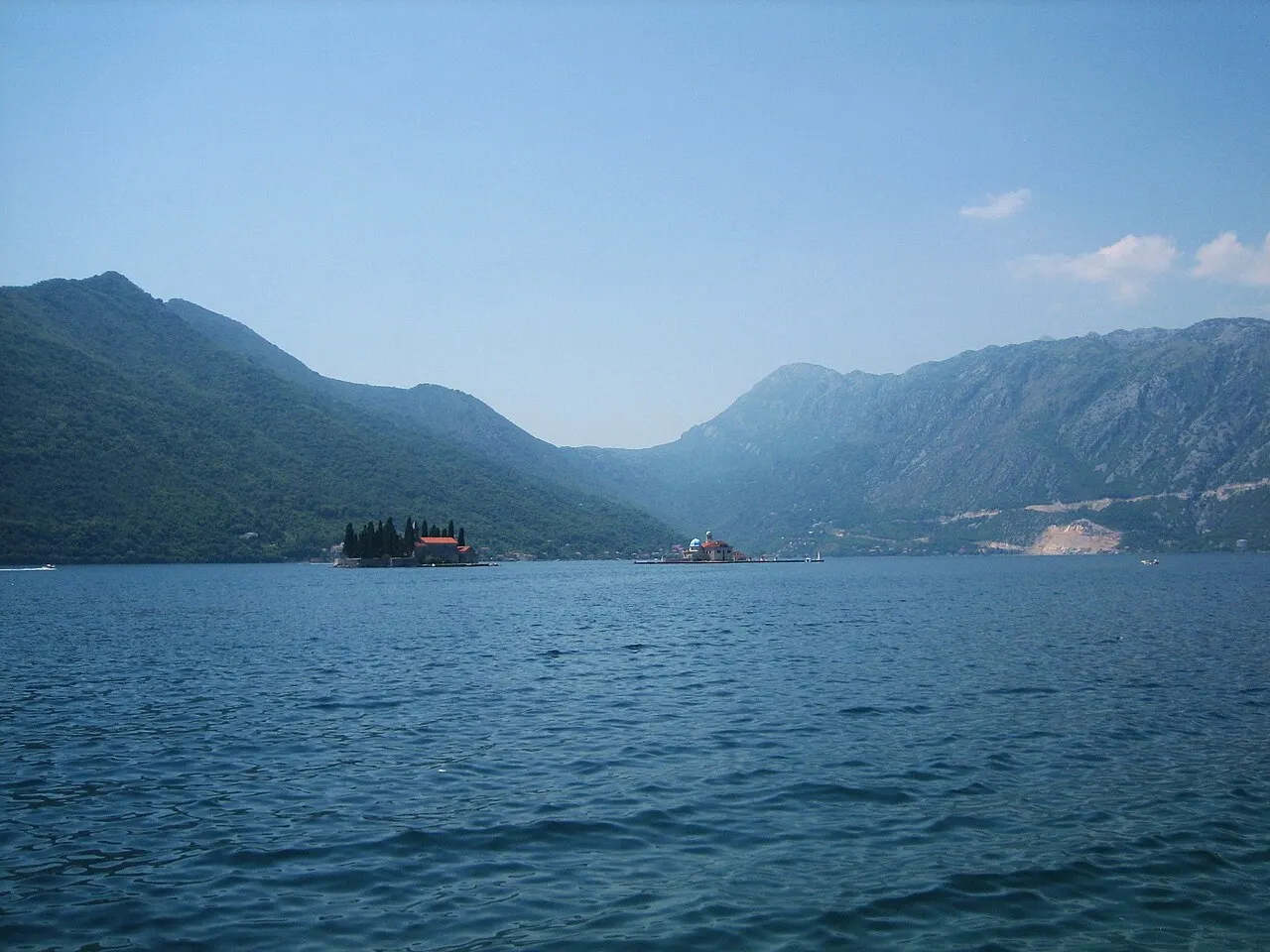
- On the water: a Perast and Our Lady of the Rocks run is quiet exactly when town is busy.
- Up the mountain: the cable car or the Lovćen road for cool air, big views and space.
- A swim cove below Prčanj or out toward Luštica beats a packed midday in the lanes.
- A private boat or excursion lets you set timing around the crush, not into it.


Where to base for a calmer Kotor
If you're staying overnight, where you sleep does as much as any trick to keep the crowds at arm's length. Inside the walls you wake in the middle of the postcard, but the stone carries every sound and the cruise wave arrives on your doorstep by mid-morning. Move a little along the bay and the character flips: Dobrota stretches north with a calm waterfront and a flat walk back into town; Prčanj and Muo, on the opposite shore, are quieter still, with rooms that look straight across the water to Kotor glowing at night; Perast is the slow, romantic choice, and Tivat the practical one near the airport and the marina.
Basing a few minutes out doesn't cut you off — it lets you choose your contact with the crowd. You can stroll into the Old Town at dawn for the climb, retreat to a quiet shore for the busy midday hours, and return for a lamplit dinner once the ships have sailed, sleeping somewhere the night stays still. For couples especially, a bay-view room away from the centre is the difference between enduring the crowds and gliding around them. Pick your base partly on parking and partly on quiet, and the cruise schedule stops being a problem and becomes a timetable you simply step around.
- Old Town: most atmospheric, least quiet — the cruise wave lands at your door.
- Dobrota: calm waterfront, flat walk into town, easier parking.
- Prčanj & Muo: quietest, with bay-view rooms facing Kotor across the water.
- Perast for slow romance; Tivat for the marina and the airport.


A crowd-proof cruise day, start to finish
Stitch it together and a busy port day becomes a good one. Start before the tenders run: be inside the walls at first light for the cathedral and the climb to St John Fortress while the stone is cool and the staircase near-empty, then come down to a coffee on a quiet square before the squares fill. As the late-morning surge builds, don't fight it — that's your cue to get on the water for Perast, or up the cable car toward Lovćen, or out to a swim cove, spending the peak hours exactly where the crowd isn't. You'll be reading the bay or cooling on a ridge while the lanes do their worst.
Drift back as the afternoon softens and the ships begin to sail. By dusk you're walking into a different town — lamplit, hushed, the cats reclaiming the warm stones — and a long dinner a lane off the busiest square turns the day golden. If you're staying over, you sleep somewhere quiet on the bay and do it again tomorrow on whatever the schedule allows; if you're here for the one day, you leave having seen the Kotor that hurried day-trippers never do. The crowds are real, but they're predictable — and predictable crowds are easy to walk around.
- First light: cathedral and the walls climb before the tenders run.
- Late morning to midday: be on the bay, up the cable car, or at a swim cove — out of the lanes.
- Late afternoon: drift back as ships sail and the town quietens.
- Evening: a long, lamplit dinner in the Kotor day-visitors miss.

Kotor Cruise Schedule Guide
How to check Kotor cruise calls and use the schedule to plan your day — when ships arrive and leave, why call size matters, and how to time the Old Town, the walls climb, restaurants and boat trips around the calendar.
Read guide
Kotor Cruise Port Guide
Arriving in Kotor by cruise ship: whether you dock or tender, the short walk to the Old Town, the best shore excursions, currency and crowds, and how to build a back-on-board buffer around the bay's slow roads and the walls climb.
Read guide
Kotor at Night
Kotor after dark: the floodlit fortress and walls tracing the mountainside, the quiet lamplit Old Town once the ships sail, wine bars and konobas, blue-hour photography from the bay, live music in the squares, and where the nightlife gets loud.
Read guideMore in Cruise Port
6
Accessible Kotor Cruise Port
Step-free cruise-port planning for Kotor — the dock-versus-tender question, the short level walk into the Old Town, the cobbled lanes and stair-bound walls, taxis and boat access, toilets, and which shore excursions fit a wheelchair or limited-mobility traveller.
Read guide
Best Kotor Shore Excursions
Compare the best Kotor shore excursions for a cruise day: the self-guided Old Town, the fortress walls, the cable car, a Perast and Our Lady of the Rocks boat, the Blue Cave, Lovćen and Cetinje, Budva, and private guides — by who they suit, effort and timing risk.
Read guide
Boat Tours for Cruise Passengers
The boat-tour options that genuinely fit a Kotor cruise call, ordered by timing risk: the short Perast and Our Lady of the Rocks run, a private boat, and the higher-risk Blue Cave — with the weather, buffer and all-aboard rules that keep you safe.
Read guide
Can Cruise Passengers Climb the Walls?
Whether the Kotor wall climb to St John Fortress fits your cruise call: the heat and fitness reality, how to time it around all-aboard, the seasonal ticket, and gentler alternatives if the full climb is too much.
Read guide
Cruise Port to Kotor Old Town
How to get from the Kotor cruise port or tender pontoon to the Old Town: the few-minute walk, the route to the Sea Gate, accessibility on the flat-but-cobbled approach, meeting points, and the tender-day note.
Read guideOne Day in Kotor from a Cruise
A realistic, hour-by-hour port-day route for Kotor: off the ship and into the Old Town early, the walls or cable car before the heat, a bay boat or Perast, a long lunch, and a safe back-on-board buffer — with three variants for different energy levels.
Read guide