
Ladder of Kotor Hike
A hiker's guide to the Ladder of Kotor (Kotor Serpentine) — the old switchback caravan trail that climbs the mountainside above the bay: the effort, the viewpoints, timing, heat and safety, and how it compares to the city-wall stairs.

- ✓The Ladder of Kotor (Kotorske Serpentine) is the old caravan trail that switchbacks up the mountain behind the Old Town toward Lovćen — a real hike, not a tourist stair.
- ✓Dozens of long switchbacks climb steadily on a walkable gradient, opening ever-wider views over the bay with every turn.
- ✓It is longer and more exposed than the city-wall climb but gentler underfoot — a graded mule path rather than steep stone steps.
- ✓A side path near the top connects to the fortress trail, so strong walkers who start early can link the Ladder and St John Fortress into a loop.
- ✓There is no shade and no water on the trail; the heat is the real challenge, so go at first light or in the cooler months.
- ✓The Ladder is free and unticketed — verify the exact trailhead and any seasonal access notes before you set out.
What the Ladder of Kotor is
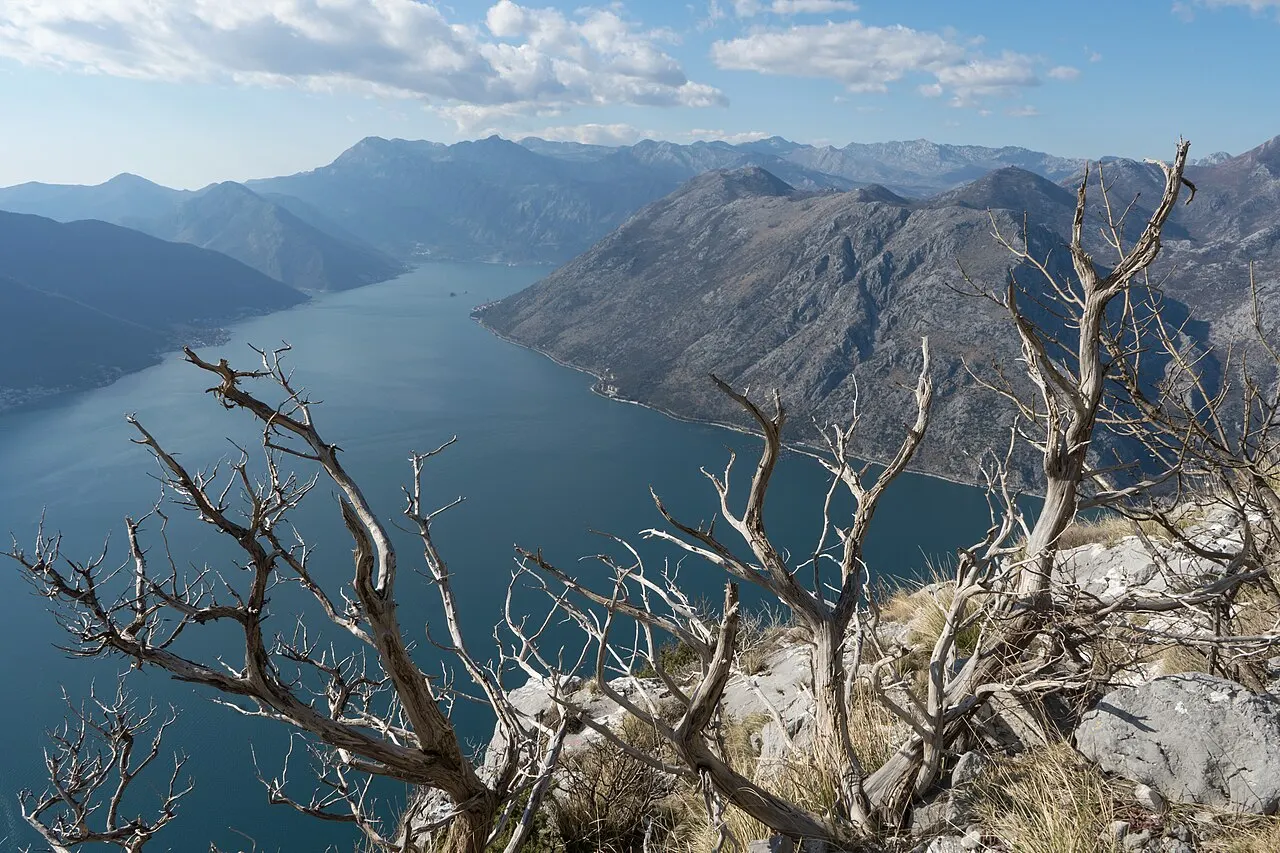
Long before any road switchbacked out of the bay, the way up the mountain from Kotor was the Ladder of Kotor — Kotorske Serpentine, the old caravan or mule trail that climbs the slope behind the Old Town in tier after tier of switchbacks toward Lovćen and the villages of Njeguši above. For centuries this was the trade route: salt, prosciutto, cheese and goods carried up and down on the backs of mules between the coast and the Montenegrin interior. Today it is one of the finest viewpoint hikes on the whole bay.
Unlike the city-wall climb, which is a steep stone stairway packed with day-trippers, the Ladder is a proper trail — a graded path of dirt and rock that zig-zags up the open mountainside. It is longer, lonelier and more exposed, but the gradient is gentler underfoot and the views are, if anything, even bigger, because the trail keeps climbing well above the height of St John Fortress. Each switchback opens a wider slice of the Boka beneath you until the whole bay lies spread out like a map.
Step by step: the route up
The Ladder is a single, obvious switchbacking line once you are on it, so the main job is finding the trailhead and pacing yourself in the heat. The lower start lies just outside the Old Town walls; from there the path climbs steadily, crossing the modern Kotor–Cetinje road at points before continuing up toward the village of Špiljari and the saddle below the fortress ridge.
- 1. Find the trailhead. The Ladder starts near the north edge of the Old Town, outside the walls close to the River Gate; signage is limited, so confirm the exact start on a trail map before you go.
- 2. Settle into the switchbacks. The path climbs in long, even zig-zags up the open slope — find a steady rhythm and let the views build with each turn.
- 3. Pause at the viewpoints. There is no single landmark stop like the wall climb's halfway church; instead the whole trail is a viewpoint, so stop whenever a turn frames the bay.
- 4. Reach the upper saddle and Špiljari. Near the top the trail passes the small abandoned hamlet of Špiljari and the ruins of St John's church, below the fortress ridge.
- 5. Link to the fortress (optional). A connecting path near the top joins the city-wall route at the back of the fortress, letting strong walkers come down through St John Fortress and the wall stairs for a loop.
- 6. Return. Descend the same switchbacks, or — if you've bought a wall ticket — drop down through the fortress and the city-wall steps into the Old Town.
 St John Fortress
The fortress the upper trail connects to, for a Ladder-and-walls loop.
Kotor Fortress HikeThe stair-based climb you can link with the Ladder to make a circuit.
Map pins
Map data © OpenStreetMap contributors · Tiles © OpenFreeMap
How long it takes, and how hard it is
Reaching the saddle below the fortress ridge takes most walkers somewhere between 1 and 2 hours of steady climbing, depending on fitness, the heat and how often you stop. A there-and-back to the upper viewpoints and Špiljari, with breaks, makes a comfortable half-day; pushing on higher toward Lovćen turns it into a long full-day mountain outing for fit hikers only. The descent is faster but harder on the knees on the looser sections.
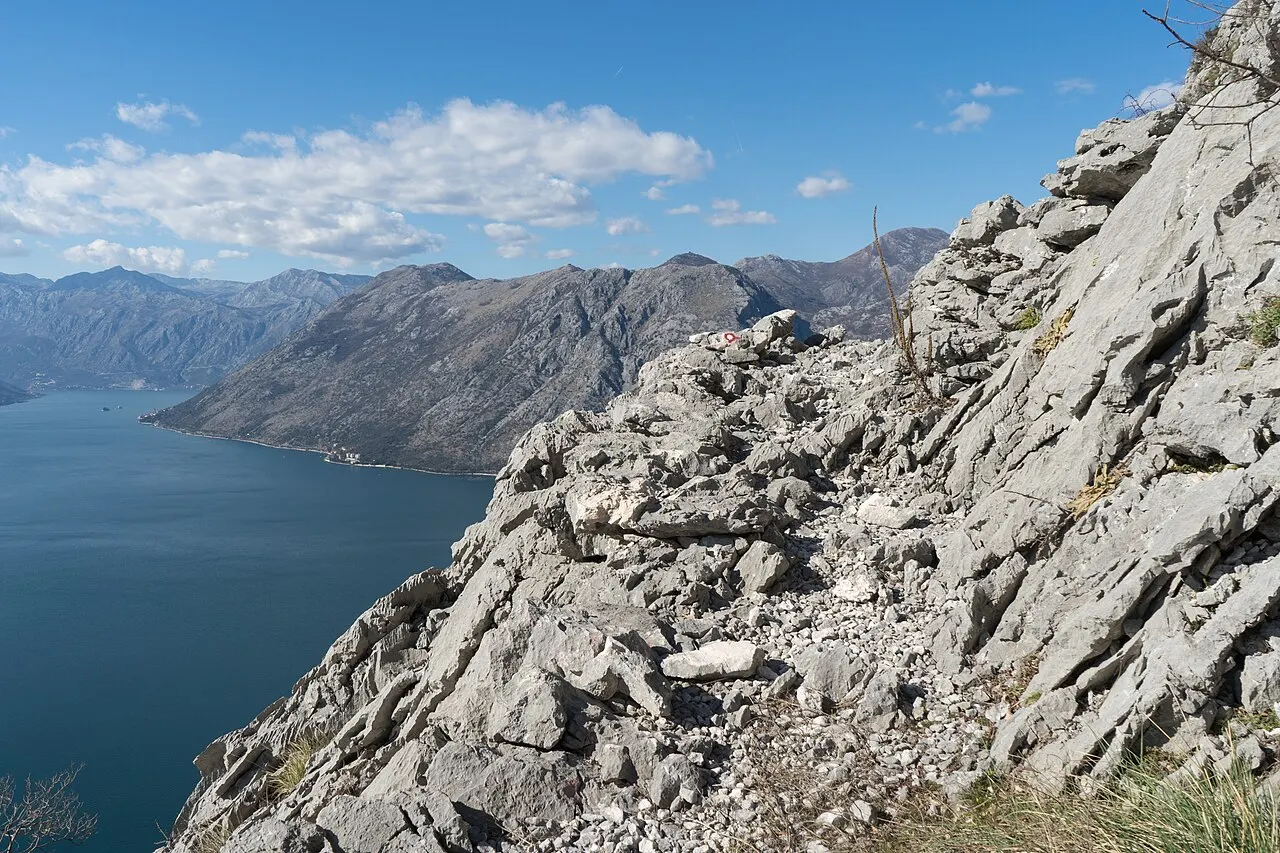
The Ladder is graded as a moderate hike rather than a casual stroll. The gradient is kinder than the wall stairs, but the trail is longer, the surface is loose underfoot in places, and — crucially — it is fully exposed, with no shade and no water along the way. That exposure, not the climbing itself, is what makes it demanding. Anyone reasonably active will manage the lower and middle sections; the higher you go, the more it asks of you.
- To the upper saddle: roughly 1–2 hours of steady climbing.
- Half-day there-and-back to the viewpoints and Špiljari, with stops.
- Surface: a graded mule path — gentler gradient than the wall stairs but loose in places.
- Fully exposed: no shade, no water — the heat is the real difficulty.
When to go: heat, light and the seasons
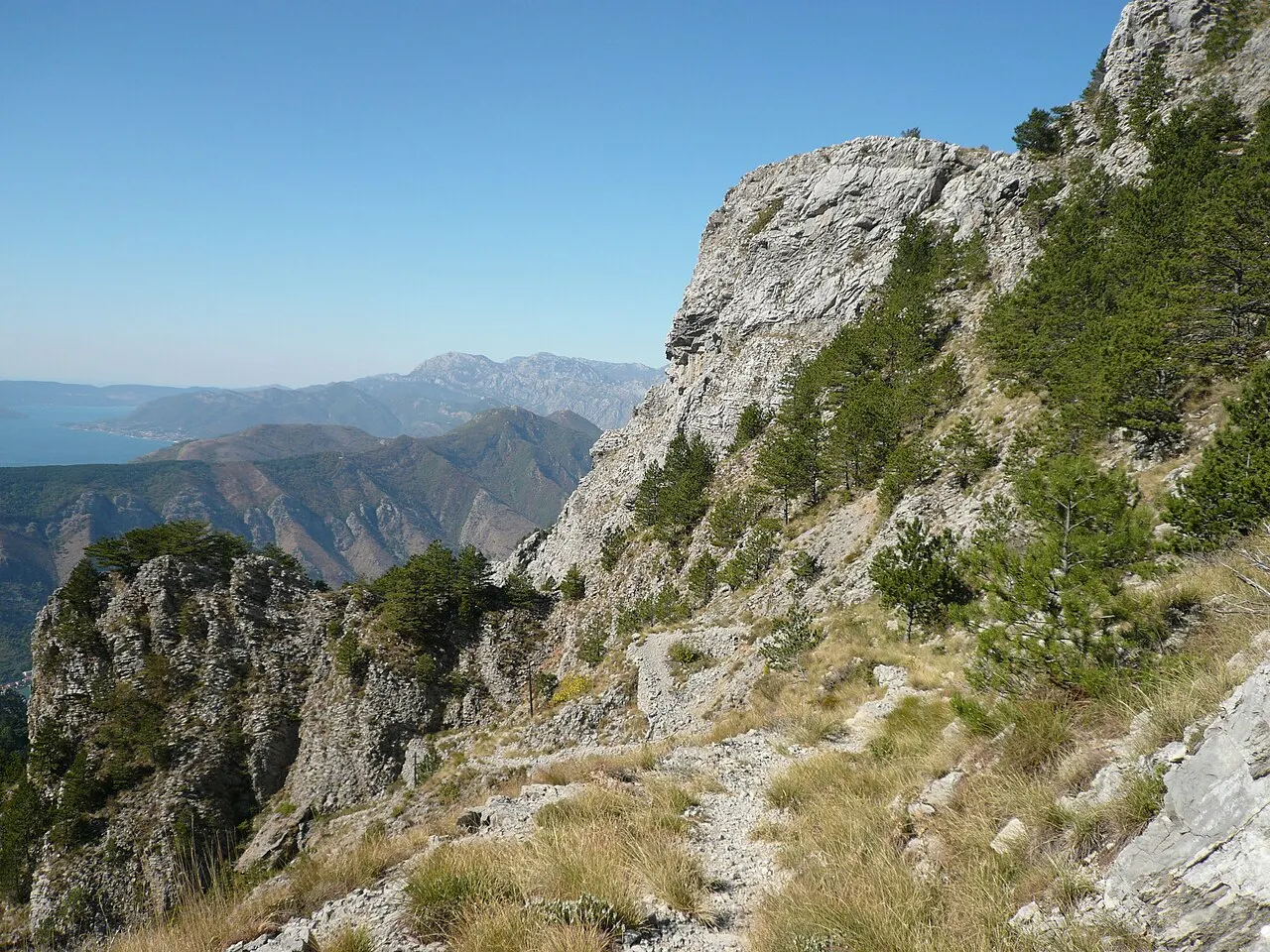
More than almost any walk around Kotor, the Ladder is ruled by the sun. The trail faces the bay across an open, treeless slope, so in high summer it bakes from mid-morning and there is nowhere to hide from the heat. Go at first light — ideally setting off at or just after dawn — and you climb in cool air and soft, slanting light, with the bay silver and still beneath you. By late morning in July or August the same path becomes genuinely punishing.
The shoulder seasons and even winter are arguably the Ladder's best window: cool, clear days reward the effort with sharp, far-reaching views and none of the summer haze. Late afternoon works too, with golden light raking across the switchbacks, but only if you are confident of finishing before dusk, since there is no lighting and the descent is awkward in the dark. Check the forecast and skip the trail in rain or low cloud, which steals both the footing and the view.
- Best: first light, or the cool clear days of the shoulder seasons and winter.
- Avoid: high-summer late morning and midday on the exposed, shadeless slope.
- Late afternoon works only if you'll finish well before dark.
- Skip it in rain or low cloud — poor footing and no view.

What to bring, and staying safe
Because the Ladder gives you no shade and no water, you carry your own comfort. Bring more water than you think you need, sun protection from head to toe — hat, sunscreen, sunglasses — and proper trail or walking shoes with grip for the loose, stony sections. A light snack, a charged phone with an offline trail map, and a layer for the cooler air higher up all earn their place. There are no facilities, kiosks or reliable signage, so come self-sufficient.
On safety: this is a real mountain trail, quieter and more committing than the wall climb. Tell someone your plan, especially if you are walking alone, and turn back rather than push on if the heat, the light or your legs are against you. Watch your footing on the loose switchbacks and near the road crossings, give yourself a generous margin to be down before dark, and treat the abandoned buildings near the top with care. Done sensibly, in the right hour and the right weather, it is one of the great walks of the Adriatic.
- Plenty of water, sun protection, and grippy trail shoes — there's no shade and no supply.
- An offline trail map and a charged phone; signage is limited.
- A layer for the cooler air higher up.
- Tell someone your plan, and turn back rather than push into heat or dark.
Ladder or city walls — which should you do?
Most visitors do not have time or legs for both, so it helps to choose deliberately. The city-wall climb is shorter, more direct and ticketed in season; it delivers you to St John Fortress on a built stone stairway with the famous postcard view, and it is busy, especially on cruise days. The Ladder is longer, free, lonelier and a genuine trail; it trades the fortress for an even higher, wider panorama, far fewer people, and the feel of a real hike on an ancient route. If you want the headline sight and have only an hour or two, climb the walls. If you want solitude, a bigger view and a proper walk — and you are happy to carry water on an exposed slope — take the Ladder.
The two are not rivals so much as different doors onto the same mountain, and strong, early-starting walkers can have both by climbing the Ladder and descending through the fortress and the wall steps. Either way, the Ladder also serves as a graceful Plan B: if the official wall route is closed, the ticket queue is long, or the stairs are simply too crowded, the old serpentine trail reaches similar heights and finer views by a gentler gradient.
- City walls: shorter, ticketed, busy, the fortress and the postcard view.
- Ladder: longer, free, quiet, a real trail with an even bigger panorama.
- Short on time and want the headline sight? Climb the walls.
- Want solitude and a proper walk? Take the Ladder — and consider linking both as a loop.

The Ladder of Kotor at a glance
Use this quick card to plan your hike — but verify the volatile details (the exact trailhead, current trail condition, and any seasonal access notes) from an up-to-date trail source before you set off, as they change.
- What: the Ladder of Kotor (Kotorske Serpentine), the old switchback caravan trail above the Old Town.
- Effort: moderate; long switchbacks on a graded path, gentler gradient than the wall stairs.
- Time: ~1–2 hours up to the saddle; a comfortable half-day there-and-back with stops.
- Surface: dirt and loose rock, fully exposed — no shade, no water.
- Link: connects near the top to St John Fortress for a loop with the wall route.
- Best time: first light, or cool clear shoulder-season and winter days.
- Ticket: the Ladder itself is free — only the wall/fortress route is ticketed in season.
- Bring: water, sun protection, grippy trail shoes, an offline map.
Ladder of Kotor FAQ
Is the Ladder of Kotor easier than the city walls? It is gentler underfoot — a graded switchback trail rather than steep stone steps — but it is longer and fully exposed, so it is not necessarily easier overall. Heat and distance make it demanding in summer.
How long does the Ladder take? Allow roughly 1 to 2 hours up to the saddle below the fortress, and a comfortable half-day for a there-and-back with stops. Going higher toward Lovćen is a long full-day hike for fit walkers.
Is the Ladder of Kotor free? Yes — the trail itself is unticketed. You only pay if you descend through the ticketed city-wall route and St John Fortress in season.
Can I link the Ladder to St John Fortress? Yes. A connecting path near the top joins the wall route at the back of the fortress, so strong walkers who start early can climb the Ladder and come down through the fortress and wall stairs.
When is the best time to hike it? First light in summer, or the cool, clear days of spring, autumn and winter. Avoid the exposed slope in high-summer midday and in rain or low cloud.
Do I need a guide? No, but the signage is limited, so carry an offline trail map, tell someone your plan, and be prepared to turn back if the heat or light turns against you.

Kotor City Walls: The Climb to St John Fortress
What to know before climbing Kotor's city walls to St John Fortress (San Giovanni): the effort and the steps, the views, when to go to beat the heat and the crowds, the seasonal ticket, and gentler alternatives like the Ladder of Kotor.
Read guide
Vrmac Ridge
The long forested ridge between the Kotor and Tivat bays: its two-bay viewpoints, the marked hike along the crest, the Austro-Hungarian Fort Vrmac, easy cycling on the old tracks, and how it differs from the city-walls climb.
Read guide
Best Viewpoints in Kotor
The best viewpoints over the Bay of Kotor, ranked by effort and payoff — St John Fortress, the halfway church, the Ladder of Kotor, the cable car, the Vrmac ridge, the serpentine roadside pullouts and the angle from the water.
Read guideMore in City Walls
3Church of Our Lady of Remedy
A short guide to the Church of Our Lady of Remedy — the small white chapel roughly halfway up Kotor's city walls, the natural place to rest, the first great viewpoint, and a worthy shorter goal than the full fortress climb.
Read guideKotor Fortress Hike
A practical, step-by-step guide to climbing Kotor's city walls from the Old Town to St John Fortress — the route, the timing, how long it takes, what to bring, and how to fit the hike into a cruise day.
Read guideSt John Fortress Kotor
A visitor's guide to St John Fortress (San Giovanni) above Kotor — what waits at the summit, how long the climb takes, the route up the city walls, and when the bay views are at their best.
Read guide