
Njeguši & the Serpentine Road
How to plan the old serpentine road above Kotor to Njeguši — the hairpin climb out of the bay, the famous viewpoints, the pršut-and-cheese stop, when to go, who should drive it, and the traffic-rule caveats to verify.

Photo: Laurynas Žižys / Unsplash
- ✓The old Kotor–Njeguši road climbs out of the bay in a famous run of tight hairpin switchbacks — around 25 numbered bends — to roughly 900 m above the water.
- ✓Each turn opens a wider view back over the Old Town, the bay's basins and the Verige strait; the top bends give the single most photographed panorama in Montenegro.
- ✓Njeguši, the mountain village at the top, is the birthplace of the Petrović dynasty and the home of the region's air-dried pršut (prosciutto) and hard cheese — the natural lunch stop.
- ✓It is a narrow, exposed, low-barrier mountain road: rewarding for a confident driver, daunting for a nervous one, and best avoided in fog, ice or after dark.
- ✓If you'd rather not drive the bends, a guided Lovćen day trip or a taxi does the hard part for you, and the cable car offers an alternative way up to the heights.
What is the serpentine road above Kotor?
The serpentine — or the Kotor–Njeguši–Lovćen road, to give it its full name — is the old caravan route that climbs straight up the mountain wall behind Kotor in a dizzying stack of hairpin bends. From a junction just outside the Old Town it switchbacks up the bare limestone face, gaining height fast, until it tops out near the high village of Njeguši at around 900 metres and carries on into Lovćen National Park toward Cetinje. There is a newer, gentler highway to the interior these days, but the old serpentine is the one people drive for the drama, not the speed.
What makes it special is the way the view rebuilds itself at every turn. Low down you are level with the rooftops; a few bends higher the whole Old Town sits below you like a model; higher still the bay's linked basins, the islets off Perast and the pinch of the Verige strait spread out in one sweep, with Lovćen looming behind. It is a short road in distance and a long one in time — you will stop constantly, and you should.
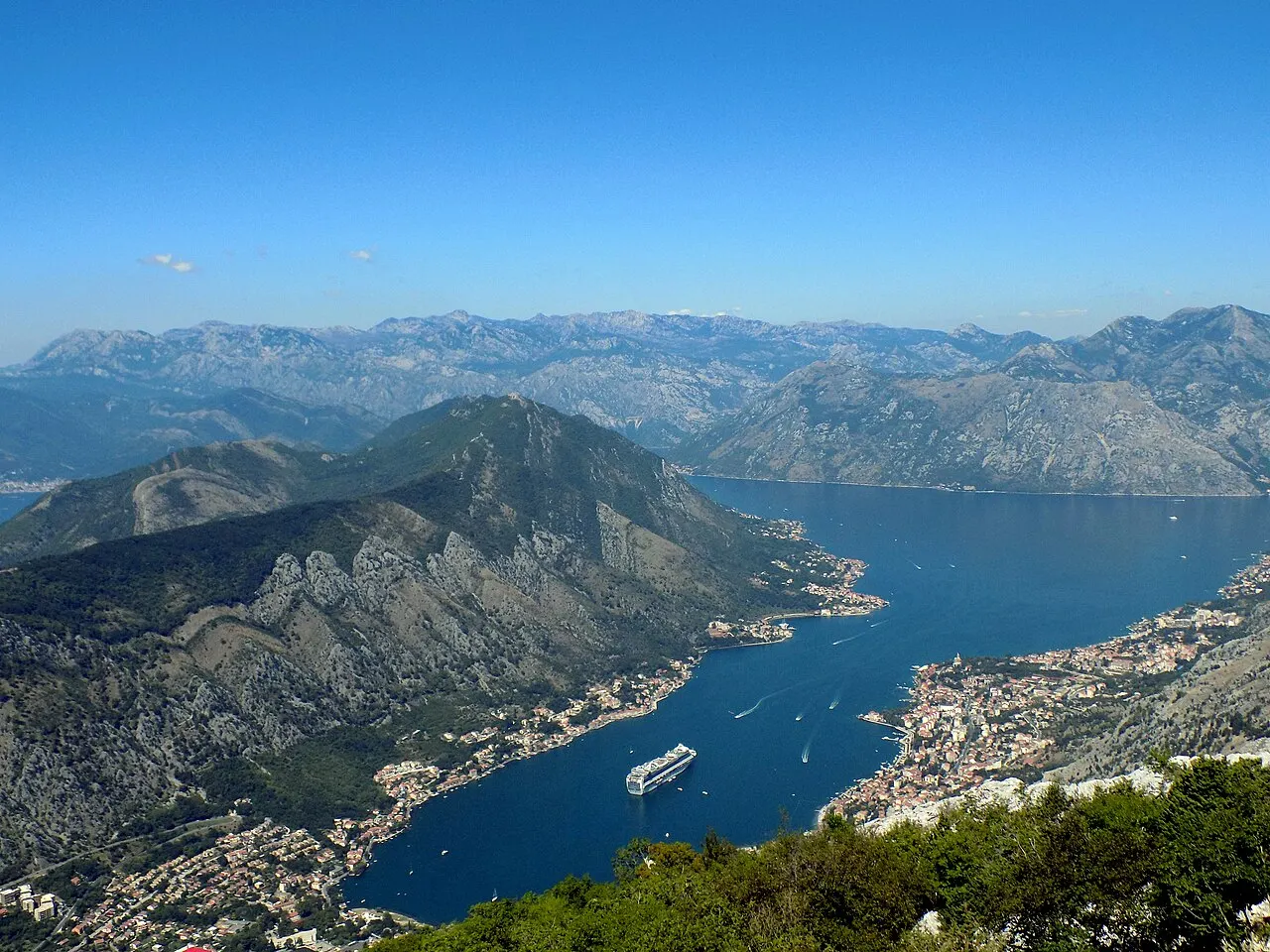
How many hairpins are there, and how long does it take?
The bends are part of the legend, and like Kotor's fortress steps they get counted differently by everyone — most accounts settle on around 25 numbered hairpins on the steep section above the bay, some of them painted with their number on the rock. The road distance from Kotor up to Njeguši is short, but the driving time is not what the kilometres suggest: between the tight turns, the gradient, oncoming traffic on narrow sections and the constant temptation to pull over and stare, you should budget far longer than a map app predicts.
Allow a relaxed half-day if you are pairing the climb with a proper stop in Njeguši, and a full day if you continue into Lovćen for the mausoleum of Njegoš and on to Cetinje. Don't try to rush it: the joy of the serpentine is in the stopping. Use the marked pull-outs at the bends to let faster locals pass and to take the photographs — never stop on a blind corner — and treat the whole ascent as the attraction rather than a transfer to somewhere else.
- Around 25 numbered hairpins on the steep section above the bay (counts vary).
- Short in distance, slow in practice — budget a half-day to Njeguši, a full day to Lovćen and Cetinje.
- Stop only at the marked pull-outs, never on a blind bend; let locals pass.

Map pins
Map data © OpenStreetMap contributors · Tiles © OpenFreeMap
Should I drive it myself, or take a tour?
This is the honest crux. The serpentine is a genuine mountain road: narrow in places, steep, exposed, with low or absent barriers above big drops and two-way traffic that includes the occasional tour van and delivery truck. A confident driver who is comfortable with hairpins, hill starts and giving way on tight sections will find it exhilarating and entirely manageable in good weather. A nervous driver, or anyone uneasy with heights and edges, may find it stressful enough to spoil the view — and a stressed driver on a road like this is also less safe.
If that's you, hand the driving over. A guided Lovćen day trip takes the wheel and the worry, lets everyone in the car enjoy the panorama, and usually builds in the Njeguši and mausoleum stops. A private driver or taxi will do the same on your own schedule. And if you simply want the heights without the road at all, the cable car from near the bay offers a different, step-light way up to the high country. Choose the option that lets you look out of the window rather than grip the wheel.
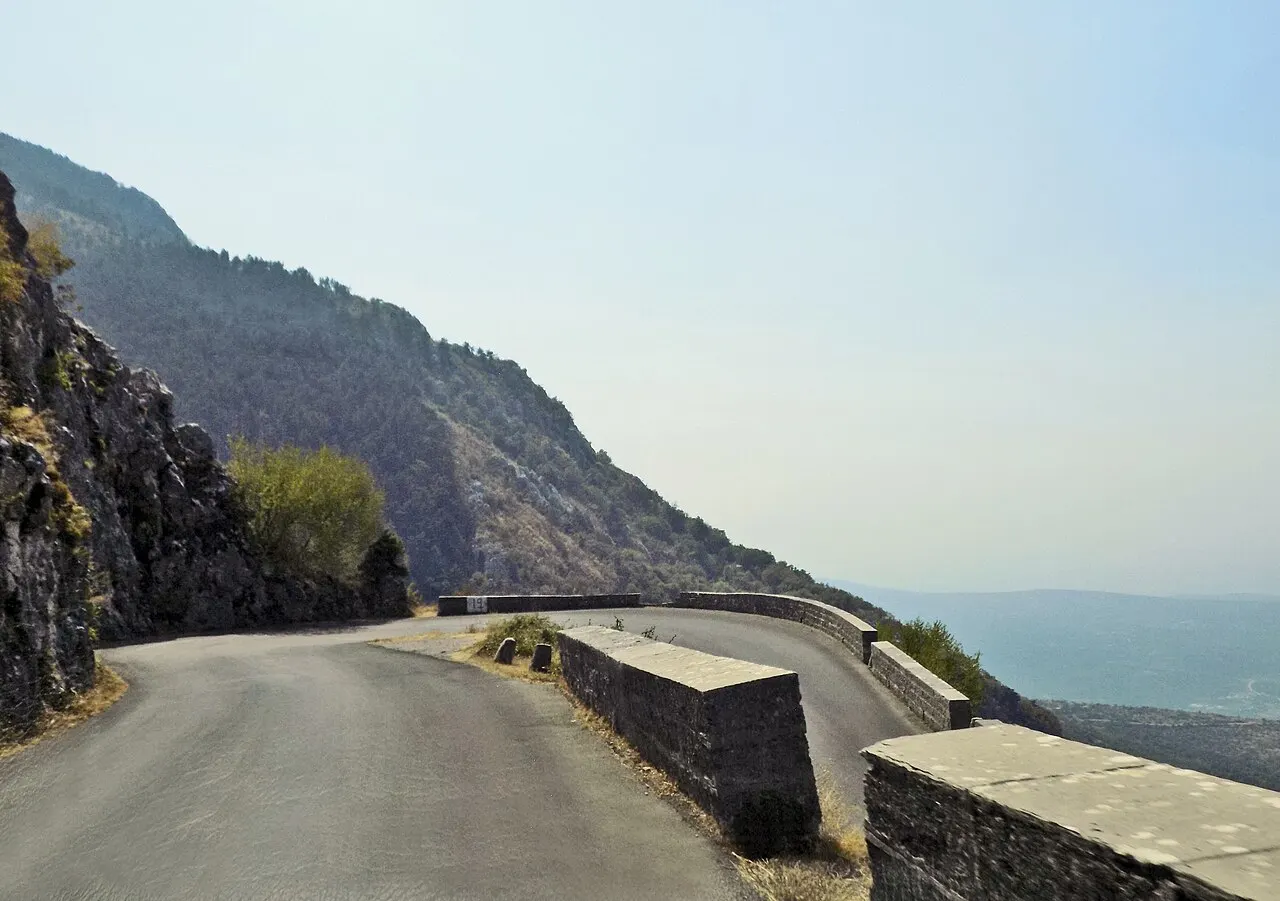
- Drive it yourself only if you're confident with hairpins, hill starts and exposed edges.
- A guided Lovćen trip or a private taxi removes the driving stress and adds the stops.
- The cable car is an alternative way to the heights for those who'd skip the bends entirely.
- Verify the current rental, insurance and any seasonal road-condition notes before you set off.
When is the best time to drive the serpentine?
Go in the morning of a clear day and you'll have the road at its best: good light on the bay, cool air, and the low sun behind you on the climb rather than in your eyes. Late afternoon delivers the golden hour over the water from the top bends — spectacular, but it leaves you driving the descent in fading light, which is not ideal on a road like this. Whatever the hour, the non-negotiable is visibility: this is mountain country, and cloud, fog or rain can close in fast, turning a glorious viewpoint into a damp, edge-of-your-seat crawl with nothing to see.
Avoid the serpentine in fog, in heavy rain, in any risk of ice, and after dark — the drops, the lack of lighting and the absent barriers all become real hazards once you can't see. Winter can bring snow and ice to the higher sections even when the bay below is mild, so check conditions before committing in the cold months. In high summer, an early start also dodges the worst of the tour-van traffic on the bends. When the weather is wrong, simply save it for another day, take a guided trip, or enjoy the bay from below instead.
- Best: a clear morning — good light, cool air, sun behind you on the climb.
- Avoid fog, heavy rain, ice and after-dark driving; the drops and missing barriers are unforgiving.
- Check winter conditions — the high sections can hold snow when the bay is mild.
- Start early in summer to beat tour-van traffic on the hairpins.
What's at Njeguši — and is it worth the stop?
Very much so. Njeguši is a small, scattered stone village on a green upland shelf, framed by the bare peaks of Lovćen — a complete change of world from the coast you climbed out of an hour before. It is the ancestral home of the Petrović-Njegoš dynasty that ruled Montenegro, including the warrior-poet-prince Njegoš whose mausoleum crowns the nearby peak, so it carries real weight in the country's story as well as a wonderful view.
Its more delicious claim to fame is food. Njeguši gives its name to the region's prized pršut — ham air-dried and lightly smoked in the mountain wind that funnels between bay and peaks — and to a firm, salty Njeguši cheese. The village tavernas serve them together on a board with olives, bread, local honey and a glass of something strong, and it is exactly the lunch the drive deserves: the source of the very prosciutto you'll have seen on every meze plate down in Kotor. Treat specific prices and opening hours as things to verify locally, since they shift with the season.
- Njeguši is the dynastic home of the Petrović-Njegoš rulers and a gateway to Lovćen.
- It's the source of the region's famous air-dried pršut and hard cheese — the classic mountain lunch.
- Pair the board with local honey and a rest before driving on or back down.
- Verify taverna hours, prices and any seasonal road rules close to your travel date.

Lovćen Day Trip from Kotor
How to day-trip from Kotor to Lovćen National Park: the four ways up — the old serpentine road, the Kotor–Lovćen cable car, an organised tour or a private driver — the Njegoš Mausoleum on its peak, the Njeguši stop, the viewpoints, timing, and an FAQ.
Read guide
Bay of Kotor Scenic Drives
The best drives around the Bay of Kotor: the shoreline loop through Perast and the captains' villages, the white-knuckle Kotor–Lovćen serpentine, the Kamenari–Lepetane ferry shortcut, plus photo stops, summer traffic and driving cautions for each.
Read guide
What to Eat in Kotor
A field guide to Montenegrin coastal food in Kotor: buzara mussels and fresh fish off the bay, black cuttlefish risotto and grilled octopus, Njeguši pršut and cheese from the mountains, lamb cooked under the bell, pastries and sweets, and the wines, rakija and coffee that go with them.
Read guideMore in Practical
6
Accessible Kotor Travel Guide
An honest accessibility guide to Kotor — the flat-but-cobbled Old Town, the stair-only fortress climb, cruise-port access, taxis and transfers, level waterfront walks, museums, accessible hotels, and realistic routing that plays to the town's strengths.
Read guide
Best Time to Visit Kotor
A month-by-month guide to the best time to visit Kotor, weighing cruise crowds, fortress-climb heat, boat-trip and swimming season, rain, prices and the bay's calendar of events.
Read guide
Driving in Kotor and Montenegro
What it's really like to drive in Kotor and Montenegro: narrow two-lane bay roads and summer traffic, the white-knuckle serpentine, tunnels, the Kamenari–Lepetane ferry shortcut, rental and cross-border cautions, parking, fuel and mountain-route planning.
Read guideDubrovnik to Kotor
How to get from Dubrovnik to Kotor: the cross-border bus, the hire car, the private transfer, the two border crossings and their summer queues, whether it works as a day trip, and when staying overnight is the better call.
Read guide
Getting Around Kotor
How to get around Kotor and the Bay of Kotor: when to walk, take a local bus, hail a taxi, hop a boat, drive and park, use the Kamenari–Lepetane ferry, or book a private driver.
Read guide
How to Get to Kotor
How to get to Kotor: the three nearest airports — Tivat, Podgorica and Dubrovnik across the border — plus bus, car, cruise ship and private transfer, with a practical FAQ.
Read guide