
St Nicholas's Church, Kotor
A respectful visitor guide to Kotor's main Serbian Orthodox church: St Nicholas's (Sveti Nikola), the twin-towered early-20th-century church on St Luke's Square, its glowing icons and silverwork, and how to visit.

Photo: Ivana Djudic / Unsplash
- ✓St Nicholas's is Kotor's principal Serbian Orthodox church, completed in 1909 — young by Old Town standards but one of its most striking buildings.
- ✓Its two slim towers and central dome give St Luke's Square a distinctive silhouette, blending Byzantine and Serbo-Byzantine forms.
- ✓Inside, a gilded iconostasis, glowing icons and notable silverwork reward a quiet few minutes.
- ✓It shares St Luke's Square with the tiny, ancient St Luke's Church — together they tell the story of Kotor's Orthodox community.
- ✓Dedicated to St Nicholas, patron of sailors — a fitting saint for a town that lived by the sea.
The young church in the old town
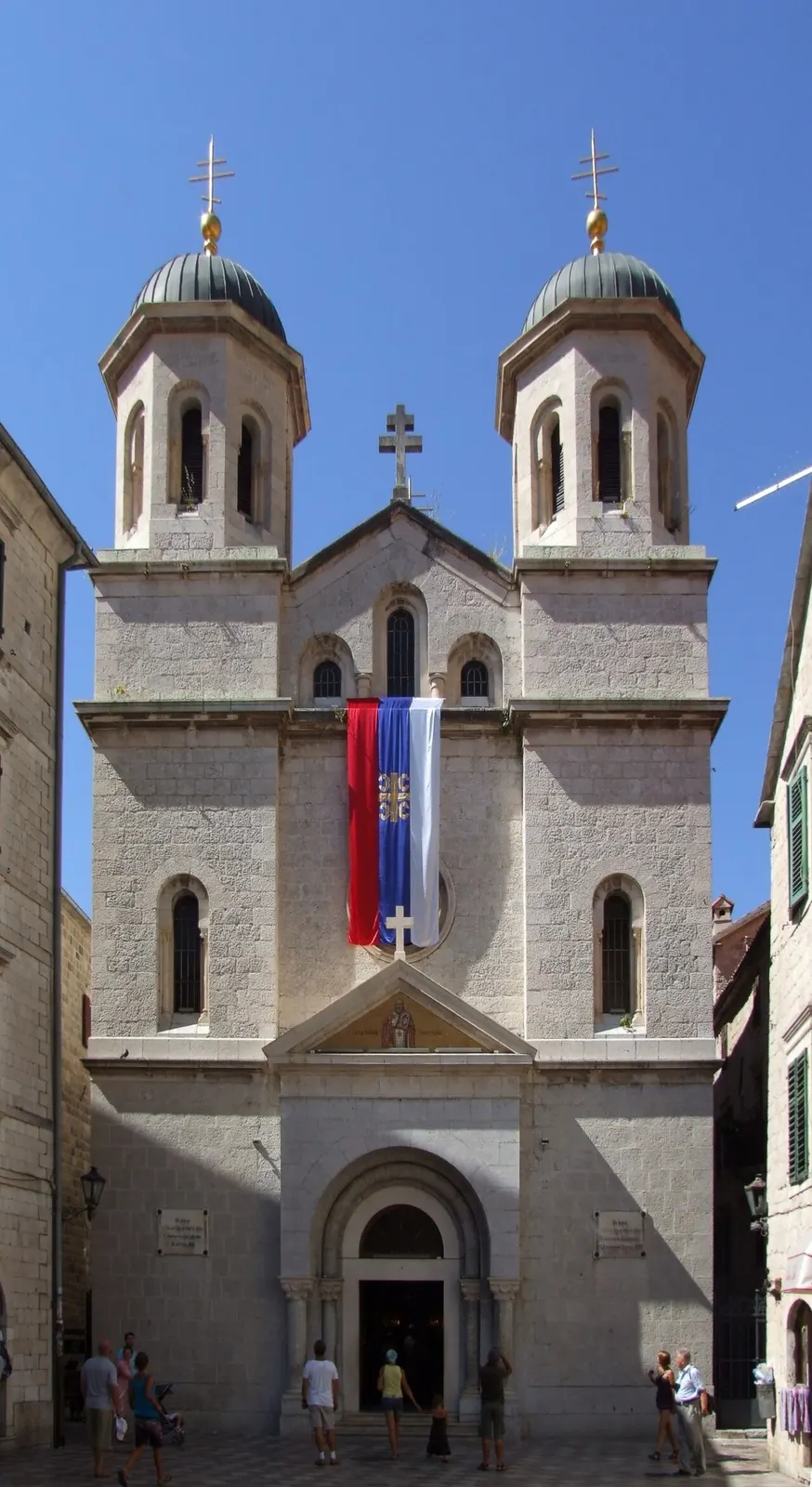
Most of what you admire in Kotor is medieval, so St Nicholas's Church (Crkva Svetog Nikole) comes as an interesting contrast: it is, by the standards of these lanes, almost new. Completed in 1909, it is the principal Serbian Orthodox church in the Old Town, and its twin towers and central dome give St Luke's Square one of the most distinctive skylines inside the walls. Where the cathedral and St Luke's whisper of the deep Middle Ages, St Nicholas's speaks of a confident, settled Orthodox community at the turn of the 20th century.
An earlier church on or near the site was lost to fire, and the present building rose in its place in the first years of the 1900s. Its style is a dignified Serbo-Byzantine — solid, symmetrical, with a calm grandeur — that sets it apart from the older Romanesque churches around it without clashing with them. The result is a building that feels both rooted in the square and clearly of a different age, a useful reminder that Kotor's story did not stop in the medieval centuries.
Inside: icons, gold and silver
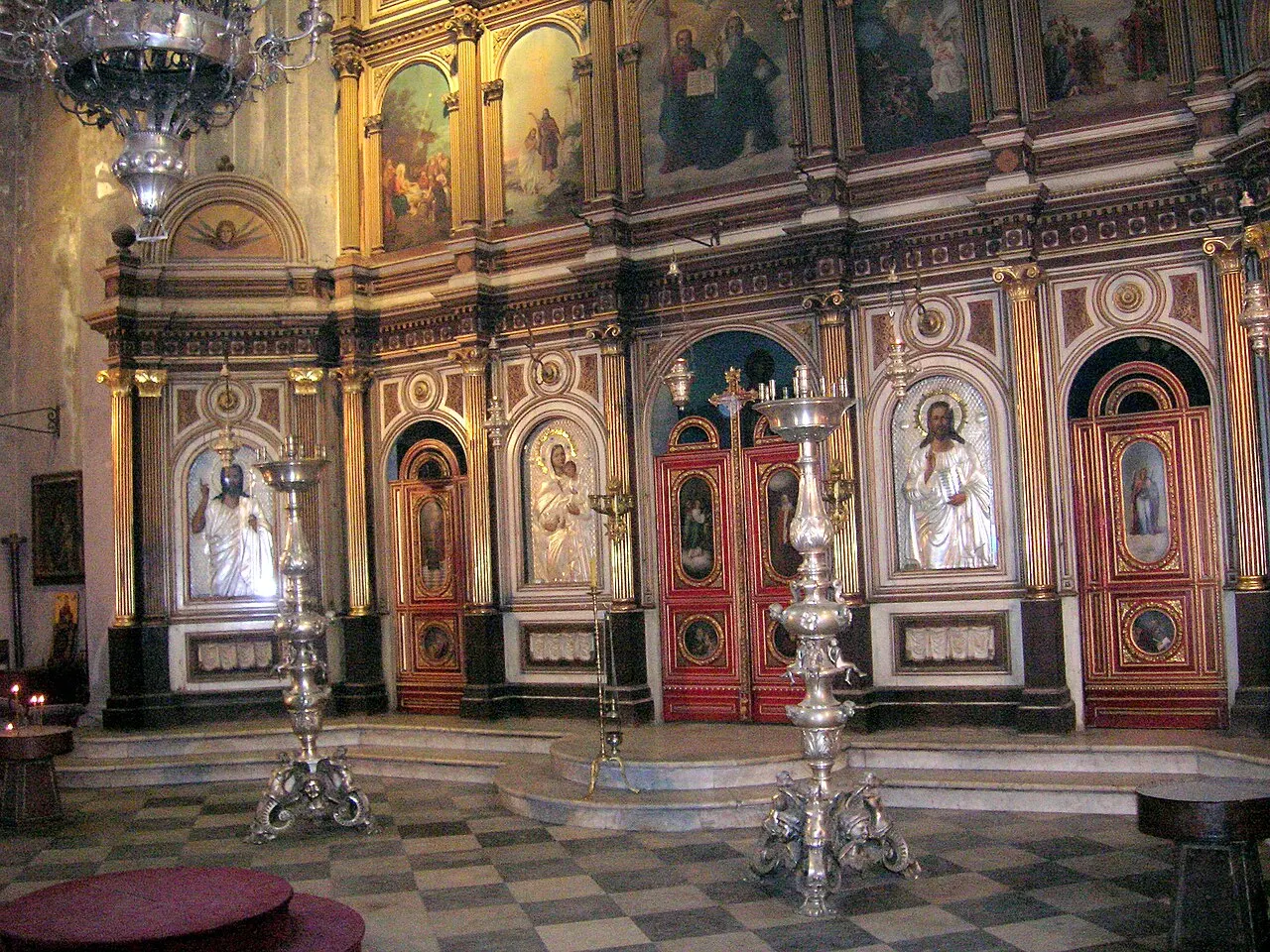
Step inside and the interior is the reason to come. The eye goes straight to the iconostasis — the great screen of icons that separates the nave from the sanctuary in every Orthodox church — gilded and glowing, hung with images of Christ, the Virgin and the saints. The light is low and warm, candles flicker, and the whole space has the hushed, incense-touched stillness that makes Orthodox churches such a contrast to the brighter Catholic interiors nearby.
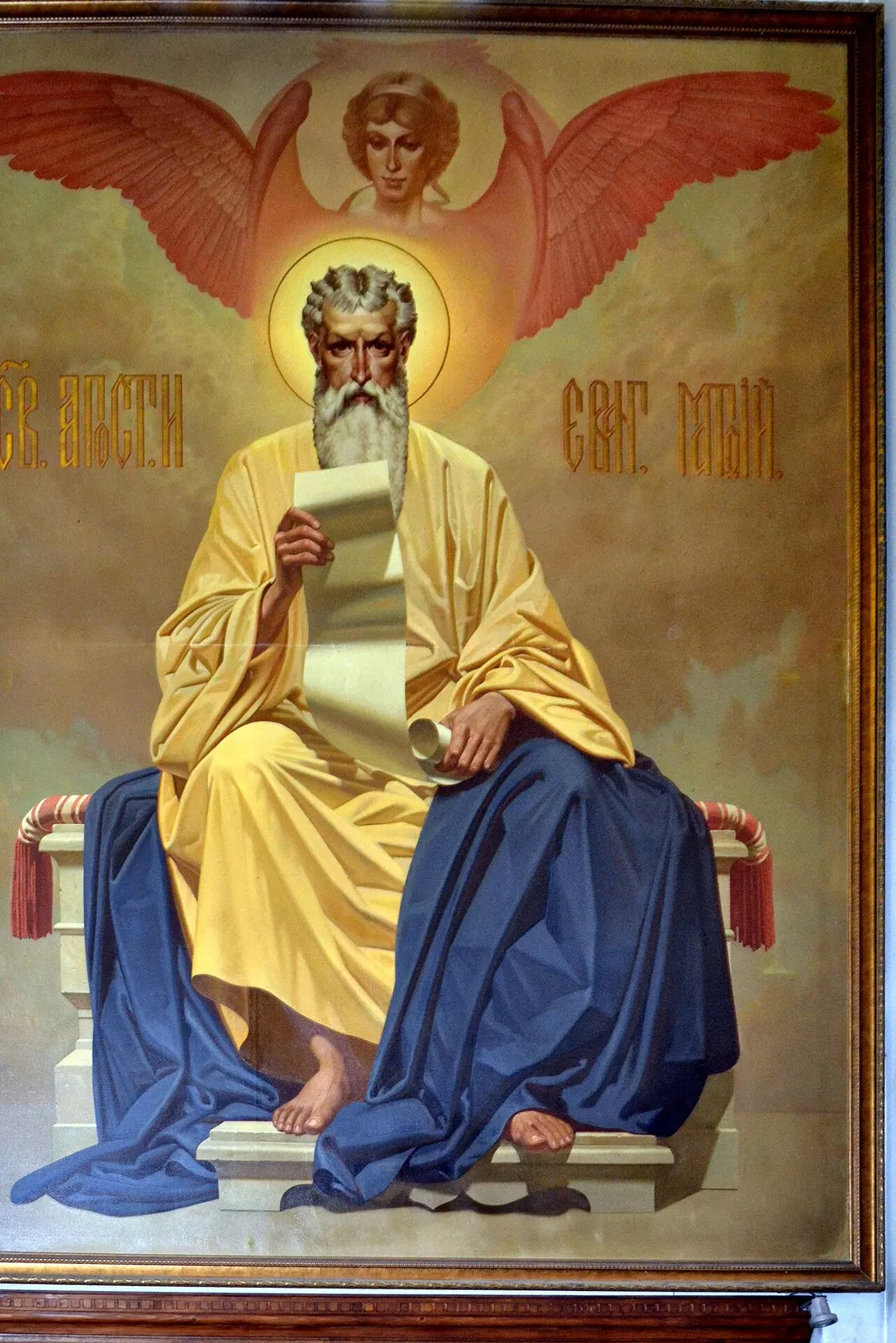
St Nicholas's is also known for its collection of icons and its silverwork, including finely worked liturgical objects and votive pieces. Take a slow turn around the interior and let your eyes adjust; details emerge from the gloom — the gold leaf catching the candlelight, the saints' faces, the worked metal. It is a small interior, but a rich one, and a few unhurried minutes reward you far more than a quick glance from the door.
The church is dedicated to St Nicholas, the protector of sailors and travellers — a saint with deep resonance in a town that lived and died by the sea. For a place whose fortunes were built on the captains and ships of the Boka, there could hardly be a more fitting dedication.
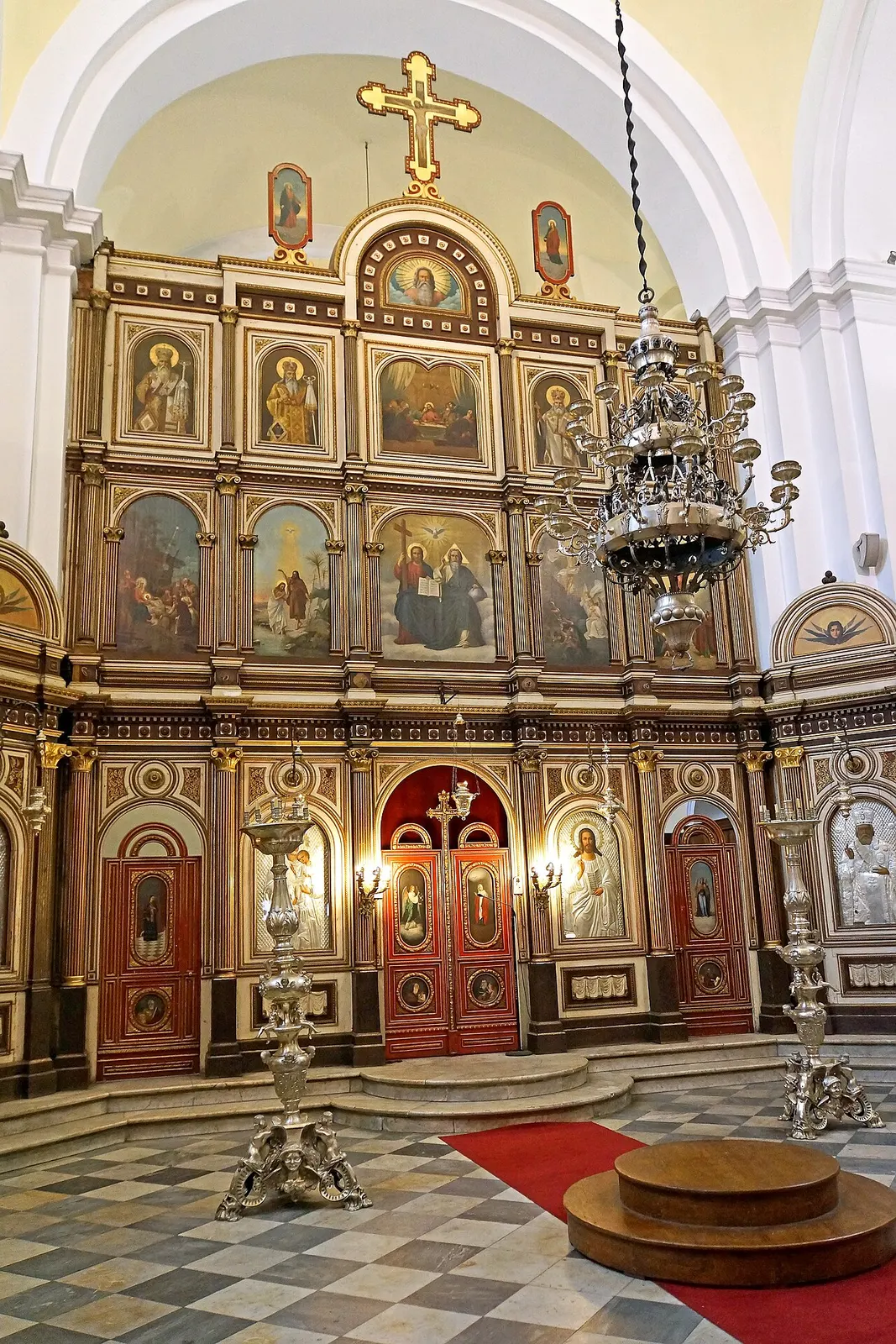
- The gilded iconostasis is the centrepiece; let your eyes adjust to the low, candlelit light.
- Look for the church's icons and silverwork — finely worked liturgical and votive pieces.
- Dedicated to St Nicholas, patron of sailors — apt for a seafaring town.
Map pins
Map data © OpenStreetMap contributors · Tiles © OpenFreeMap
The Orthodox community and the bay's two faiths
To understand why such a substantial church rose here in 1909, it helps to know how the Bay of Kotor's faiths have lived side by side. For most of its history Kotor was a Catholic town under Venetian rule, but from the late 17th century onward a growing Orthodox community settled within the walls — at first sharing the little church of St Luke, with a Catholic and an Orthodox altar standing together under one roof. As that community grew and prospered, it wanted a church of its own, and St Nicholas's is the confident answer to that long-held wish.
That backstory is part of what makes the building worth more than a passing glance. It is not just a handsome church; it is the visible result of generations of coexistence in a bay where Latin and Byzantine Christianity met and, for the most part, got along. Standing on St Luke's Square between the medieval Catholic-then-shared church and the proud 20th-century Orthodox one, you are standing inside one of the clearest physical expressions of that shared history anywhere on the coast.

Sharing a square with St Luke's
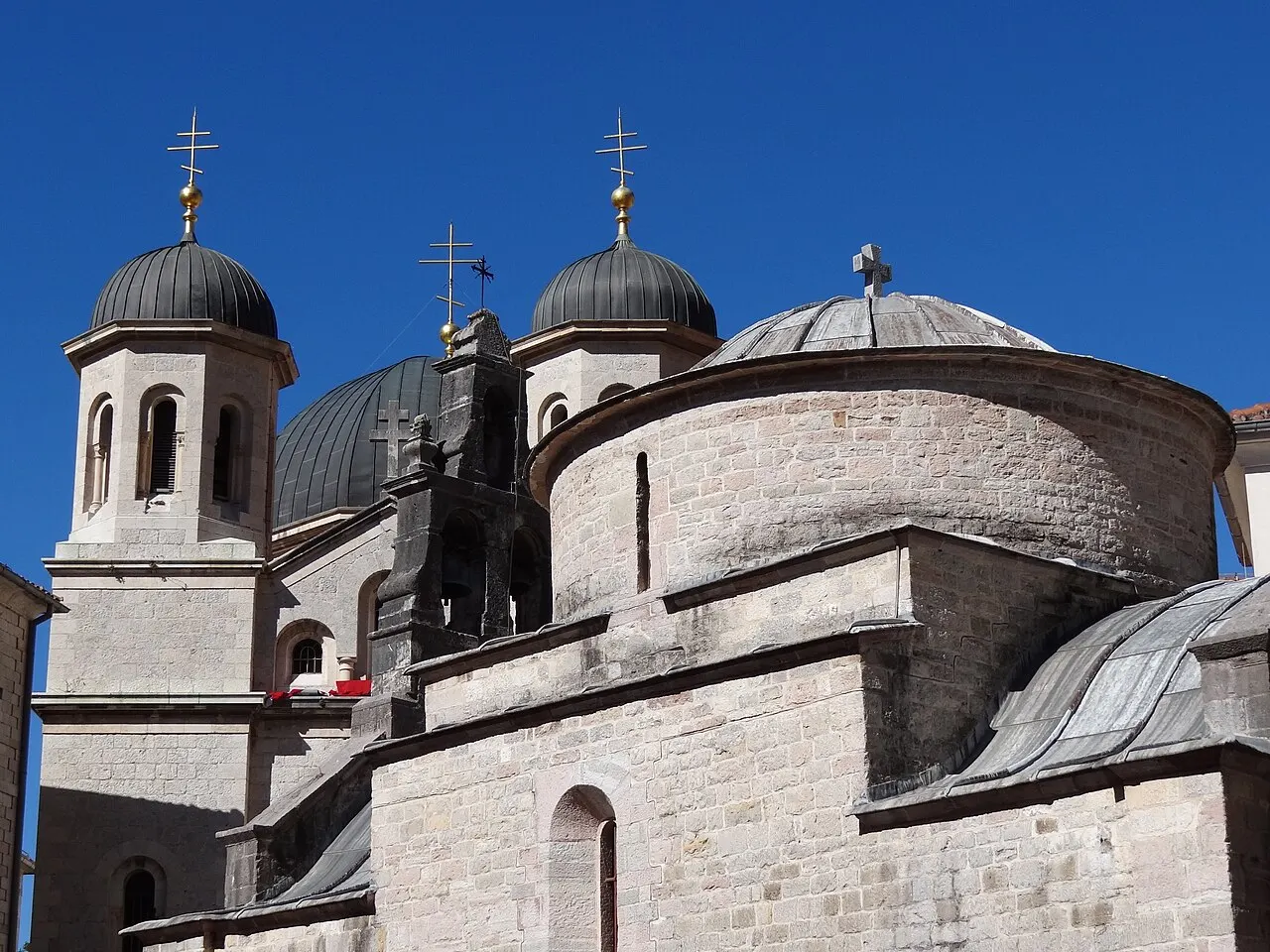
St Nicholas's stands on St Luke's Square (Trg Svetog Luke), which it shares with its tiny, ancient namesake church — and the pairing is the best way to understand it. St Luke's, built in 1195, is small, plain and over eight centuries old; St Nicholas's, beside it, is large, grand and barely more than a century. Between them, in one quiet square, you can read the whole arc of Kotor's Orthodox community, from a shared medieval altar to a confident church of its own.
It makes the square one of the most rewarding stops in the Old Town for anyone interested in the bay's layered faith. The two churches sit a few steps apart, off the busiest tourist routes, and the square stays calmer than the squares at the town's centre. Visit them together: the contrast in scale and age between the little Romanesque church and its towering Orthodox neighbour says more than either could alone.
The architecture in detail
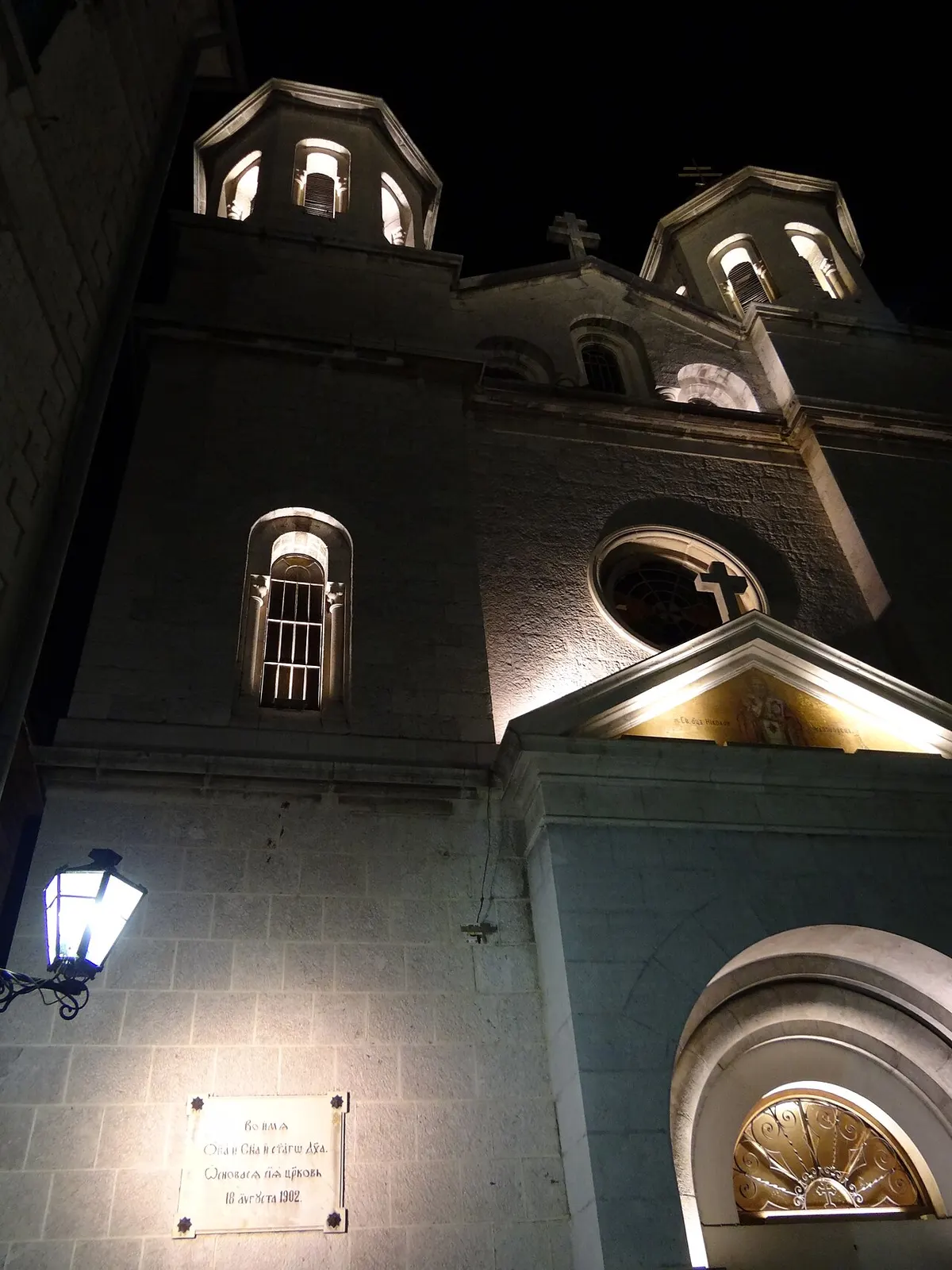
Slow down outside before you go in, because the building rewards a careful look. St Nicholas's is a study in symmetry: two slim bell towers frame a central drum and dome, all in pale stone, in the Serbo-Byzantine manner that drew on medieval Serbian and wider Byzantine models to give the young Orthodox community a church that looked both modern and deeply rooted. The proportions are calm and vertical, the surfaces mostly plain, so the silhouette — towers, dome, the cross above — does the work against the sky. After the busy stonework of the medieval Catholic churches, the restraint reads as confidence rather than poverty.
Inside, the plan follows Orthodox tradition: a single high space focused entirely on the iconostasis and the sanctuary it screens, rather than the long processional nave of a Western church. The dome draws the eye and the light upward; the icons line the walls and the great screen; and there is little of the statuary or side-chapel clutter of a Catholic interior, because Orthodox worship turns on painted icons, not carved figures. Understanding that difference makes the visit richer — you are not looking at a smaller version of the cathedral, but at a different way of building a holy space entirely.
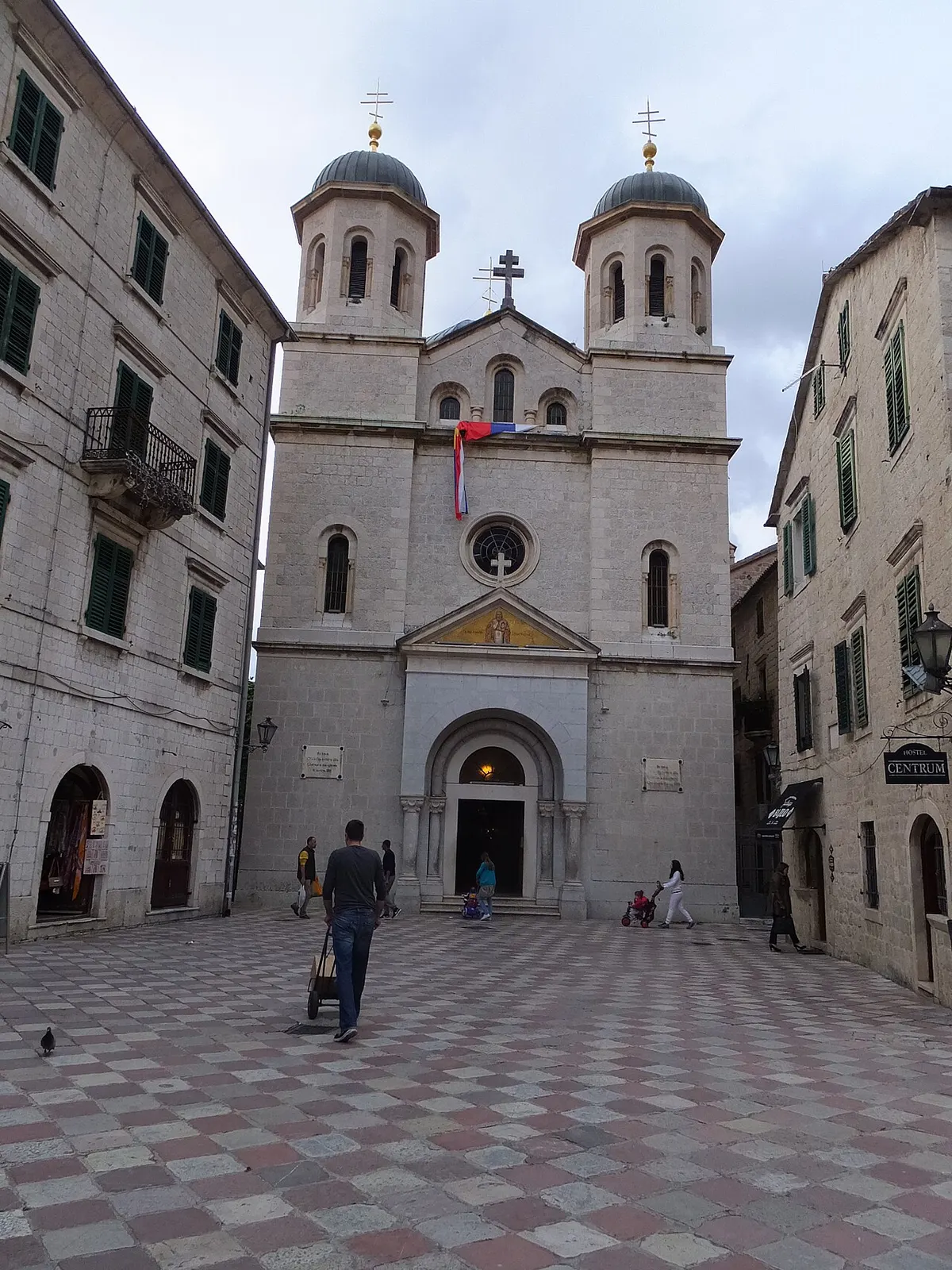
- Serbo-Byzantine style — twin towers, a central dome, pale stone and calm symmetry.
- An Orthodox plan: one high space focused on the iconostasis, not a long Western nave.
- Icons, not statues — the interior turns on painted images and the screen, not carved figures.
St Nicholas, patron of sailors, and his feast
The dedication is not incidental in a town like this. St Nicholas — the 4th-century bishop of Myra whose legend later spread across both Eastern and Western Christianity — is venerated above all as the protector of sailors, travellers and children, and few patrons could matter more to a community whose wealth and lives rode out on the bay. For the captains, merchants and ordinary seafarers of the Boka, a church to St Nicholas was an act of both devotion and insurance, a place to give thanks for a safe return and to pray for those still at sea. The votive silverwork and the maritime undertone of the whole interior make more sense once you hold that in mind.
St Nicholas's day, in early December, is a significant feast for the Orthodox community, and the church is at its most alive around it. If your visit falls near then, expect the building to be busier and more devotional than usual — a reminder that this is first and foremost a working parish church, not a museum. Outside the feast, the same dedication simply adds a quiet layer of meaning to a stop that already pairs naturally with Kotor's seafaring sights, from the Maritime Museum to the captains' palaces along the bay.
Visiting respectfully: practical notes
St Nicholas's is an active Serbian Orthodox church and remains a place of worship first, a sight second, so visit accordingly. Dress modestly — shoulders and knees covered — and women may wish to carry a light scarf for the head as a courtesy, in keeping with Orthodox custom. Keep your voice low, move quietly, and never walk in front of or photograph people at prayer. If a service (liturgy) is in progress, it is best to stand respectfully at the back or return later; the chanting is beautiful, but you are a guest in it, not an audience.
Photography of the icons and interior may be restricted, so look for posted signs and follow any guidance from those tending the church. There is generally no sightseeing ticket — it is a free, quiet stop — and a donation toward the candles and upkeep is welcome. Verify opening hours on the day, as the church keeps its own schedule around services.
- Dress modestly; a head scarf is a courteous touch for women in an Orthodox church.
- Stay quiet and stand back during services; don't photograph people at prayer.
- Free to enter with a donation for upkeep; verify hours, which work around the liturgy.


St Luke's Church, Kotor
A guide to one of Kotor's most atmospheric small churches: St Luke's (Sveti Luka), built in 1195, famous for the rare period when it held both a Catholic and an Orthodox altar — and the quiet square it shares with St Nicholas's.
Read guide
Kotor Old Town: A Guide to Stari Grad
How to explore Kotor's walled Old Town (Stari Grad): the gates, the squares you navigate by, St Tryphon Cathedral, the small churches, the cats, the museums and the quiet corners away from the crowds.
Read guideA Self-Guided Walk Through Kotor's Old Town
A self-guided walking route through Kotor's Old Town: the Sea Gate, Arms Square and the clock tower, St Tryphon Cathedral, St Luke's and St Nicholas, the maze of palaces and the wall-view corners — in the right order, at the right hour.
Read guideMore in Old Town
4
Clock Tower & Arms Square, Kotor
The Clock Tower on Arms Square is the first thing you meet inside Kotor's Sea Gate — the Old Town's natural anchor for orientation, cafés, routes and meeting up. How to use it, what to see around it, and the leaning landmark's story.
Read guideKotor Sea Gate
Start your Old Town visit at the Sea Gate — Kotor's main western gate of 1555, opening from the waterfront onto Arms Square and the leaning clock tower. Where to find it from the cruise port, what to look for, and how to plan a route through the squares.
Read guideMaritime Museum of Montenegro, Kotor
Inside Kotor's Maritime Museum of Montenegro: the baroque Grgurina Palace, three floors of ships, captains' portraits, maps, weapons and Boka seafaring history — and why it is the Old Town's best rainy-day visit.
Read guide
St Tryphon Cathedral, Kotor
How to visit Kotor's landmark Romanesque cathedral, consecrated in 1166: the twin bell towers, the treasury and the relics of St Tryphon, the art, the square, and the Old Town heritage that surrounds it.
Read guide