
Three Days in Kotor
A deeper three-day Kotor itinerary that goes beyond the walls: the Old Town and the climb to St John Fortress on day one, the bay by boat to Perast and Our Lady of the Rocks with a swim on day two, and the serpentine road to Lovćen, Njeguši and Cetinje on day three — with a flexible day-trip swap.

Photo: Robin van Holst / Unsplash
- ✓Three days is the sweet spot for Kotor: enough to do the town, the bay and the mountains properly, without the rushed feeling of a single day.
- ✓Day 1 stays inside the walls — the Old Town early, the climb to St John Fortress before the heat, a long lunch, and a quiet lamplit evening once the ships sail.
- ✓Day 2 belongs to the water: a boat to Perast and Our Lady of the Rocks, a swim from a calm cove, and a sunset somewhere along the bay.
- ✓Day 3 goes up: the old serpentine road to Njeguši for prosciutto, on to Lovćen and the old royal capital of Cetinje — or swap in Budva, the Blue Cave or a slow second bay day.
- ✓Sequence around the heat and the cruise calls, not the clock: front-load the climb and the boat into the cool, quiet hours and leave the middle of each day soft.
Why three days is the right length for the Boka
Kotor flatters a longer stay more than almost anywhere on the Adriatic. One day shows you the walled town and one big sight; two days adds the bay. But three is when the place finally relaxes into its real shape — a thousand-year-old town wedged under a mountain, ringed by a fjord-like bay of baroque villages, with a wild limestone interior climbing straight up behind it. With three days you can do each of those three worlds — town, water, mountain — at its own pace and at the right hour, instead of cramming them into a sweaty single dash.
This itinerary is built around two ideas the bay teaches everyone eventually. The first is heat and crowds: in summer the bare limestone of the walls bakes by late morning, and the cruise tenders land a wave of day-trippers into the same compact, car-free lanes at roughly the same time. So you front-load the demanding things — the climb, the boat — into the cool, quiet early hours, and let the busy middle of each day be the easy, sit-down part. The second idea is that the evenings, after the last ship sails and the day-trippers leave, are the best part of a Kotor stay. Keep them loose.
A word on the moving details. Ticket prices for the walls, cable-car timetables, bus and ferry schedules, boat fares and opening hours all shift with the season and the operator, so we keep them out of the prose and give the evergreen shape here. Treat the day-by-day below as a flexible frame, verify the volatile bits on the day, and bend it to your own pace.
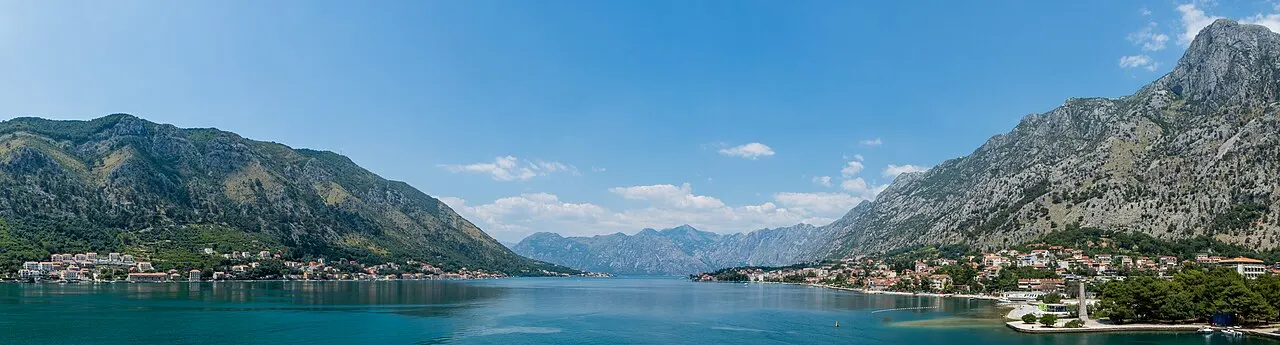


Day 1 — The Old Town and the climb to St John Fortress
Give the first morning to the walls of Kotor, in both senses. Start inside them: enter through the grand Sea Gate of 1555, which opens onto the Square of Arms with its leaning clock tower of 1602, and simply wander before the day fills up. The Old Town is tiny — you can cross it in ten minutes — and it navigates by squares rather than street names, so let yourself get pleasantly lost between St Tryphon Cathedral (consecrated in 1166, with its two slightly mismatched Romanesque towers), the little churches and the palazzo courtyards. The cats, Kotor's unofficial mascots, will be the only crowd this early.
Then climb the walls themselves, while the limestone is still cool. The wall-walk up to St John Fortress (San Giovanni) is the town's signature experience and the reason most people come. The step-count is a famous local parlour game — you will see anything from 1,200 to 1,500 quoted — with field estimates landing near 1,350 steps and roughly 260 m of climb. About halfway, the small Church of Our Lady of Remedy is the natural place to pause for breath and your first big bay view. There is little shade, so morning is not a nicety here; it is the difference between a glorious climb and a punishing one. Allow around 90 minutes round trip at an easy pace, carry more water than you think you need, and wear shoes with grip on the polished stone. A seasonal entry ticket usually applies in the warmer months — verify the current price and hours before you set off.
Down by late morning with the big effort behind you, the rest of day one is deliberately soft. Have a long, unhurried lunch a lane or two off the busiest square — you will eat better and pay less — and order the bay's buzara (mussels in white wine, garlic and olive oil), a board of Njeguši prosciutto, and a glass of Montenegrin Vranac. Spend the hot afternoon in the shade: the Maritime Museum, the cathedral interior, a slow loop of the back lanes under the cliff. Then keep the evening loose. Once the last ship sails, the Old Town that felt packed at noon empties into a hush of lamplight and cats, and a dinner that runs late is the right way to end the first day.
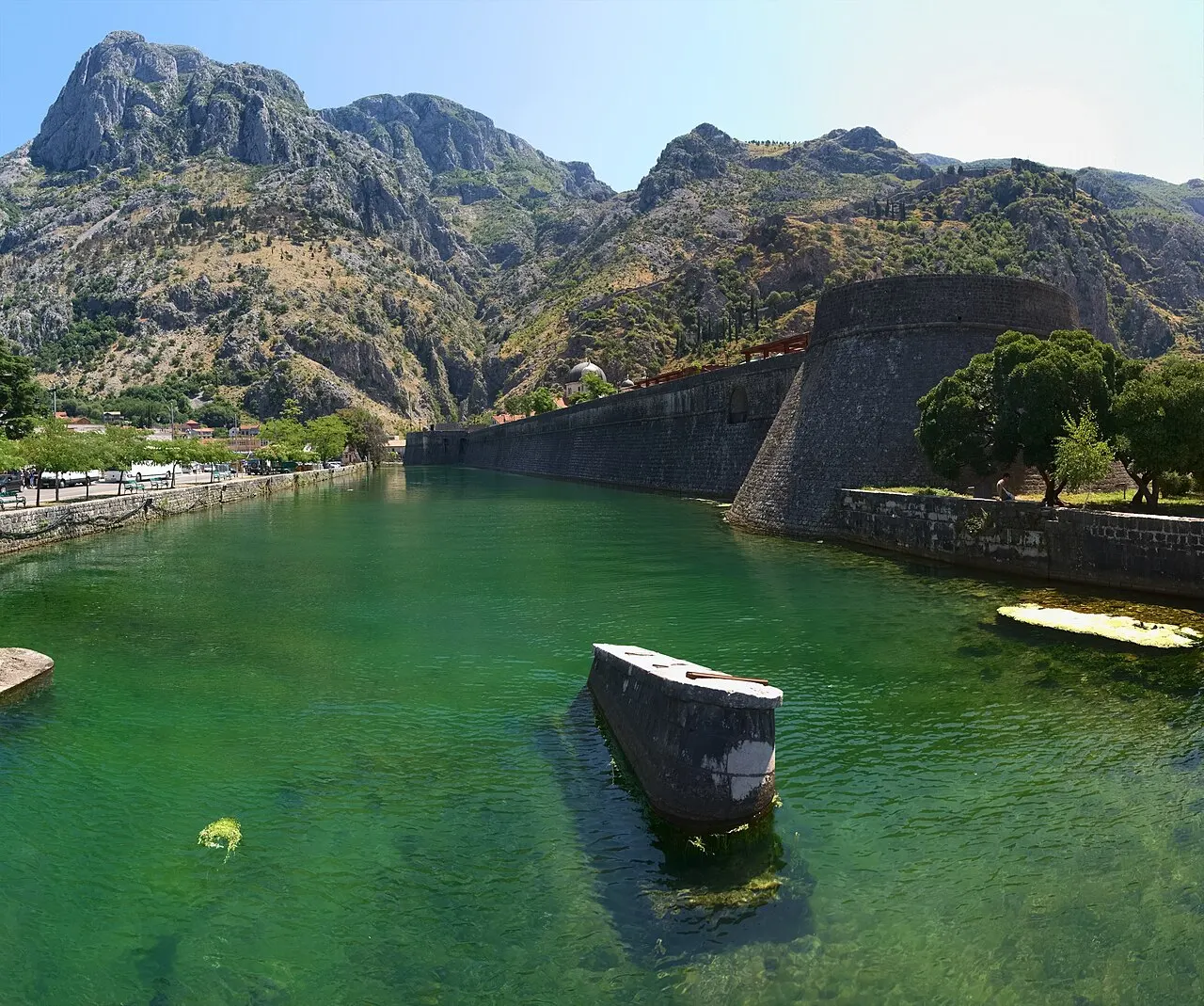
- Be inside the walls early — the lanes belong to the cats before the cruise tenders land.
- Climb to St John Fortress in the cool morning: ~1,350 steps, ~260 m, about 90 minutes round trip. Verify the seasonal ticket and hours.
- Pause at the Church of Our Lady of Remedy, about halfway, for the first great view.
- Keep the hot afternoon shaded and the evening loose — the Old Town is at its best once the ships leave.
 City Walls & St John Fortress
How the climb works, when to go, and the two waypoints you will stop at.
 Self-Guided Old Town Walk
A sensible route through the gates, squares and churches for your first morning.
St John FortressThe fortress at the top of the climb, its history and the view that earns it.
Map pins
Map data © OpenStreetMap contributors · Tiles © OpenFreeMap
Day 2 — The bay by boat: Perast, Our Lady of the Rocks and a swim
Day two belongs to the water, because the Bay of Kotor was built to be read from a boat. The Boka is a flooded river canyon — often loosely called Europe's southernmost fjord — folding inland in four linked basins, narrowest at the 340 m Verige strait. From the deck you see what the road hides: the captains' towns strung along the shore, the two islets off Perast, the pinch where defensive chains were once hung. The single most rewarding short trip is the run up to Perast and the little island church of Our Lady of the Rocks, sheltered and steeped in story.
Aim to be on the early side again. Small-group and private boats gather on the Kotor waterfront just outside the walls, and you can also reach Perast by the regular Kotor–Risan bus or by car (cars are kept out of the town itself; there is paid parking on the approach). Perast is the bay distilled: a long stone waterfront of baroque captains' palaces, almost no cars, the bell tower of St Nicholas above you. From the quay, boatmen run the short hop to Our Lady of the Rocks — an artificial island raised over centuries on the hulls of scuttled ships and stones dropped by returning sailors, crowned by a 17th-century church and a small museum. The second islet, St George, is a natural island with a Benedictine monastery and cypresses, beautiful but closed to visitors.
Build the afternoon around a swim. The bay water stays calm and swimmable well into autumn, with quiet coves below Prčanj, Stoliv and the Vrmac ridge, and easy spots along the Dobrota promenade north of town. If you would rather a longer day on the water, group boats push out past the bay mouth to the Blue Cave near Luštica — wonderful, but weather-dependent and easily cancelled in wind, so treat it as a flexible option rather than a fixed plan. End day two with a bay sunset: the light goes glassy and gold, the day-tour traffic thins, and the captains' towns glow. Verify boat fares, departure times and the weather window before you commit to any trip.
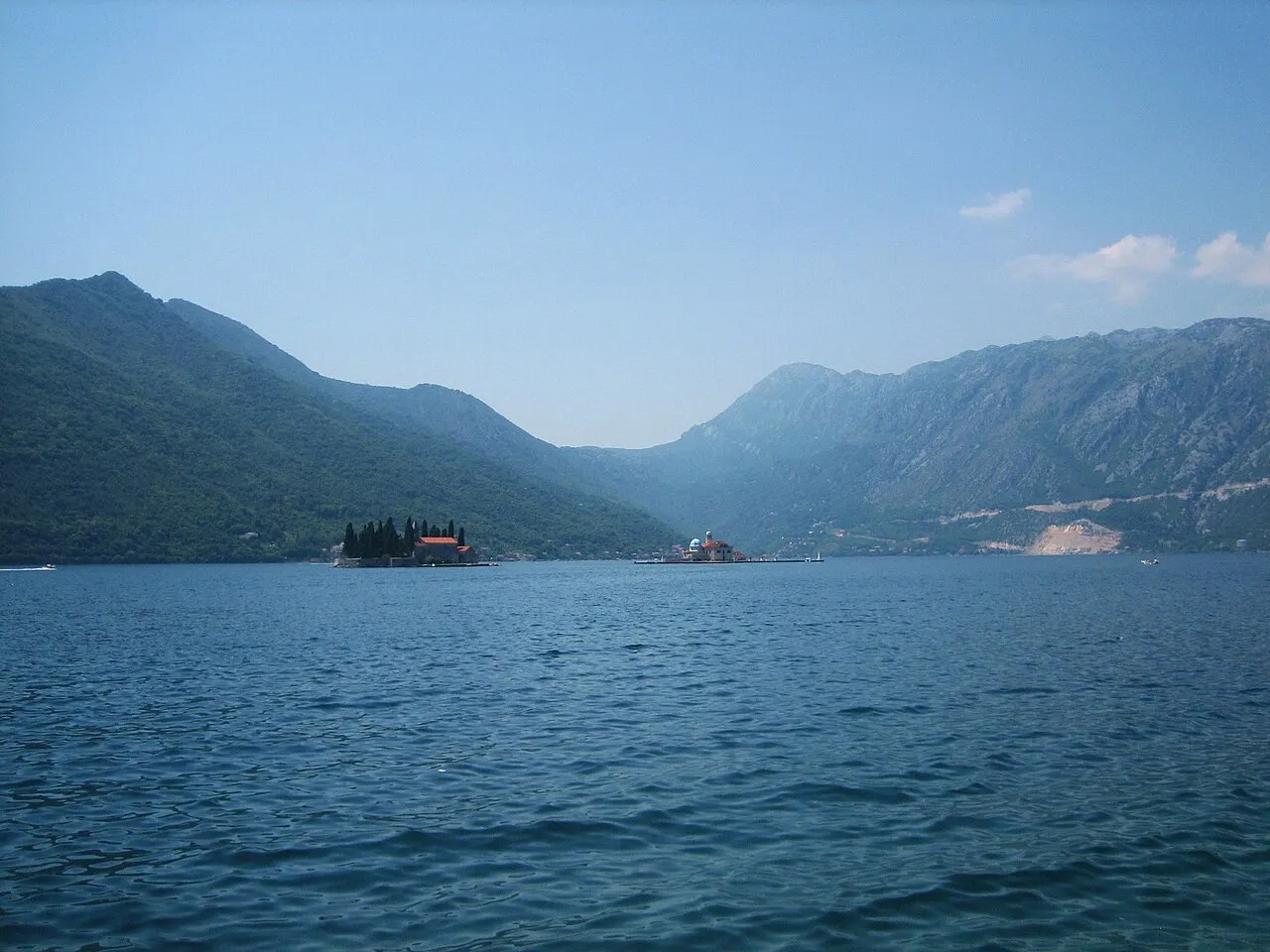
- Take the morning boat to Perast and Our Lady of the Rocks — sheltered, scenic and the bay's signature half-day.
- Reach Perast by boat, by car (paid parking on the approach) or the Kotor–Risan bus; the town itself is car-free.
- Build in a swim — calm coves below Prčanj, Stoliv and Vrmac, or along the Dobrota promenade.
- Treat the longer Blue Cave run as weather-dependent; verify fares, times and the forecast before booking.
 Bay of Kotor & Boat Tours
The four basins and how to choose between a short and a long trip on the water.
 Kotor to Perast by Boat
How the Perast and island boat trips work, shared and private.
 Our Lady of the Rocks
The man-made island church, its story and the short hop from Perast.
 Best Swimming Spots in the Bay
Calm coves and promenades for the afternoon swim on day two.
Day 3 — Up the mountain: Njeguši, Lovćen and Cetinje (or swap)
On day three, go up. The signature drive out of Kotor switchbacks dizzyingly up the old serpentine road, gaining the whole height of the bay in a series of hairpins, each one opening a wider view of the Boka spread out below. The first stop is Njeguši, the mountain village that gives its name to the region's smoked prosciutto and hard cheese — buy both at the source. Beyond it lies Lovćen National Park, where the mausoleum of the poet-prince Njegoš crowns a peak with one of the great views in the Balkans, reached by a long flight of steps through a tunnel near the summit.
Then drop down to Cetinje, Montenegro's historic royal capital: a low, walkable town of old embassies, monasteries and museums that tells the country's story far better than any guidebook. It makes a relaxed afternoon — a coffee on the main street, a museum or two, the monastery — before the drive back down to the bay for a last slow evening in the lanes. If you would rather not drive the bends, the Kotor cable car offers a gentler way to gain the mountain's lower views; verify its current timetable, fares and lower-station location, and confirm it is running on the day, as all of those change.
Day three is the flexible one, so swap freely. If the mountains do not appeal, spend the day down the coast in Budva, which pairs a walled old town with proper beaches about half an hour down the coast, or push further around the bay to Risan's Roman floor mosaics. The ambitious can attempt Dubrovnik across the Croatian border — doable in a long day, but summer queues at the crossing eat into it, so start early and check conditions. Or simply give the bay a second, slower day: another swim, a kayak along the shore, a sunset cruise. Three days in Kotor are best when the last one bends to your mood. We keep border timings, bus and ferry schedules and cable-car details evergreen here — verify them before you build a day around them.
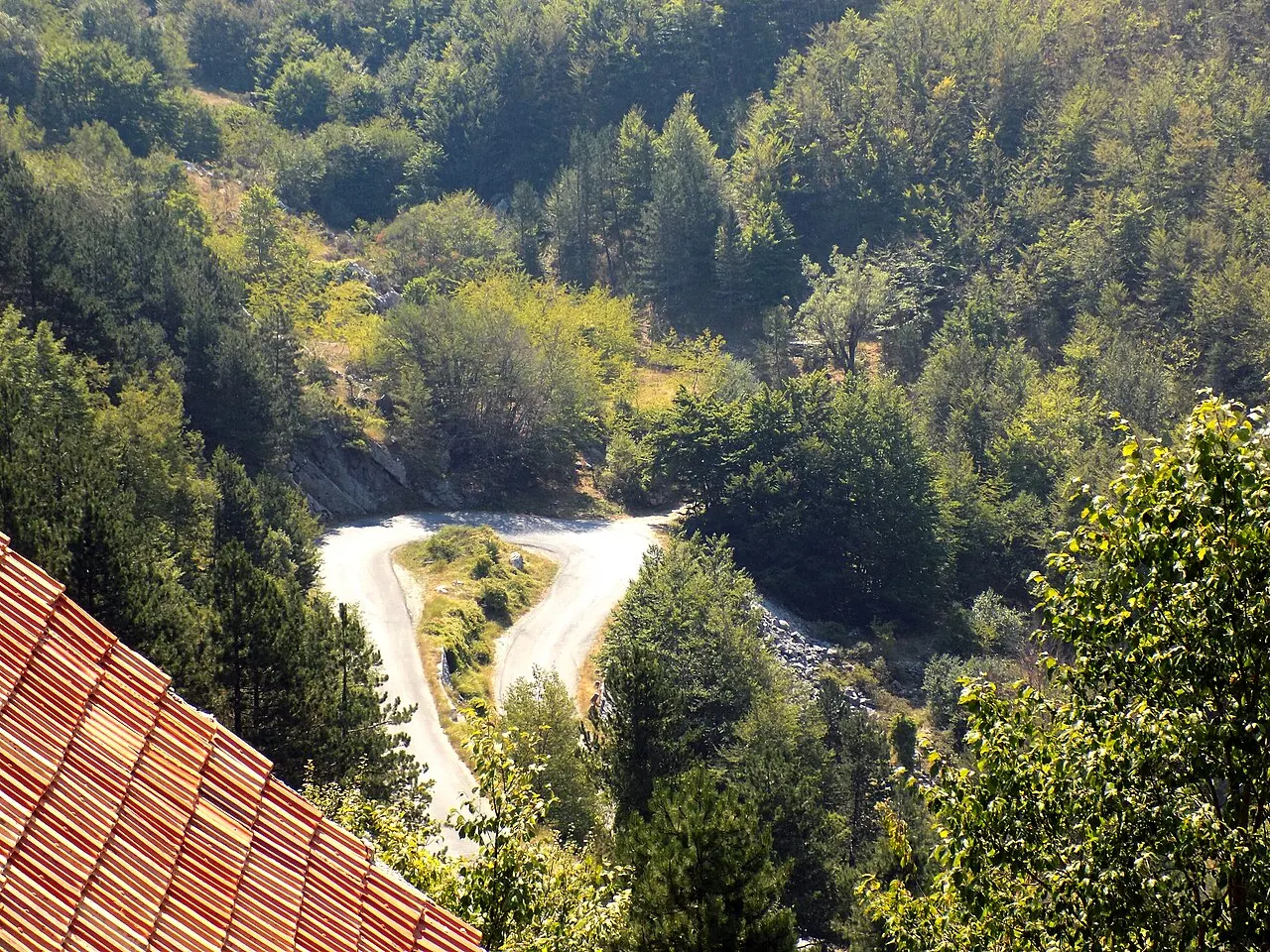
- Drive the old serpentine road to Njeguši (prosciutto and cheese), Lovćen (Njegoš's mausoleum) and Cetinje (the old royal capital).
- Prefer not to drive the bends? The Kotor cable car is a gentler way up — verify the timetable, fares and that it is running.
- Swap freely: Budva's beaches and walls, Risan's Roman mosaics, a long-day trip to Dubrovnik (mind the border queues), or a second slow bay day.
- Verify border times, bus and ferry schedules and cable-car details before committing to day three.


Eating, sleeping and getting around over three days
Where you sleep shapes the whole three days. The Old Town is the most atmospheric base — you wake in the middle of the postcard — but the noisiest, since stone lanes carry the sound of late tables and early deliveries, and the cruise crowds arrive on your doorstep. A short way along the bay, Dobrota trades the lanes for a calm waterfront and a flat walk back into town; across the water, Prčanj and Muo are quieter still, with rooms that look straight onto the bay and Kotor glowing across it after dark. If you are touring Montenegro by car, a base with parking outside the walls usually beats squeezing into the car-free Old Town.
Eat coastal and unfussy. Beyond the buzara, prosciutto and Vranac of day one, work in fresh fish priced by the kilo, the crisp local whites for a warm evening, and at least one waterfront konoba dinner along the bay in Dobrota or Perast, where the same seafood comes with more room and a sunset. Book ahead for dinner on summer and cruise nights, and carry some cash for smaller konobas and boatmen, though cards are widely taken. Montenegro uses the euro.
For getting around, the bay is small but the geography is slow. Kotor's bus station, just outside the Old Town, links the bay villages, Budva and Tivat; the Kamenari–Lepetane ferry across the bay mouth is a handy shortcut that saves the long drive around when you head north or toward Croatia. A car frees up day three's mountain and coast options but is a liability in the lanes. Tivat airport is closest; Podgorica and Dubrovnik (across the border) are the wider options. Whatever you do, leave the evenings loose — three unhurried nights in the emptied lanes are the quiet heart of a Kotor stay.
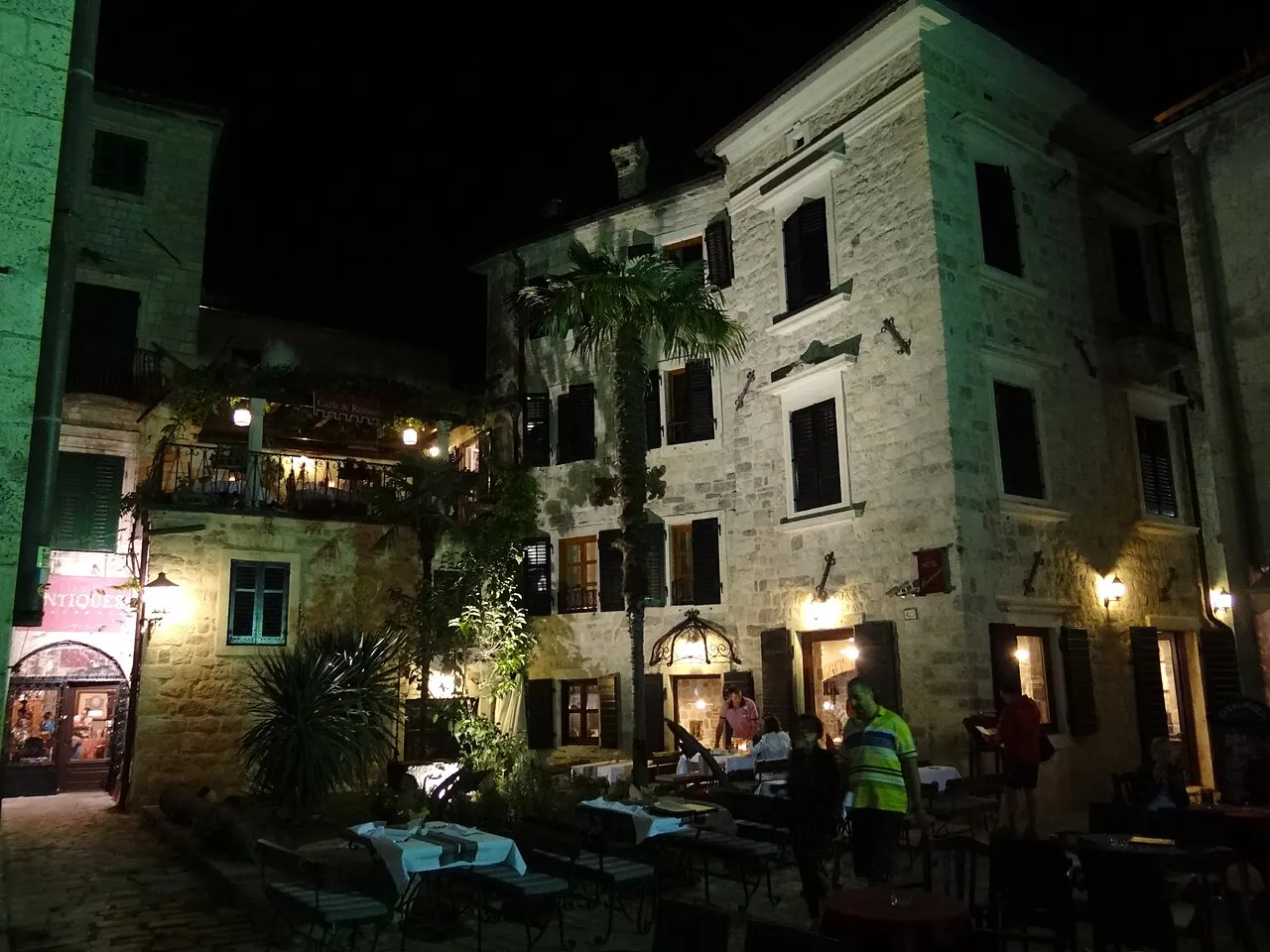
- Base in the Old Town for atmosphere, or along the bay (Dobrota, Prčanj, Muo) for quiet, views and easier parking.
- Work in a waterfront konoba dinner; book ahead on summer and cruise nights, and carry some cash. Euro currency.
- Use the bus station and the Kamenari–Lepetane ferry to move around; a car helps day three but not the lanes.
- Tivat airport is closest; verify all transfer, ferry and bus details on the day.
 Where to Stay in Kotor
The Old Town, Dobrota, Prčanj, Muo, Perast and Tivat by atmosphere and walkability.
 Food & Drink in Kotor
Buzara, Njeguši prosciutto, fresh bay fish and where to eat off the squares.
 Best Restaurants in Kotor
Tables for the three dinners this plan builds in, from town to waterfront.
Your three days in Kotor at a glance
Use this card to shape the trip, then bend it to the weather, the cruise calls and your own pace. Verify the volatile details — the walls ticket and hours, cable-car timetable and fares, boat-tour departures and prices, bus and ferry schedules, and border timings — on the day or from official sources, because they all change with the season and the operator.
- Length: 3 days / 2–3 nights, ideally based in or just along the bay from the Old Town.
- Day 1 — Old Town early, the St John Fortress climb before the heat, long lunch, lamplit evening.
- Day 2 — Boat to Perast and Our Lady of the Rocks, an afternoon swim, a bay sunset.
- Day 3 — Serpentine road to Njeguši, Lovćen and Cetinje (or cable car), or swap in Budva, the Blue Cave or a second bay day.
- Sequence around the heat and the cruise crowds — front-load the climb and the boat, keep middays and evenings soft.
- Best base: Old Town for atmosphere, the bay villages for quiet and parking.
- Always verify tickets, schedules, boat departures and the weather before relying on them.
Two Days in Kotor
A balanced 48-hour plan for Kotor: day one for the town — Old Town, the walls, a long lunch, the evening lanes; day two for the bay — a boat to Perast and the islands, a swim, a sunset climb and a relaxed waterfront dinner.
Read guide
Lovćen Day Trip from Kotor
How to day-trip from Kotor to Lovćen National Park: the four ways up — the old serpentine road, the Kotor–Lovćen cable car, an organised tour or a private driver — the Njegoš Mausoleum on its peak, the Njeguši stop, the viewpoints, timing, and an FAQ.
Read guide
Best Day Trips from Kotor
The hub for day trips from Kotor: the bay classics of Perast and Tivat, the mountain day to Lovćen and Cetinje, the coast at Budva, Sveti Stefan and Herceg Novi, cross-border Dubrovnik, and the inland wonders of Skadar Lake, Ostrog and Durmitor.
Read guideMore in Itineraries
6
A Weekend in Kotor
A Friday-evening-to-Sunday plan for the Bay of Kotor built around hotel-area logic, sunset views, boat timing and relaxed meals: arrive and settle in, give Saturday to the Old Town and the walls climb, take Sunday onto the water before you leave — the well-chosen short break, not a sight-ticking marathon.
Read guideBay of Kotor Road Trip
A self-drive loop around the Bay of Kotor: out of Kotor along the inner shore through Dobrota and Perast, on to Risan's Roman mosaics, the full loop versus the Kamenari–Lepetane ferry shortcut, then Tivat and the high viewpoints — with honest notes on the narrow bay road, the car-free Old Town and where to park.
Read guideKotor for Couples: A Romantic Itinerary
A romantic two-to-three day Kotor route built around slow bay-view mornings, the fortress at golden hour, Perast and a private boat, waterfront dinners and the lamplit lanes once the ships leave — the unhurried, golden side of the Boka, planned for two.
Read guide
Kotor on a Budget: A Low-Cost Itinerary
A lower-cost Bay of Kotor plan that leans on free sights, local buses, market and bakery food, self-guided walks and one or two selective paid splurges — how to do the Old Town, the bay and the views well without spending much, and where it is worth paying.
Read guide
Kotor Rainy Day Itinerary
A full wet-weather day in Kotor that still feels like a day: a slow indoor morning of museums and churches inside the walls, a long café-and-konoba lunch, a covered-courtyard or hotel-spa afternoon, and a moody bay option for when the sea stays calm.
Read guideKotor with Kids: A Family Itinerary
A family-paced Bay of Kotor plan built around short flat walks, the cats and the Cats Museum, the aquarium, calm beaches, safe boat choices and low-stress meals — with honest notes on what the walls climb and the summer heat mean for children, and how to keep everyone happy.
Read guide